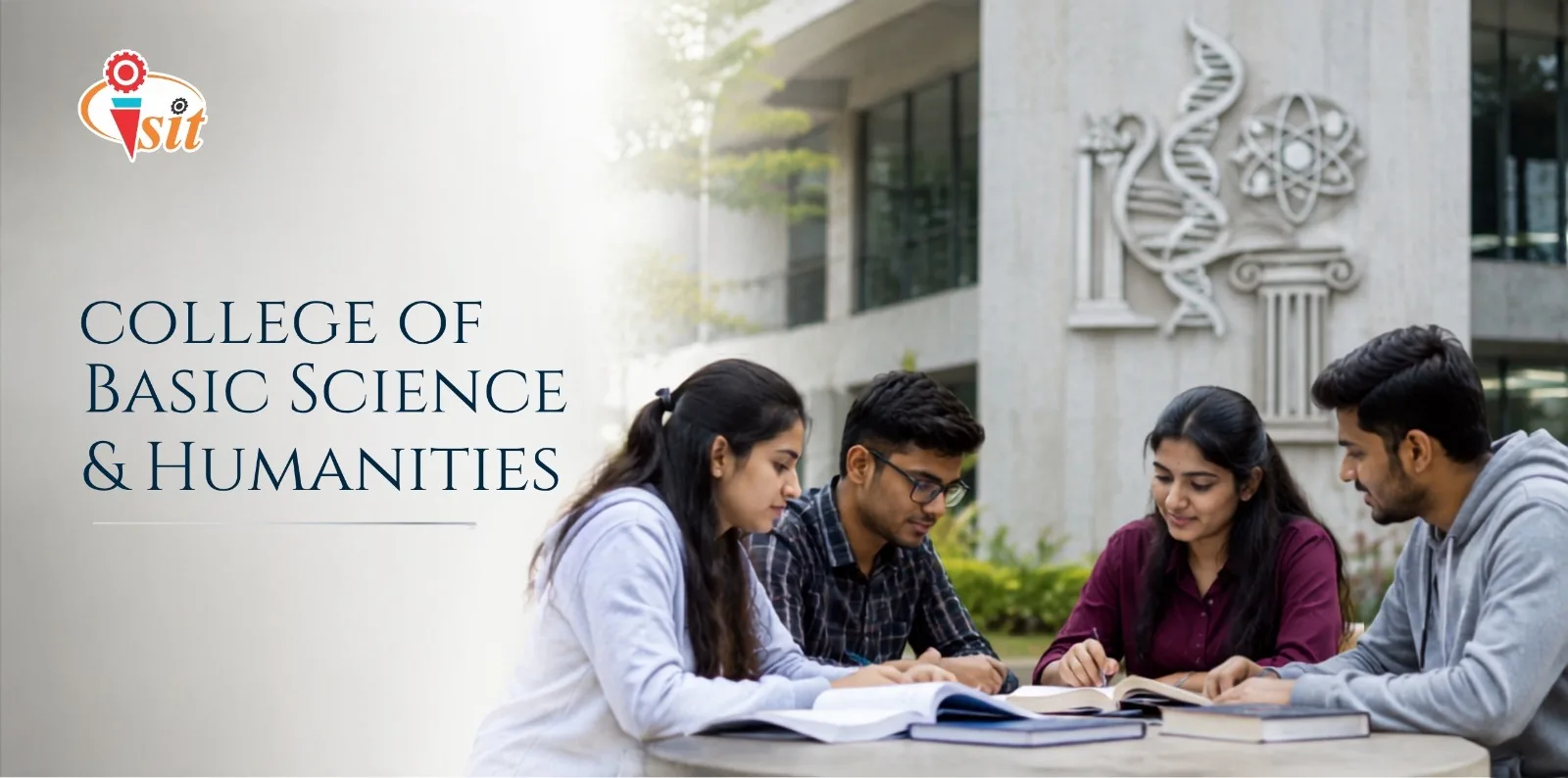
A College of Basic Science and Humanities plays an important role in developing strong academic foundations for students pursuing higher education in science, engineering, agriculture, technology, and related disciplines. These colleges typically focus on fundamental sciences, humanities, communication skills, and interdisciplinary learning.
What Is a College of Basic Science and Humanities?
A College of Basic Science and Humanities generally provides foundational education in subjects such as mathematics, physics, chemistry, biology, English, communication skills, and social sciences. These subjects help students develop the theoretical knowledge and practical skills required for advanced studies.
For students entering professional degree programs, basic science and humanities courses can provide an important foundation for understanding specialized subjects later in their academic journey.
Common Subjects Offered
The exact curriculum varies between institutions, but students may study subjects such as:
- Mathematics and statistics
- Physics
- Chemistry
- Biology and life sciences
- English and communication skills
- Computer fundamentals
- Environmental science
- Social sciences and humanities
- Professional ethics and soft skills
These subjects can help students strengthen analytical thinking, communication, problem-solving, and research abilities.
Why Basic Science and Humanities Education Matters
Basic sciences help students understand fundamental scientific principles, while humanities contribute to communication, critical thinking, ethics, and social awareness. Combining both areas can create a broader educational foundation.
For example, mathematics and science can strengthen analytical abilities, while communication and humanities courses can help students present ideas clearly and understand social and professional contexts.
Career and Higher Education Opportunities
Students with a strong foundation in basic sciences and humanities can pursue various academic and professional pathways. Depending on their chosen subjects and degree program, opportunities may include higher education, research, engineering, healthcare, agriculture, technology, teaching, management, and other professional fields.
Students interested in research can also pursue postgraduate programs and specialized qualifications after completing their undergraduate education.
How to Choose the Right College
When searching for a College of Basic Science and Humanities, students should consider factors such as:
- Academic curriculum: Check whether the subjects match your future study plans.
- Faculty: Review faculty qualifications and teaching experience.
- Laboratory facilities: Practical science education requires appropriate laboratory infrastructure.
- Learning environment: Consider academic support, student activities, and campus facilities.
- Higher education opportunities: Look at progression options and academic guidance.
- Location and affordability: Compare fees, accommodation, transportation, and other expenses.
Conclusion
A College of Basic Science and Humanities provides students with fundamental knowledge that can support further education and professional development. By combining scientific understanding with communication, critical thinking, and humanities education, these institutions can help students build a well-rounded academic foundation.
Before selecting a college, students should compare its curriculum, faculty, facilities, academic opportunities, and overall suitability for their long-term educational goals.