South Africa, known for its rich coal reserves, is now facing a major challenge—how to continue leveraging coal as an energy source while reducing environmental impact. This is where coal gasification comes into play.
This advanced process converts solid coal into a cleaner, more efficient gaseous fuel called syngas, which can be used for power generation, fertilizers, fuels, and industrial applications.
As global energy demand increases, countries like South Africa are turning to coal gasification as a sustainable bridge between traditional fossil fuels and renewable energy sources. This technology not only enhances energy efficiency but also helps reduce greenhouse gas emissions—supporting national sustainability goals.
What Is Coal Gasification?
Coal gasification is a thermo-chemical process where coal reacts with oxygen, steam, and controlled amounts of heat to produce syngas—a mixture of hydrogen, carbon monoxide, and carbon dioxide. Unlike traditional combustion, where coal is burned directly, gasification breaks down coal molecules without complete oxidation.
This controlled reaction results in a cleaner and more versatile fuel that can be used in:
- Power plants – as a replacement for conventional coal combustion
- Chemical industries – to produce ammonia, methanol, and hydrogen
- Liquid fuel production – via Fischer–Tropsch synthesis
By transforming coal into syngas, industries gain a reliable and flexible energy source that is easier to handle and more environmentally friendly.
The Process of Coal Gasification
The coal gasification process involves four key stages:
- Drying and Devolatilization: Coal is heated to remove moisture and volatile gases.
- Pyrolysis: At high temperatures, coal decomposes into char and tar.
- Gasification Reaction: The char reacts with oxygen and steam under controlled pressure to form syngas.
- Gas Cleaning: Impurities such as sulfur and particulates are removed from the syngas before use.
The purified syngas can then be used directly for energy generation or as feedstock in industrial applications.
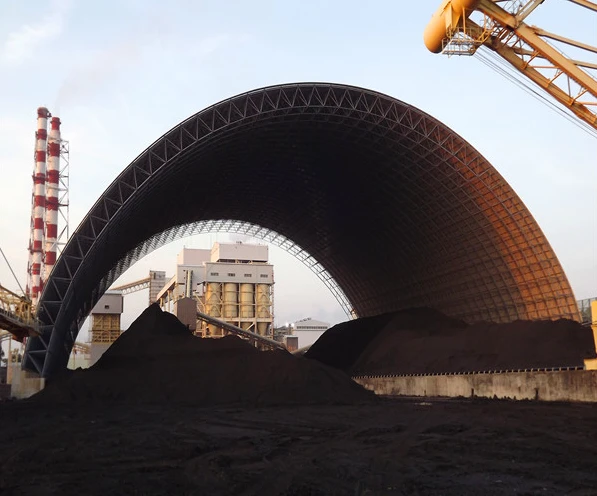
For efficient operations, Hindustan Alcox Ltd provides advanced coal storage sheds and handling systems to ensure coal remains dry and uncontaminated before entering the gasification process.
Benefits of Coal Gasification in South Africa
With South Africa’s abundant coal resources, gasification offers a sustainable way to extend the life of existing energy infrastructure while reducing emissions. Key benefits include:
- 🔹 Cleaner Energy Production: Lower emissions compared to direct coal combustion.
- 🔹 Efficient Use of Low-Grade Coal: Converts even low-quality coal into valuable syngas.
- 🔹 Reduced Import Dependency: Promotes energy independence by maximizing domestic coal use.
- 🔹 Industrial Versatility: Produces raw materials for fertilizers, fuels, and petrochemicals.
- 🔹 Carbon Capture Potential: The process can be integrated with carbon capture and storage (CCS) technologies to minimize CO₂ emissions.
With the right infrastructure, including enclosed coal storage and automated material handling, gasification plants can operate safely, efficiently, and sustainably.
Challenges in Coal Gasification
While promising, coal gasification also faces challenges that must be managed carefully:
- High Initial Costs: Setting up gasification plants requires significant investment in equipment and safety systems.
- Water Usage: The process demands a large amount of water, which can be challenging in arid regions.
- Complex Operation: Gasifiers require advanced control systems and technical expertise.
- Environmental Considerations: Without proper gas cleaning and waste handling, emissions could offset environmental benefits.
To overcome these issues, Hindustan Alcox Ltd supports industries by designing custom-engineered steel enclosures, coal storage sheds, and handling systems tailored for local climatic and operational conditions.
Hindustan Alcox Ltd – Engineering Solutions for Modern Energy Systems
As a global leader in industrial steel structures and storage systems, Hindustan Alcox Ltd has been at the forefront of supporting energy and mining industries worldwide.
Their expertise extends to designing large-scale coal storage sheds, iron ore storage facilities, and bulk material enclosures that ensure long-term protection and operational efficiency.
For countries like South Africa, where mining remains a cornerstone of the economy, reliable infrastructure is critical. Hindustan Alcox’s turnkey engineering solutions provide cost-effective, long-lasting, and sustainable designs that align with global environmental standards.
Conclusion
Coal gasification represents a major step toward a cleaner, more efficient, and sustainable energy future. For South Africa, it’s not just an energy solution—it’s a national opportunity to balance industrial growth with environmental responsibility.
With modern technologies, proper coal storage infrastructure, and strategic partnerships with leaders like Hindustan Alcox Ltd, industries can harness the full potential of their natural resources—responsibly and sustainably.