
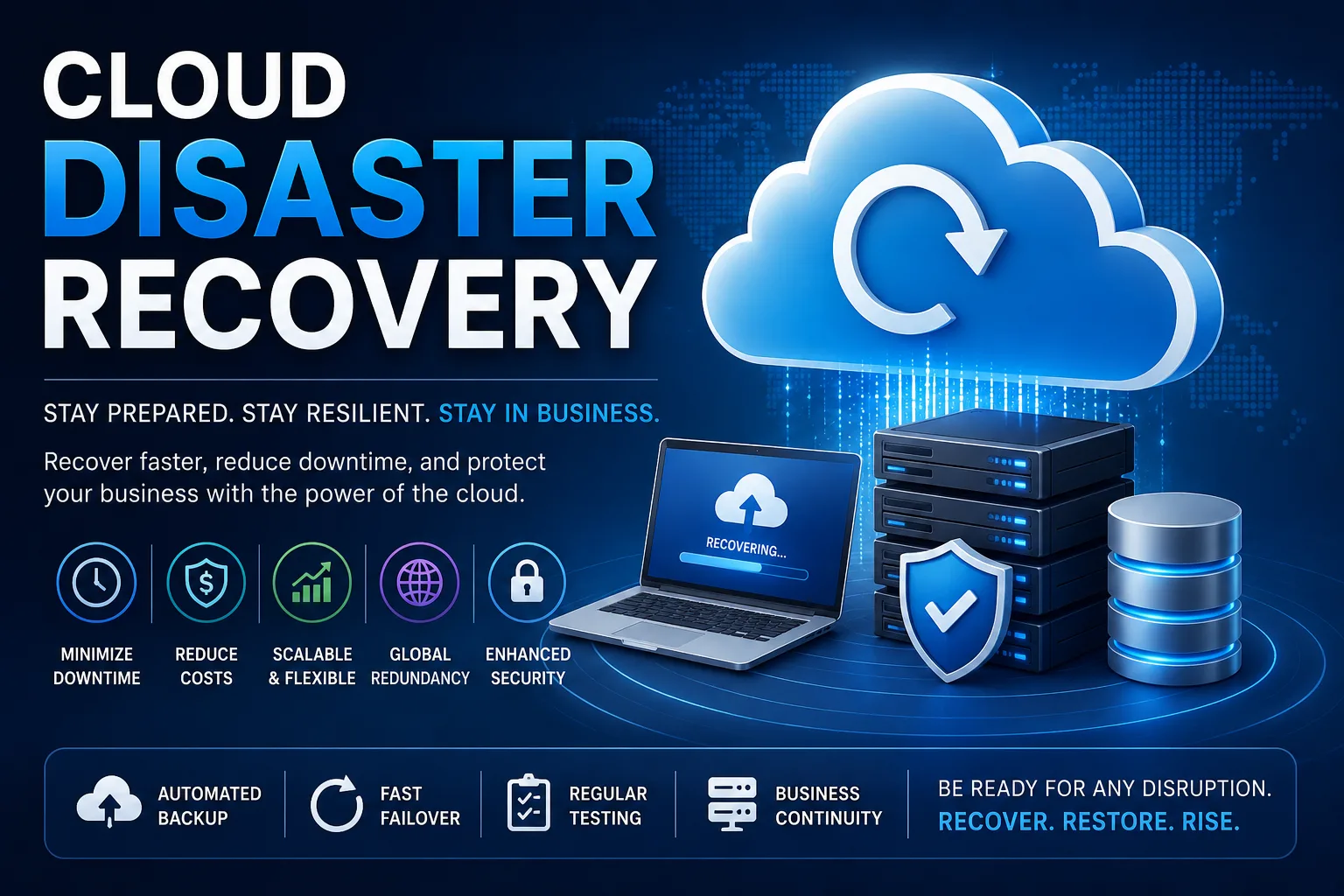
In today's digital-first business environment, downtime is more than an inconvenience—it can result in lost revenue, damaged customer relationships, compliance violations, and operational chaos. As organizations increasingly rely on cloud applications, virtual infrastructure, and digital data, the need for a robust recovery strategy has never been greater.
Cloud Disaster Recovery (Cloud DR) provides businesses with a reliable way to restore systems and data after disruptions, helping organizations maintain continuity and recover quickly from unexpected events.
Understanding Cloud Disaster Recovery
Cloud Disaster Recovery is the process of replicating and storing critical business data, applications, and IT systems in a cloud environment so they can be restored when a disaster occurs.
Unlike traditional disaster recovery models that require expensive secondary data centers, cloud-based recovery solutions leverage scalable cloud disaster recovery infrastructure to provide rapid failover and restoration capabilities.
The goal is simple: ensure business operations continue even when primary systems become unavailable.
Common Threats That Can Disrupt Business Operations
Modern organizations face a wide range of threats that can impact critical systems, including:
- Cyberattacks and ransomware
- Hardware failures
- Network outages
- Human error
- Software corruption
- Natural disasters
- Power disruptions
- Data center failures
Without an effective recovery strategy, these incidents can lead to extended downtime and significant financial losses.
Why Businesses Are Moving to Cloud-Based Recovery
Traditional disaster recovery often requires maintaining duplicate infrastructure, which can be costly and difficult to manage.
Cloud disaster recovery offers several advantages:
Cost Efficiency
Organizations only pay for the cloud resources they use, eliminating the need for large capital investments in secondary recovery sites.
Faster Recovery Times
Cloud environments allow businesses to restore applications and data much faster than traditional backup methods.
Flexible Scalability
As workloads grow, cloud recovery environments can scale automatically without requiring additional hardware purchases.
Simplified Management
Modern cloud recovery platforms provide centralized management, automation, monitoring, and reporting capabilities.
Key Components of a Cloud Disaster Recovery Strategy
A successful cloud disaster recovery plan includes several essential elements.
Continuous Data Protection
Continuous replication ensures that critical data is copied to the cloud in near real time, reducing potential data loss.
Backup and Recovery Automation
Automated recovery workflows help organizations restore systems quickly while reducing the risk of human error.
Failover Capabilities
Failover enables workloads to switch from production environments to cloud-based recovery environments during an outage.
Recovery Testing
Regular testing ensures recovery procedures work as expected and helps organizations identify gaps before a real disaster occurs.
Cloud Disaster Recovery and Business Continuity
Although disaster recovery and business continuity are closely related, they serve different purposes.
Disaster Recovery
Focuses on restoring:
- Data
- Applications
- Servers
- Infrastructure
after an incident.
Business Continuity
Focuses on maintaining critical business operations during and after disruptions.
Cloud disaster recovery supports business continuity by ensuring essential systems remain accessible when needed most.
Recovery Objectives Every Business Should Understand
Effective recovery planning requires defining measurable recovery goals.
Recovery Time Objective (RTO)
RTO refers to the maximum acceptable amount of downtime after a disruption.
For example, if a business has an RTO of one hour, systems must be restored within that timeframe.
Recovery Point Objective (RPO)
RPO measures how much data loss an organization can tolerate.
A lower RPO typically requires more frequent replication and backup processes.
Industries That Benefit from Cloud Disaster Recovery
Nearly every industry can benefit from cloud-based recovery solutions.
Healthcare
Protects patient records and ensures compliance with regulatory requirements.
Financial Services
Supports business continuity and minimizes risks associated with service interruptions.
Manufacturing
Maintains operational systems and protects production data.
Retail and E-Commerce
Ensures online services remain available and customer transactions are protected.
Education
Safeguards student records, learning platforms, and administrative systems.
Best Practices for Cloud Disaster Recovery
Organizations can maximize recovery effectiveness by following proven best practices.
Prioritize Critical Workloads
Identify applications and systems that are essential for business operations.
Implement Multiple Recovery Layers
Combine cloud backup, backup solutions, replication, and disaster recovery solutions to strengthen resilience.
Conduct Routine Recovery Drills
Testing helps validate recovery procedures and improves organizational readiness.
Protect Recovery Environments
Apply strong cybersecurity measures such as:
- Encryption
- Multi-factor authentication
- Role-based access controls
- Immutable storage
Maintain Updated Documentation
Document recovery procedures, responsibilities, and escalation processes to support efficient response efforts.
Emerging Trends in Cloud Disaster Recovery
Cloud recovery technologies continue to evolve.
Key trends include:
- AI-powered recovery automation
- Multi-cloud disaster recovery
- Ransomware-resilient storage
- Immutable backups
- Recovery orchestration platforms
- Zero-trust security integration
These advancements are helping organizations improve resilience while reducing operational complexity.
Conclusion
Cloud disaster recovery has become an essential part of modern IT strategy. By leveraging cloud infrastructure, businesses can improve recovery speed, reduce downtime, lower costs, and strengthen overall resilience against cyber threats and unexpected disruptions.
As organizations continue their digital transformation journeys, investing in a comprehensive cloud disaster recovery solution is one of the most effective ways to protect critical systems, maintain business continuity, and ensure long-term operational success.