
Severe maxillary bone loss presents one of the greatest challenges in implant dentistry. Patients with advanced upper jaw resorption often experience limited treatment options, reduced oral function, and a significant decline in quality of life. Conventional implants frequently require extensive bone grafting, leading to longer treatment times and increased morbidity. Zygomatic and pterygoid implants have emerged as reliable alternatives for managing extreme maxillary atrophy. By anchoring into stable anatomical structures beyond the alveolar bone, these techniques can eliminate the need for grafting. Careful clinical judgement is essential, and this article outlines the key factors guiding evidence-based decision making principles today.
Understanding the Clinical Problem: When Conventional Implants Fail
The posterior maxilla is particularly prone to bone resorption following tooth loss. Sinus pneumatization, reduced bone density, and vertical bone loss often render conventional implants unsuitable without augmentation procedures. While sinus lifts and bone grafts can be effective, they are not always ideal for every patient.
Limitations of conventional approaches include:
- Extended treatment timelines
- Increased surgical complexity
- Higher costs and patient morbidity
- Unpredictable graft integration in compromised bone
For patients seeking faster, graftless solutions, advanced anchorage techniques provide viable alternatives that restore function while reducing overall treatment burden.
Overview of Zygomatic Implants
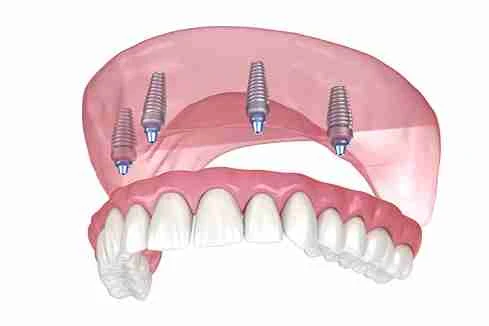
Zygomatic implants are long implants anchored into the dense zygomatic bone rather than the maxillary alveolar ridge. They are primarily indicated in cases of severe anterior and posterior maxillary atrophy where conventional implants are not feasible.
Clinical Indications
- Extreme maxillary bone loss
- Failed bone grafts or sinus augmentation
- Patients unsuitable for extensive grafting
Advantages
- High primary stability due to dense bone anchorage
- Potential for immediate loading
- Reduced need for bone grafting
Limitations and Risks
- Technically demanding surgery
- Risk of sinus-related complications
- Requires advanced training and experience
In specialist centres offering zygomatic dental implants Belfast, these implants are often used as part of full-arch rehabilitation protocols to restore function and aesthetics efficiently.
Overview of Pterygoid Implants
Pterygoid implants engage the pterygoid plate of the sphenoid bone, providing posterior support without sinus involvement. They are particularly effective in addressing distal maxillary deficiencies.
Clinical Indications
- Posterior maxillary atrophy
- Need for distal anchorage to reduce cantilevers
- Patients with adequate pterygoid anatomy
Advantages
- Avoids sinus grafting
- Improves posterior load distribution
- Enhances prosthetic stability
Limitations
- Challenging surgical access
- Steep learning curve
- Limited visibility during placement
In practices focused on advanced dental implant Belfast solutions, pterygoid implants are increasingly used to complement anterior implants for balanced full-arch support.
Key Factors Influencing Clinical Decision Making
Selecting between zygomatic and pterygoid implants is rarely a binary choice. Several interrelated factors must be evaluated to ensure predictable outcomes.
1. Anatomical Considerations
- Bone volume and density
- Maxillary sinus size and position
- Zygomatic bone quality versus pterygoid plate anatomy
2. Patient-Related Factors
- Systemic health and medical history
- Smoking status and healing capacity
- Oral hygiene and long-term compliance
- Expectations regarding treatment time and aesthetics
3. Prosthetic Planning Considerations
- Type of final restoration (fixed vs hybrid)
- Occlusal scheme and bite forces
- Need for cross-arch stabilisation
- Implant angulation and prosthetic access
4. Surgical Expertise and Infrastructure
- Clinician training and experience
- Availability of CBCT imaging
- Access to guided surgery technology
- Surgical setting and anaesthetic options
Successful outcomes depend on aligning all these elements into a cohesive treatment plan rather than focusing on implant choice alone.
Zygomatic vs Pterygoid Implants: A Comparative Perspective
The decision between zygomatic and pterygoid implants should be guided by anatomical and prosthetic requirements rather than personal preference.
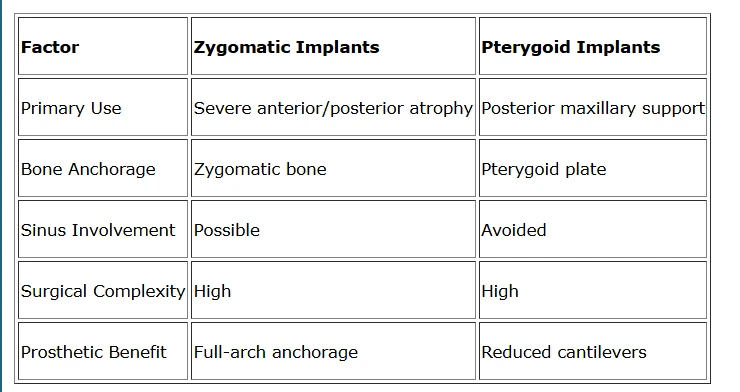
In many complex cases, a combined approach utilising both implant types offers optimal biomechanical support and prosthetic predictability.
Role of Digital Planning and Guided Surgery
Digital workflows have transformed the planning and execution of advanced implant procedures. CBCT imaging allows precise assessment of anatomical structures, while virtual planning software enables accurate implant positioning before surgery.
Benefits of digital planning include:
- Improved surgical accuracy
- Reduced risk to vital structures
- Enhanced prosthetic outcomes
- Greater patient confidence and understanding
Guided surgery is particularly valuable in zygomatic and pterygoid implant placement, where millimetre-level precision can significantly impact safety and success.
Patient Selection and Risk Management in Advanced Implant Cases
Successful outcomes with zygomatic and pterygoid implants rely heavily on careful patient selection and proactive risk management. Not every patient with severe maxillary atrophy is an ideal candidate, making thorough assessment essential before treatment planning. Beyond anatomical suitability, clinicians must evaluate behavioural and systemic factors that influence healing and long-term success.
Key elements to assess include:
- Overall medical status and contraindications
- Smoking habits and lifestyle-related risks
- Ability to maintain long-term oral hygiene
- Psychological readiness for complex procedures
Clear communication regarding risks, benefits, and expected outcomes helps align patient expectations with clinical reality. When patient selection is managed correctly, complications are reduced and implant longevity is significantly improved.

Post-Operative Considerations and Long-Term Outcomes
Post-operative management plays a critical role in the long-term success of advanced implants. Immediate or early loading protocols may be employed, depending on primary stability and prosthetic design.
Key considerations include:
- Regular follow-up and maintenance
- Monitoring peri-implant soft tissues
- Occlusal adjustments as needed
- Patient education on hygiene and care
Long-term studies report high survival rates for both zygomatic and pterygoid implants when placed and restored correctly, reinforcing their value as reliable solutions for severe maxillary atrophy.
Conclusion
Clinical decision making for zygomatic and pterygoid implants requires a careful balance of anatomical assessment, prosthetic planning, patient expectations, and surgical expertise. These advanced solutions have reshaped the management of severe maxillary bone loss, offering predictable, graftless rehabilitation for complex cases. By adopting a comprehensive, patient-centric approach and leveraging modern digital planning tools, clinicians can achieve stable, functional, and long-lasting outcomes. Practices such as Smilo Dental Implant Belfast continue to demonstrate how evidence-based strategies and specialist experience can transform even the most challenging implant cases into successful restorations.