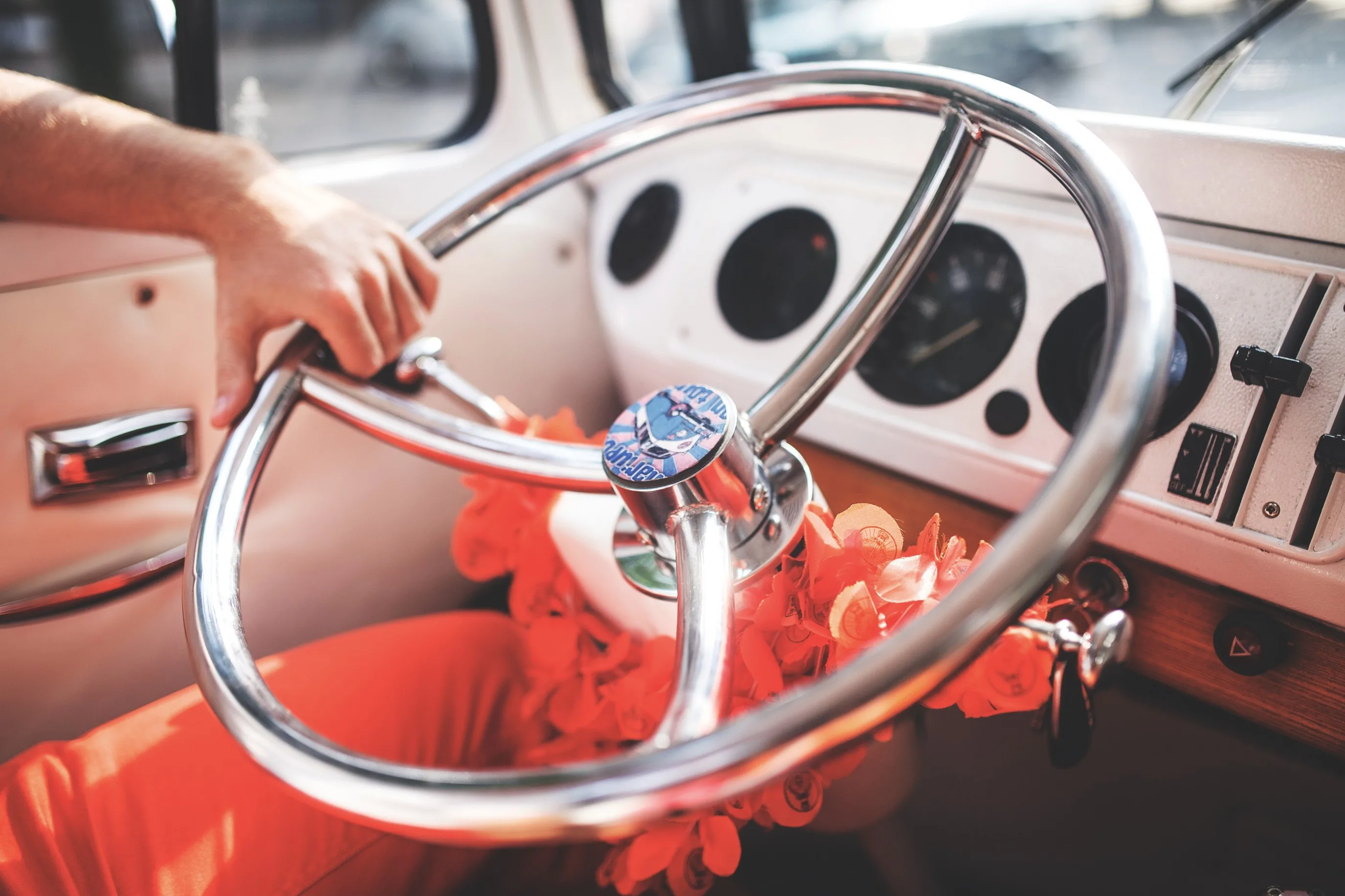
Restoring a vintage Cadillac is a rewarding project, especially when the goal is to preserve the elegance, craftsmanship, and character of a historic automobile. Every detail matters during a restoration, from the dashboard and upholstery to the chrome trim and steering wheel. Among these components, the steering wheel deserves special attention because it is both a highly visible interior feature and an important part of the driving experience.
A classic Cadillac steering wheel can transform the appearance of an interior when it has been properly restored. However, steering wheels that have spent decades exposed to sunlight, heat, moisture, and constant use often develop cracks, discoloration, surface damage, loose components, and deteriorated finishes.
Attempting to restore one without understanding its construction can result in further damage or an inaccurate appearance.
Many restoration mistakes happen because owners focus only on making the wheel look new. Authentic restoration requires more than cosmetic improvement. The correct materials, colors, finishes, hardware, horn components, dimensions, and original design details should all be considered.
Whether you are restoring a Cadillac for regular driving, preserving a family-owned vehicle, or preparing a collector car for a high-quality restoration, knowing what not to do can save time and money.
In this guide, we will explore the most common classic Cadillac steering wheel restoration mistakes and explain how to avoid them.
Why Steering Wheel Restoration Requires Care
A vintage steering wheel is more complicated than it may initially appear. It may contain a metal core, molded material, decorative trim, horn components, an emblem, mounting hardware, and other small components that work together.
Decades of aging can affect each of these areas differently.
Common problems found on vintage Cadillac steering wheels include:
- Surface cracks
- Deep structural cracks
- Discoloration
- Fading
- Brittle material
- Missing sections
- Loose spokes
- Corroded metal
- Damaged horn rings
- Missing center emblems
- Worn finishes
- Improper previous repairs
- Incorrect replacement parts
Some damage is purely cosmetic, while other problems can affect the structural integrity of the wheel.
This is why restoration should begin with inspection rather than immediately moving to sanding, filling, painting, or polishing.
If you are unsure about the condition or originality of your wheel, consulting an experienced Antique Cadillac Parts Dealer can help you identify the correct parts and determine whether restoration is practical.
Mistake 1: Starting Restoration Without Identifying the Wheel
One of the biggest mistakes is beginning work before determining exactly what steering wheel you have.
Cadillac produced numerous models and generations, and steering-wheel designs changed over the years. A wheel that appears similar to another Cadillac wheel may have different dimensions, materials, horn components, mounting arrangements, or decorative details.
Before doing any restoration work, document:
- Cadillac model year
- Model
- Series
- Body style
- Steering-column type
- Original wheel diameter
- Horn-ring design
- Center emblem
- Spoke configuration
- Existing hardware
Take photographs from multiple angles before disassembly.
This documentation can be extremely useful if you need to locate replacement components later.
An Antique Cadillac Parts Dealer may also be able to help identify a steering wheel based on photographs, dimensions, and vehicle information.
Mistake 2: Assuming Every Cadillac Steering Wheel Is Interchangeable
A common misconception is that Cadillac steering wheels from similar years or models can be swapped freely.
That assumption can create serious problems.
Two wheels may have similar styling but different:
- Hub dimensions
- Mounting systems
- Horn contacts
- Column compatibility
- Wheel depth
- Diameter
- Spoke configuration
- Trim components
A steering wheel that looks right may not actually be correct for your vehicle.
Always verify application before purchasing or modifying a replacement.
If the original wheel is missing, research factory references and consult a specialist before selecting another wheel.
Mistake 3: Focusing Only on Cosmetic Appearance
Making a steering wheel look beautiful is important, but appearance should never be the only consideration.
A wheel may have a polished surface and attractive finish while still having structural problems underneath.
Before beginning cosmetic work, inspect:
- Metal core
- Spokes
- Hub
- Rim
- Mounting area
- Horn-ring attachment
- Center section
- Previous repairs
If the underlying structure is compromised, cosmetic restoration will not solve the problem.
The steering wheel is a control component, so structural integrity should always be treated as a priority.
Mistake 4: Ignoring Existing Cracks
Cracks are among the most common problems found on vintage steering wheels.
However, not all cracks are equal.
Some may be shallow surface cracks caused by aging, while others can extend deeper into the wheel's material or expose problems around the underlying structure.
Ignoring cracks and simply covering them with filler or paint can result in a restoration that looks good temporarily but deteriorates later.
Before repairing a crack, determine:
- How deep it is.
- Whether it extends into the structural core.
- Whether surrounding material is stable.
- Whether there are additional hidden cracks.
- Whether professional restoration is required.
A professional restoration specialist should evaluate serious structural damage.
Mistake 5: Using the Wrong Repair Material
Another common mistake is selecting a repair material simply because it is easy to obtain.
Vintage steering wheels can use materials that require compatible restoration products. Modern generic fillers, adhesives, coatings, and paints may not produce the correct results.
An unsuitable repair material can:
- Fail to bond properly
- Shrink
- Crack
- Change texture
- React with the original material
- Create visible repair lines
- Make future restoration more difficult
The restoration material should be selected according to the wheel's original construction and the type of damage being repaired.
When originality matters, avoid shortcuts that may permanently alter the component.
Mistake 6: Removing Too Much Original Material
Aggressive sanding is another mistake that can permanently damage a valuable vintage steering wheel.
It may be tempting to sand heavily until every imperfection disappears. However, excessive sanding can alter the original shape and dimensions of the rim.
This can affect:
- Rim thickness
- Original contours
- Surface texture
- Spoke transitions
- Decorative details
- Overall appearance
The goal should be to remove damaged material only when necessary while preserving as much original material as possible.
A carefully restored wheel should retain its factory character rather than look like a completely modern reproduction.
Mistake 7: Changing the Original Shape
The shape of a Cadillac steering wheel is part of its identity.
Classic wheels often have specific rim profiles, spoke angles, contours, and dimensions that contribute to the character of the vehicle.
During repair, excessive filler or aggressive sanding can unintentionally change those proportions.
This is particularly problematic when restoring a rare or collector-quality Cadillac.
Before making major repairs, photograph and measure the original wheel.
Measurements can include:
- Overall diameter
- Rim thickness
- Hub depth
- Spoke position
- Center-section dimensions
Preserving these measurements helps maintain the correct shape throughout the restoration.
Mistake 8: Using an Incorrect Paint Color
Color matching can be challenging with vintage steering wheels.
A color that appears close under one type of lighting may look completely different inside the vehicle.
Avoid choosing paint based solely on a modern color chart.
Instead, consider:
- Original interior color
- Factory references
- Existing undamaged areas
- Period photographs
- Interior trim
- Original samples
The steering wheel should complement the rest of the Cadillac interior.
An experienced Antique Cadillac Parts Dealer can also help identify period-correct components or finishes when originality is important.
Mistake 9: Painting Before Proper Surface Preparation
Even the correct color will not produce a quality result if the surface is poorly prepared.
Before refinishing, the surface should be appropriately cleaned and prepared for the selected restoration system.
Common preparation problems include:
- Leaving grease on the surface
- Failing to remove contamination
- Painting over unstable material
- Applying coatings over loose finishes
- Skipping necessary surface preparation
- Applying excessive coating thickness
A poor foundation can cause peeling, bubbling, cracking, or uneven texture.
Take the time to prepare the surface correctly instead of rushing to the finishing stage.
Mistake 10: Forgetting the Horn Ring
The horn ring is a major visual feature on many vintage Cadillac steering wheels.
Unfortunately, restoration projects sometimes focus heavily on the wheel itself while treating the horn ring as an afterthought.
This can result in:
- Incorrect chrome finish
- Missing hardware
- Wrong horn-ring shape
- Damaged mounting points
- Poor alignment
- Incorrect horn operation
Before restoration, document the horn ring carefully.
Check how it mounts, where the contacts are located, and how it interacts with the
center section.
If the original component is missing, verify the correct replacement rather than using a visually similar part.
Mistake 11: Losing Small Components During Disassembly
Vintage steering wheels can contain surprisingly small pieces.
During disassembly, you may encounter:
- Screws
- Springs
- Clips
- Insulators
- Contacts
- Washers
- Retainers
- Emblem hardware
Losing one small component can make reassembly difficult.
A simple organization system can prevent this problem.
Use labeled containers or bags for each group of components. Photograph each stage of disassembly and keep notes about the location and orientation of each part.
This is particularly useful when restoration takes several weeks or months.
Mistake 12: Forgetting to Photograph the Original Assembly
Photographs are one of the most valuable restoration tools.
Before removing anything, take detailed photographs.
Capture:
- Front of the wheel
- Rear of the wheel
- Hub
- Horn ring
- Center emblem
- Wiring
- Mounting hardware
- Spoke connections
- Component orientation
Take close-up photographs of areas that may be difficult to remember later.
These images provide a visual reference during reassembly and can also help a specialist identify missing components.
Mistake 13: Replacing Original Hardware Without Checking It
Vintage hardware may look worn, but that does not necessarily mean it should be replaced.
Original screws, clips, brackets, and other hardware can contribute to the authenticity of a restoration.
Before replacing hardware, inspect:
- Threads
- Corrosion
- Dimensions
- Finish
- Strength
- Originality
If replacement is necessary, choose hardware that is appropriate for the application.
Avoid using modern hardware simply because it is convenient if the goal is an authentic restoration.
Mistake 14: Polishing Chrome Too Aggressively
Chrome and metal components can deteriorate after decades.
Aggressive polishing can sometimes remove remaining finish or damage delicate surfaces.
Before polishing, determine whether the component is:
- Solid metal
- Chrome-plated
- Painted
- Anodized
- Coated
Use an appropriate restoration method for the specific material.
If the chrome plating is severely damaged, polishing alone will not restore it. Professional replating may be necessary.
Mistake 15: Replacing the Center Emblem With an Incorrect One
The center emblem is one of the easiest ways to distinguish one Cadillac steering wheel from another.
Using an incorrect emblem can make an otherwise excellent restoration look inaccurate.
Compare:
- Emblem shape
- Size
- Background
- Lettering
- Mounting method
- Finish
- Period styling
If the original emblem can be preserved, restoration is often preferable to replacing it with an unrelated reproduction.
When sourcing a missing emblem, provide your exact Cadillac details to an Antique Cadillac Parts Dealer.
Mistake 16: Ignoring the Steering-Wheel Hub
The hub is critical for both fitment and functionality.
A restored wheel is of little value if the hub does not properly match the steering column.
Before installation, verify:
- Hub diameter
- Spline or mounting configuration
- Nut and retaining hardware
- Horn-contact arrangement
- Wheel depth
- Column compatibility
Never force a wheel onto the column.
If the wheel does not fit correctly, stop and verify the application.
Mistake 17: Installing Parts Based Only on Appearance
Vintage Cadillac restoration requires attention to function as well as appearance.
A part can look nearly identical to the original and still be mechanically incorrect.
This applies to:
- Steering wheels
- Horn rings
- Center caps
- Hubs
- Mounting hardware
- Electrical contacts
Whenever possible, compare part numbers, dimensions, photographs, and application information.
An experienced Antique Cadillac Parts Dealer can often provide more useful information than a generic parts marketplace listing.
Mistake 18: Ignoring the Steering Column
The steering wheel should not be considered separately from the steering column.
Changes or modifications to the column may affect wheel compatibility.
Check whether your Cadillac has:
- Original steering column
- Replacement column
- Modified column
- Different steering components
- Previous restoration work
If the vehicle has been modified by a previous owner, factory application information may not be enough.
In such cases, physical measurements become especially important.
Mistake 19: Trying to Restore Everything Yourself
DIY restoration can be satisfying, but some steering-wheel work requires specialist equipment and experience.
Professional help may be appropriate when dealing with:
- Serious structural damage
- Complex cracks
- Missing sections
- Extensive material deterioration
- Damaged metal cores
- Specialized refinishing
- Chrome restoration
- Difficult color matching
There is nothing wrong with doing basic restoration work yourself, but knowing when to stop is part of good restoration practice.
A specialist may save you from permanently damaging an original and difficult-to-replace component.
Mistake 20: Choosing Modern Appearance Over Original Character
One of the biggest restoration mistakes is making a vintage component look too modern.
A classic Cadillac should retain the visual character of its era.
An overly glossy finish, incorrect color, modern materials, or incorrect trim can make the interior appear less authentic.
Restoration does not necessarily mean making every component look brand new.
In many cases, the best restoration preserves the original character while correcting deterioration and damage.
Mistake 21: Failing to Compare the Finished Wheel With Historical References
Once restoration is complete, compare the finished wheel with reliable references.
Use:
- Factory photographs
- Original brochures
- Period advertisements
- Restoration manuals
- Documented collector vehicles
Look at the wheel from multiple angles.
Ask:
- Is the shape correct?
- Is the color accurate?
- Are the spokes correct?
- Is the horn ring positioned correctly?
- Does the center emblem match?
- Does the finish look appropriate for the period?
This final comparison can identify problems before installation.
How to Restore a Classic Cadillac Steering Wheel Correctly
Avoiding mistakes is easier when you follow a logical restoration process.
Step 1: Document the Original
Photograph the wheel thoroughly before removing anything.
Record dimensions, colors, hardware, and component positions.
Step 2: Inspect the Structure
Look for cracks, loose sections, damaged spokes, and problems around the hub.
Do not begin cosmetic work until structural issues are understood.
Step 3: Disassemble Carefully
Remove the horn ring, emblem, hardware, and other components carefully.
Label every small part.
Step 4: Clean the Components
Remove dirt, grease, and surface contamination using appropriate methods for the materials involved.
Avoid harsh methods that could damage original finishes.
Step 5: Repair Damage
Address cracks, missing material, and structural problems using appropriate restoration techniques.
For serious damage, consult a professional.
Step 6: Restore the Correct Shape
Maintain the original diameter and rim profile.
Avoid excessive sanding or filler.
Step 7: Refinish Appropriately
Match the original color and surface appearance as closely as practical.
Avoid making the finish unnecessarily modern.
Step 8: Restore Decorative Components
Clean or restore the horn ring, emblem, trim, and other details.
Replace missing components only after verifying their correct application.
Step 9: Reassemble Carefully
Use your photographs and notes to restore each component to its original position.
Step 10: Verify Fitment
Before final installation, confirm that the wheel and hub match the steering column.
Never force components into place.
How to Know When Your Steering Wheel Should Be Replaced
Not every steering wheel should be restored.
Replacement may be more practical when the original component has:
- Severe structural damage
- Extensive missing material
- Irreparable deformation
- Major modifications
- Unavailable restoration options
- Excessive restoration costs
However, do not automatically discard an original wheel.
A component that appears badly damaged may still be valuable if its original structure and important features can be preserved.
Consult a restoration specialist or Antique Cadillac Parts Dealer before making the final decision.
Choosing Replacement Parts for Your Restoration
When replacement becomes necessary, accuracy is still important.
Before purchasing a replacement steering wheel, confirm:
- Model year
- Cadillac series
- Body style
- Steering-column compatibility
- Wheel diameter
- Spoke design
- Horn-ring design
- Center emblem
- Finish
- Condition
Avoid generic descriptions such as "fits classic Cadillac" unless the seller provides detailed application information.
The more information you provide, the easier it is to identify the appropriate component.
Why Caddy Daddy Can Help With Cadillac Restoration
Finding authentic vintage Cadillac components can be challenging, particularly when restoring an older vehicle with missing or damaged parts.
Caddy Daddy specializes in vintage and antique Cadillac parts and serves enthusiasts working on classic Cadillac restoration projects.
As a Vintage and Antique Cadillac Parts Dealer, Caddy Daddy can be a useful resource when you need to identify or locate components associated with older Cadillac models.
Whether you are working on steering components, interior parts, transmission components, trim, emblems, or other restoration pieces, accurate application information is essential.
When contacting Caddy Daddy about a classic Cadillac steering wheel, provide as much information as possible about your vehicle, including the year, model, series, and photographs of the existing components.
This information can help make the parts-identification process more efficient.
Questions to Ask an Antique Cadillac Parts Dealer
If you are purchasing a replacement or restoration component, asking the right questions can save you from expensive mistakes.
Consider asking:
Is the part original or reproduction?
Original and reproduction parts can have different values and restoration implications.
What model years does it fit?
Do not rely on a general Cadillac description.
What condition is the part in?
Ask about cracks, repairs, corrosion, missing components, and previous modifications.
Are all components included?
A steering wheel may be sold without the horn ring, emblem, hub, or hardware.
Has the part been restored?
If so, ask what work was performed.
Is the finish original?
This can be important for preservation and collector-quality restorations.
An experienced Antique Cadillac Parts Dealer should be able to provide useful information that helps you make an informed decision.
Classic Cadillac Steering Wheel Restoration Checklist
Before considering your restoration complete, use this checklist:
Identification
- Model year confirmed
- Cadillac model confirmed
- Series confirmed
- Original application verified
Structural Condition
- Rim inspected
- Spokes inspected
- Hub inspected
- Cracks evaluated
- Previous repairs documented
Restoration
- Original shape preserved
- Appropriate repair materials used
- Correct color selected
- Surface properly prepared
- Chrome and trim treated appropriately
Components
- Horn ring checked
- Center emblem verified
- Mounting hardware checked
- Horn contacts inspected
- Small components accounted for
Installation
- Steering-column compatibility verified
- Correct mounting hardware used
- Wheel securely installed
- Horn operation checked
- Steering function verified
Final Thoughts
Restoring a classic Cadillac steering wheel requires patience, research, and attention to detail. The goal should not simply be to make an old steering wheel look new. A successful restoration preserves the wheel's original shape, character, materials, and period-correct appearance while ensuring that the component remains suitable for its intended use.
The most common mistakes include ignoring structural damage, using incorrect repair materials, sanding too aggressively, changing the original shape, choosing the wrong color, losing small components, overlooking the horn ring, and installing a wheel without verifying compatibility.
Taking photographs before disassembly, documenting dimensions, organizing hardware, and researching the original specifications can make the restoration process much more manageable.
If the wheel is severely damaged or difficult to identify, professional assistance is often the safest approach. An experienced Antique Cadillac Parts Dealer can also help locate appropriate components and clarify application details when original parts are missing.
For enthusiasts who want authentic Cadillac restoration parts, Caddy Daddy provides access to vintage and antique Cadillac components and can help enthusiasts searching for parts that support their restoration goals. As a Vintage and Antique Cadillac Parts Dealer, Caddy Daddy understands the importance of selecting parts that are appropriate for classic Cadillac vehicles.
Whether you are restoring a preserved original, building a show-quality Cadillac, or simply bringing a family classic back onto the road, careful steering-wheel restoration can make a significant difference to the finished interior.
Take your time, verify every component, preserve original details whenever possible, and avoid shortcuts that could compromise the authenticity or integrity of your Cadillac. With the right approach, your restored classic Cadillac steering wheel can become one of the standout features of the entire vehicle while maintaining the timeless character that makes vintage Cadillac automobiles so special.