
Why the final years of schooling deserve as much thought as the first
The senior secondary years are often the most defining stretch of a student's academic journey. These are the years when career paths begin to take shape, when board exam results start influencing college admissions, and when a young mind transitions from being a student to becoming an independent thinker. Choosing the right school for this phase is not just about academics — it is about finding an environment that nurtures confidence, clarity, and character alongside marks.
Parents often assume that any school offering classes eleven and twelve will serve the purpose. But the senior secondary stage demands far more specialized attention than earlier years. Subject streams need to be chosen wisely, teachers need to be subject-matter experts rather than generalists, and the school's infrastructure needs to support serious, focused study. A mismatch at this stage can affect not just board exam performance but also a student's confidence heading into competitive exams and higher education.
One of the first things to evaluate is how a school structures its streams — Science, Commerce, and Humanities. A good institution doesn't just offer these streams on paper; it invests in well-equipped laboratories, updated curriculum resources, and teachers who can simplify complex concepts rather than rush through a syllabus. Career counselling also becomes essential at this stage. Students at sixteen or seventeen are often unsure of what they want to pursue, and a school that offers genuine guidance — rather than generic advice — makes a meaningful difference in how confidently a student chooses their path forward.
Beyond academics, the emotional and social environment of a school matters just as much during these years. Board exam pressure, peer comparison, and the uncertainty of what comes next can weigh heavily on teenagers. Schools that maintain smaller class sizes, encourage open communication between teachers and students, and build in regular wellness check-ins tend to produce more balanced, self-assured young adults. Extracurricular exposure, leadership opportunities, and real-world skill-building — through workshops, internships, or project-based learning — also help students build a well-rounded profile that extends beyond report cards.
Location and consistency matter too. Many families in the city specifically look for a well-established Senior Secondary School in Prayagraj precisely because continuity, familiarity with the local academic ecosystem, and proximity to home reduce unnecessary stress during an already demanding phase, allowing students to focus their energy where it matters most.
Infrastructure plays a quieter but equally important role. Well-lit classrooms, updated libraries, functional science and computer labs, and reliable digital learning tools all contribute to a smoother academic experience. A school that invests visibly in its physical and academic infrastructure is usually one that takes long-term student outcomes seriously, rather than treating senior secondary education as a formality before board exams.
Ultimately, the right senior secondary school does more than prepare students for exams — it prepares them for the transitions that follow: college applications, entrance tests, and the independence of adult life. It should feel like a bridge, not a bottleneck, guiding students steadily from adolescence into early adulthood with the right mix of academic rigor and personal support.
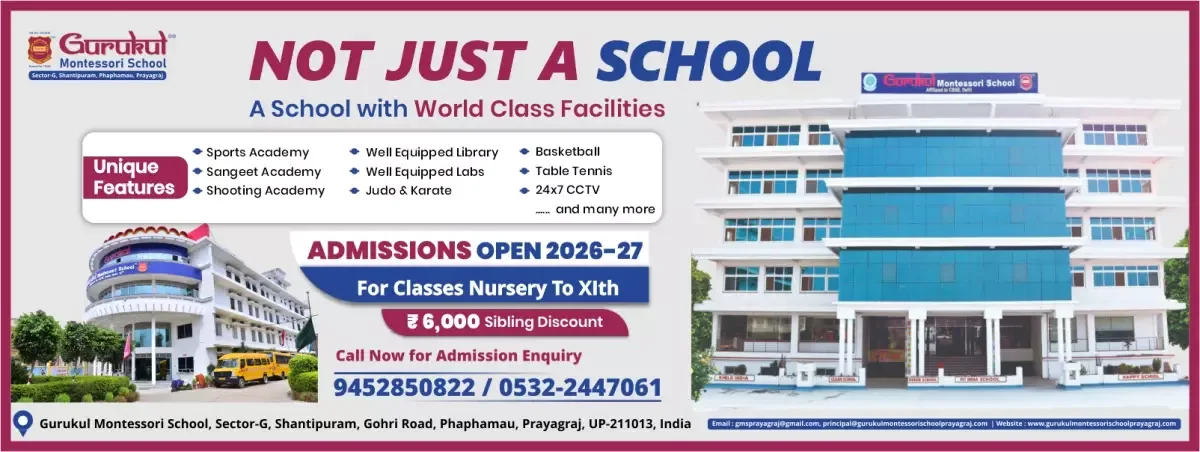
At Gurukul Montessori School, this is exactly the balance that senior secondary education is built around — strong academics paired with genuine mentorship, so that every student steps out not just with good grades, but with the clarity and confidence to shape what comes next.