
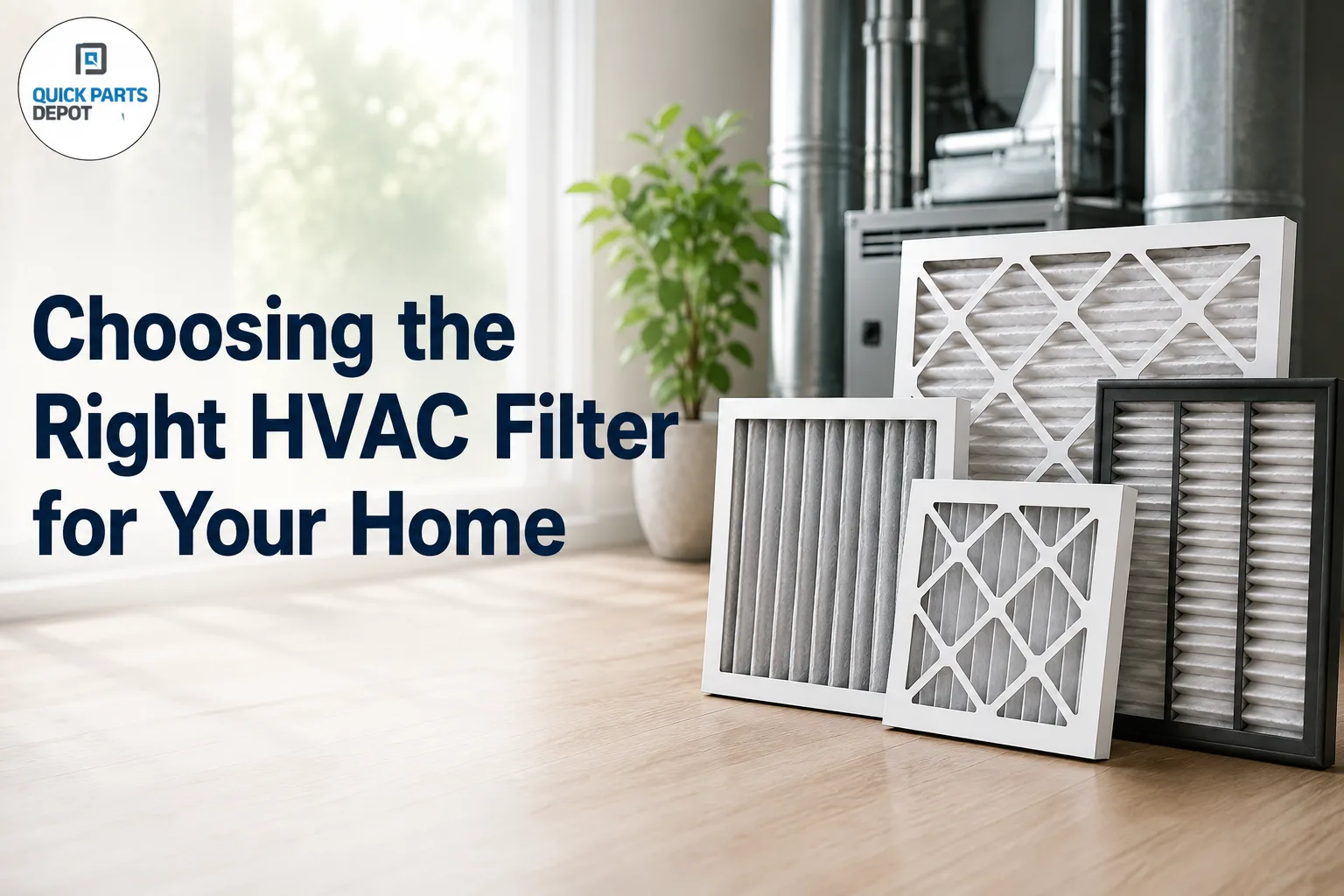
Your HVAC system works hard throughout the year to keep your home comfortable, but one small component plays a much bigger role than many homeowners realize—the air filter. Choosing the right HVAC filter doesn't just improve indoor air quality; it also helps your heating and cooling system run more efficiently and last longer.
With so many filter types and ratings available, selecting the right one can seem confusing. This guide explains what to look for so you can make the best choice for your home.
Why HVAC Filters Matter
An HVAC filter captures airborne particles before they circulate throughout your home. Dust, pollen, pet hair, lint, mould spores, and other pollutants can build up inside your system if the filter isn't replaced regularly.
A quality filter helps:
- Improve indoor air quality
- Reduce dust around your home
- Protect HVAC components
- Improve airflow
- Increase system efficiency
- Extend equipment life
Understand MERV Ratings
One of the first things you'll notice when shopping for filters is the MERV rating (Minimum Efficiency Reporting Value).
Generally:
- MERV 1–4: Basic dust protection
- MERV 5–8: Suitable for most homes
- MERV 9–12: Better filtration for allergy sufferers
- MERV 13+: High-efficiency filtration for homes with greater air quality needs (ensure your HVAC system supports it)
Choosing a filter with an excessively high MERV rating can reduce airflow if your system isn't designed for it.
Choose the Right Filter Type
Different homes have different needs.
Fiberglass Filters
Affordable and suitable for capturing larger dust particles.
Pleated Filters
Provide improved filtration while maintaining good airflow. These are a popular option for many households.
HEPA Filters
Designed for superior filtration, HEPA filters capture extremely small airborne particles. Not every residential HVAC system is compatible with true HEPA filters, so always check system requirements first.
Consider Your Household
Think about your family's lifestyle before choosing a filter.
You may benefit from higher-efficiency filtration if:
- You have pets
- Someone has allergies
- Family members have asthma
- You live in a dusty environment
- Your home experiences seasonal pollen
Don't Forget Filter Size
Using the correct filter size is just as important as choosing the right efficiency rating.
Always verify:
- Length
- Width
- Thickness
Installing the wrong size can allow unfiltered air to bypass the filter.
How Often Should You Replace an HVAC Filter?
Replacement frequency depends on usage and household conditions.
General recommendations:
- Every 30–60 days for homes with pets or allergies
- Every 60–90 days for average households
- Check monthly during periods of heavy HVAC use
A dirty filter restricts airflow and forces your HVAC system to work harder.
Common Signs It's Time to Replace Your Filter
Watch for these signs:
- Reduced airflow
- Increased dust indoors
- Higher energy bills
- Allergy symptoms becoming worse
- Visible dirt on the filter
- HVAC system running longer than usual
Replacing the filter promptly helps maintain system performance.
Benefits of Regular Filter Replacement
Replacing your HVAC filter regularly can:
- Improve indoor comfort
- Support healthier indoor air
- Reduce strain on HVAC equipment
- Help lower energy consumption
- Extend the lifespan of your heating and cooling system
It's one of the simplest maintenance tasks homeowners can perform.
Frequently Asked Questions
Which HVAC filter is best for most homes?
Pleated filters with a moderate MERV rating are a good balance of filtration and airflow for many households.
Can I use the highest MERV filter available?
Not always. Your HVAC system must be designed to handle higher-efficiency filters without restricting airflow.
How do I know when my filter needs replacing?
Inspect it monthly. If it's covered in dust and debris or airflow has noticeably decreased, it's time for a replacement.
Final Thoughts
Choosing the right HVAC filter doesn't have to be complicated. By selecting the proper size, filter type, and efficiency rating, you can improve indoor air quality while helping your HVAC system perform at its best. Regular filter replacement is a simple habit that can make a noticeable difference in comfort, efficiency, and long-term system reliability.