
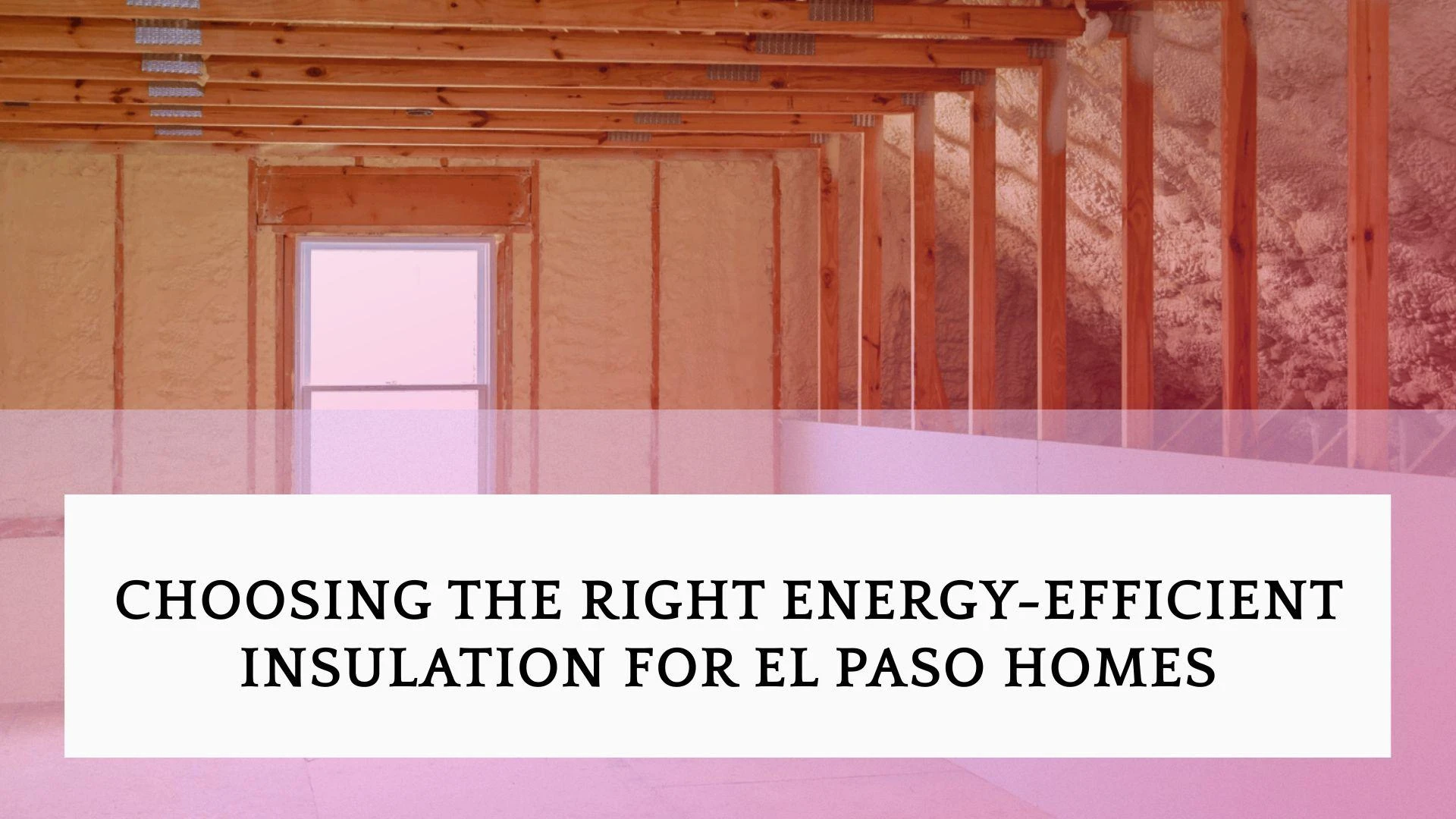
When the sun beats down on El Paso, keeping cool indoors without breaking the bank becomes more than just a seasonal concern. That’s where energy-efficient insulation steps in—not just to shield against summer heat, but to support year-round comfort and cut down on energy bills. But choosing the right insulation for a desert climate like El Paso’s isn’t always straightforward.
Each home has unique needs, and not every insulation material performs equally under the same conditions. Understanding the pros and cons of popular options—spray foam, fiberglass, and cellulose—can make all the difference in achieving maximum efficiency without overspending.
Why Energy-Efficient Insulation Matters in El Paso
Insulation isn’t just about warmth in the winter—it’s a frontline defence against energy waste in the summer, too. El Paso homes experience extreme temperature swings, and without proper insulation, HVAC systems work overtime, leading to rising energy costs. That’s why choosing the right material isn’t just a preference—it’s a strategic investment.
As highlighted in The Real Cost of Poor Insulation, inadequate insulation doesn’t just compromise comfort—it leads to long-term financial loss. So let’s look at the main players in insulation and how they stack up in the El Paso climate.
1. Spray Foam Insulation: Sealing Every Gap
Spray foam insulation is often seen as the gold standard for energy efficiency—and for good reason. Applied as a liquid that expands into every crevice, it forms an airtight seal that virtually eliminates air leakage. This makes it especially useful in attics, crawl spaces, and other hard-to-reach areas.
Pros:
- High R-value per inch (excellent thermal resistance)
- Expands to fill gaps, preventing air infiltration
- Acts as both insulation and air barrier
Cons:
- Higher upfront cost
- Installation must be done by trained professionals
For homeowners serious about cutting down on energy loss, spray foam insulation in El Paso offers top-tier performance. It’s particularly effective in attics, where air leakage is most common. Learn more about how proper attic insulation in El Paso contributes to long-term savings in this supporting guide.
2. Fiberglass Insulation: Affordable and Familiar
Fiberglass remains one of the most commonly used insulation materials in North America. Made from tiny glass fibres, it’s typically installed as batts or rolls and offers a more budget-friendly option for homeowners looking to improve energy efficiency without a hefty upfront investment.
Pros:
- Low material cost
- Easy installation in open spaces
- Non-combustible
Cons:
- Less effective at sealing air leaks
- Can sag or compress over time, reducing effectiveness
- Sensitive to moisture
In a dry climate like El Paso’s, the moisture concern is less of an issue. However, gaps in coverage or poor installation can diminish its performance. This is especially true in older homes where attic insulation may not have been updated in decades.
3. Cellulose Insulation: Eco-Friendly and Effective
Cellulose insulation, made from recycled paper treated with fire retardants, offers a sustainable alternative that performs well in most environments. It’s typically blown into wall cavities and attics, making it ideal for retrofits.
Pros:
- Environmentally friendly
- Good thermal performance
- Fills irregular spaces well
Cons:
- Can settle over time, reducing R-value
- Vulnerable to moisture if not sealed properly
When professionally installed, cellulose can offer solid performance and energy savings. But it requires proper air sealing to avoid performance gaps, which are especially critical in hot climates like El Paso’s.
Matching Material to Climate and Home Design
The choice between spray foam, fiberglass, and cellulose isn’t just about price—it’s about performance in real-world conditions. In El Paso, where heat infiltration can drastically affect energy bills, spray foam insulation often comes out on top for its ability to seal and insulate simultaneously.
That said, every home is different. A well-designed insulation plan should consider not just the material, but also the attic layout, age of the home, and whether the current insulation is doing its job. Curious about your home’s energy efficiency? This introduction to Pink Elephant’s services is a great place to start.
Investing in Long-Term Comfort
While initial installation costs can vary widely, energy-efficient insulation pays for itself over time. According to our internal estimates and data from regional case studies, homeowners who upgrade their insulation often see significant reductions in monthly energy bills—some even cutting them by half. For real-life examples and a deeper dive, see how proper insulation can cut your energy bills in half.
Choose What’s Right for You
Choosing energy-efficient insulation in El Paso is about more than just comfort—it’s about protecting your investment, lowering your environmental impact, and ensuring long-term savings. Whether the decision leans toward high-performance spray foam, cost-effective fiberglass, or eco-conscious cellulose, the key is proper assessment and professional installation.
For those wondering where to begin, a home energy audit or attic inspection can shine a light on areas where insulation may be falling short. When insulation is tailored to local conditions and installed with precision, El Paso homes become true fortresses against both heat and waste.
Explore more about why quality insulation matters in El Paso by visiting The Real Cost of Poor Insulation and consider how small upgrades today can lead to long-term gains tomorrow.