Choosing a hot water system in Malaysia used to be simple: most homes fitted an instant heater in each bathroom and never thought about it again. Today there are more options, including storage heaters, solar systems and heat pumps, and each suits a different kind of home. Picking the wrong one can mean lukewarm showers, higher electricity bills or equipment that does not fit the space. This guide compares the main types of hot water system in Malaysia and explains how to choose the right one for your household.
Start With How Your Household Uses Hot Water
Before looking at any product, it helps to understand your own usage. A few questions make the choice much clearer:
- How many people live in the home, and how many bathrooms need hot water?
- Do several people shower at the same time, for example in the morning?
- Is hot water needed in the kitchen, or for a bathtub?
- Is the home a landed house with roof space, or a condominium with limited outdoor area?
- Is the priority low upfront cost, or lower running costs over many years?
The answers point naturally towards one type of system.
Instant Water Heaters
Instant heaters heat water as it flows, with no tank. They are compact, affordable and quick to install, which is why they are so widely used in Malaysian bathrooms. Because incoming water in a tropical climate is already fairly warm, they deliver comfortable showers without much effort.
Best for: individual bathrooms, apartments and households where each bathroom has its own heater.
Limitations: designed for one outlet at a time, so not ideal for bathtubs or several simultaneous showers from one unit.
Electric Storage Water Heaters
A storage heater warms a tank of water and keeps it ready for use. It can supply several taps at once and fill a bathtub, making it a common choice for larger households.
Best for: families with higher demand, homes with bathtubs, and kitchens that need hot water.
Limitations: takes up more space, and uses energy to keep water hot between uses. Choosing the right tank size matters, since an oversized tank wastes energy.
Solar Water Heaters
A solar water heater uses collectors on the roof to capture heat from the sun and store it in an insulated tank. Most systems include an electric backup element for cloudy days and the monsoon season.
Best for: landed homes with sunny, unshaded roof space and households wanting to cut electricity use significantly.
Limitations: needs suitable roof space and orientation, and has a higher upfront cost. Less practical for most condominiums.
Heat Pump Water Heaters
A heat pump extracts warmth from the surrounding air and transfers it to water, using much less electricity than a conventional element. Malaysia’s warm climate helps heat pumps run efficiently all year.
Best for: households with steady, higher hot water use, and homes without good roof space for solar.
Limitations: higher upfront cost and needs a well-ventilated location for proper airflow.
Comparing the Options Side by Side
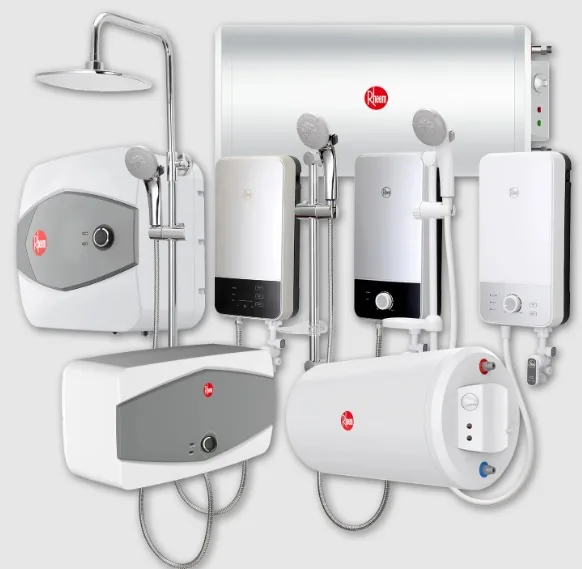
Looking at the whole Rheem Malaysia residential water heating range in one place makes the trade-offs clearer, because it shows instant, storage and renewable options together rather than in isolation. As a simple guide:
- Lowest upfront cost: instant water heater
- Most hot water on demand for several outlets: electric storage heater
- Lowest running cost with good roof space: solar water heater
- Lowest running cost without roof space: heat pump water heater
Many homes also combine systems, for example instant heaters in smaller bathrooms and a storage or renewable system for the master bathroom and kitchen. Homeowners with suitable roofs can explore solar water heaters as a way to reduce electricity use while keeping an electric backup for rainy days.
Installation and After-Sales Support
Whatever system you choose, proper installation is essential. Electrical work should be done by a qualified electrician with suitable circuit protection, and larger systems such as solar and heat pumps need a site check to confirm space, structural support and plumbing. Ask about warranty terms, availability of spare parts and servicing support before you commit, since a hot water system is expected to run for many years.
Conclusion
There is no single best hot water system for every Malaysian home. Instant heaters suit compact, single-bathroom use; storage heaters handle bigger demand; solar and heat pumps cut running costs where the home allows. Match the system to how your household actually uses hot water, and you will get comfortable showers without paying for capacity or features you do not need.