
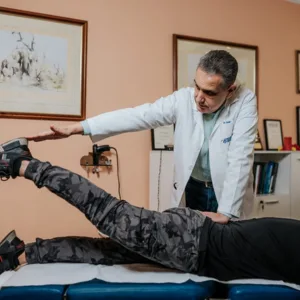
Short answer: Most working professionals in Dubai can fit chiropractic care around a busy schedule if they plan ahead. Check your insurance policy first, ask what documents you will need for claims, book regular slots instead of waiting for pain to peak, and ask your employer about wellness support. A good practice examines you before treating you and explains the plan.
Key takeaways
- Desk work, commuting, and travel are common reasons working adults in Dubai seek spine care.
- Insurance coverage varies, so check your policy before your first visit.
- Ask for a clear invoice and treatment report, which you may need to make a claim.
- Employers can reduce desk-related pain with simple workplace changes.
- A plan with a clear goal and regular reviews fits better around work than open-ended visits.
Many of the people I see as a chiropractor in Dubai have something in common. They are busy. They work long hours, travel often, and put their own health last on the list. By the time they book an appointment, the pain has usually been there for weeks or months.
This guide is for those people. It covers the practical questions I hear most: how to fit care around work, how to check your insurance, what to ask for when you pay, and what your employer can do to help.
Why do so many professionals in Dubai get back and neck pain?
The pattern is familiar. Long commutes mean hours in a car seat. Office days mean hours at a desk. Frequent flights, late meetings, and a sedentary routine add to the load. Many people also train hard in the evening, with padel, CrossFit, or running, after sitting still all day.
None of these habits causes pain on its own. The problem is repetition. The spine is built to move, and when it is held in one position day after day, the discs, joints, and muscles get little chance to recover. Pain usually builds slowly, from stiffness at the end of the day to an ache that no longer eases with rest.
What work-related complaints are most common?
- Lower back pain after long periods of sitting
- Neck and shoulder tension from laptop and phone use
- Headaches that come with a stiff neck
- Pain that spreads into a buttock or leg, often called sciatica
- Tight hips and a sore upper back
Each of these has several possible causes. That is why a proper assessment matters more than quick fixes.
How can I fit chiropractic care around a busy schedule?
A few habits make a big difference:
- Act early. A problem that has lasted a few days is easier to deal with than one that has lasted months.
- Book ahead. Regular appointments in fixed slots are easier to keep than last-minute visits.
- Ask about scheduling when you book, including how long a visit takes.
- Ask for a plan with a goal and review points, so you know how many visits to expect.
- Build short home routines into your day. Two or three minutes of movement between meetings is more useful than one long session at the weekend.
A good plan fits around your life. It is not open-ended. It has a clear goal, such as reducing pain, restoring movement, or helping you return to normal activity, and it is reviewed at set points.
How do I check my insurance coverage?
Coverage differs between policies, so it is worth checking before your first visit. I suggest you contact your insurer, or read your policy, and find out:
- Whether chiropractic care is covered, and under which category
- Whether there is a limit on the number of visits or the amount you can claim
- Whether you need a referral or pre-approval
- Whether you pay up front and claim back, or the practice bills the insurer directly
- What documents the insurer needs to process a claim
My practice accepts insurance and provides documentation to support claims. Because policies differ, I always suggest confirming the details with your insurer in advance.
What documents should I ask for?
To make a claim, you will usually need some or all of the following:
- An itemized invoice showing the date, the service, and the amount
- A treatment report or letter that explains your condition and the care you received
- Any referral or approval your policy requires
Ask the practice for these at the time of your visit, so you are not chasing them later. Keep copies for your own records.
What can employers do about desk-related pain?
Back and neck pain is also a workplace issue. Staff who sit for most of the day benefit from a few simple changes, and these are often low in cost:
- Encourage short movement breaks, such as standing or walking every 30 to 45 minutes
- Check that chairs support the lower back and that screens sit at eye level
- Offer education sessions on posture, movement, and safe lifting
- Support staff who need time for appointments
- Provide a quiet space where people can stretch
Some employers also arrange corporate wellness programs. Employers who would like to explore what is possible can contact the practice to discuss what would suit their team. Early attention to these habits can help prevent short-term aches from becoming long-term problems.
What should I expect at a first visit?
A good first visit starts with a detailed history. I ask about your pain, your work, your commute, your training, and your general health. I then carry out a physical, orthopedic, and neurological examination and review any scans you have.
At the end, you should understand what is causing your pain, what has been ruled out, and what the plan is meant to achieve. If your symptoms point to something outside chiropractic care, I refer you to the right doctor or specialist.
For disc-related back pain, I use Cox Flexion-Distraction Technic, for which I am certified. You can read more about what happens at a first visit on the new patients page.
When should I see a doctor first?
Some symptoms need medical care before any chiropractic treatment. Go to an emergency department if you have loss of bladder or bowel control, numbness around the groin or inner thighs, weakness in both legs, back pain with a fever, or severe pain after a major accident. Arrange a medical assessment within a few days for pain that wakes you repeatedly at night, unexplained weight loss, or weakness that keeps getting worse.
What questions should I ask any chiropractor?
- Which board certifications does the treating practitioner hold?
- Is the practitioner licensed to practice in Dubai?
- What will the first visit include?
- How will my progress be reviewed, and how often?
- What happens if my symptoms point to something that needs another specialist?
- Do I need to pay for a long package before an examination?
A practitioner who is confident in their training answers these questions openly.
Frequently asked questions
Do I need a referral to see a chiropractor in Dubai?
Requirements vary by insurer and by practice. Check your policy before you book.
How long does a visit take?
It depends on the visit. A first visit is usually longer because it includes a full history and examination. Ask the practice when you book.
Can I come during my working week?
Many professionals do. Ask the practice about available times, and plan regular slots where you can.
What if my pain is only mild?
Mild pain that settles within a few days usually does not need treatment. If it keeps coming back, or lasts more than two to three weeks, get it assessed.
This article is for general information and does not replace medical advice. If you are worried about your symptoms, speak with a doctor.
About the author
Dr Gerry Nastasia, DC, DABCO, DIANM, Cert-PSP, is a Dual Board Certified chiropractor and certified Primary Spine Practitioner based in Umm Suqeim 2, Dubai, with more than 36 years of international clinical experience. He is licensed by the Dubai Health Authority and is certified in Cox Flexion-Distraction Technic. He treats back pain, sciatica, disc conditions, neck pain, shoulder pain, and sports injuries.


