Introduction
The HVAC industry is rapidly evolving as sustainability becomes a major priority for businesses worldwide. Today, cooling systems are expected to do much more than deliver reliable performance—they must also meet environmental regulations, reduce energy consumption, and support long-term sustainability goals.
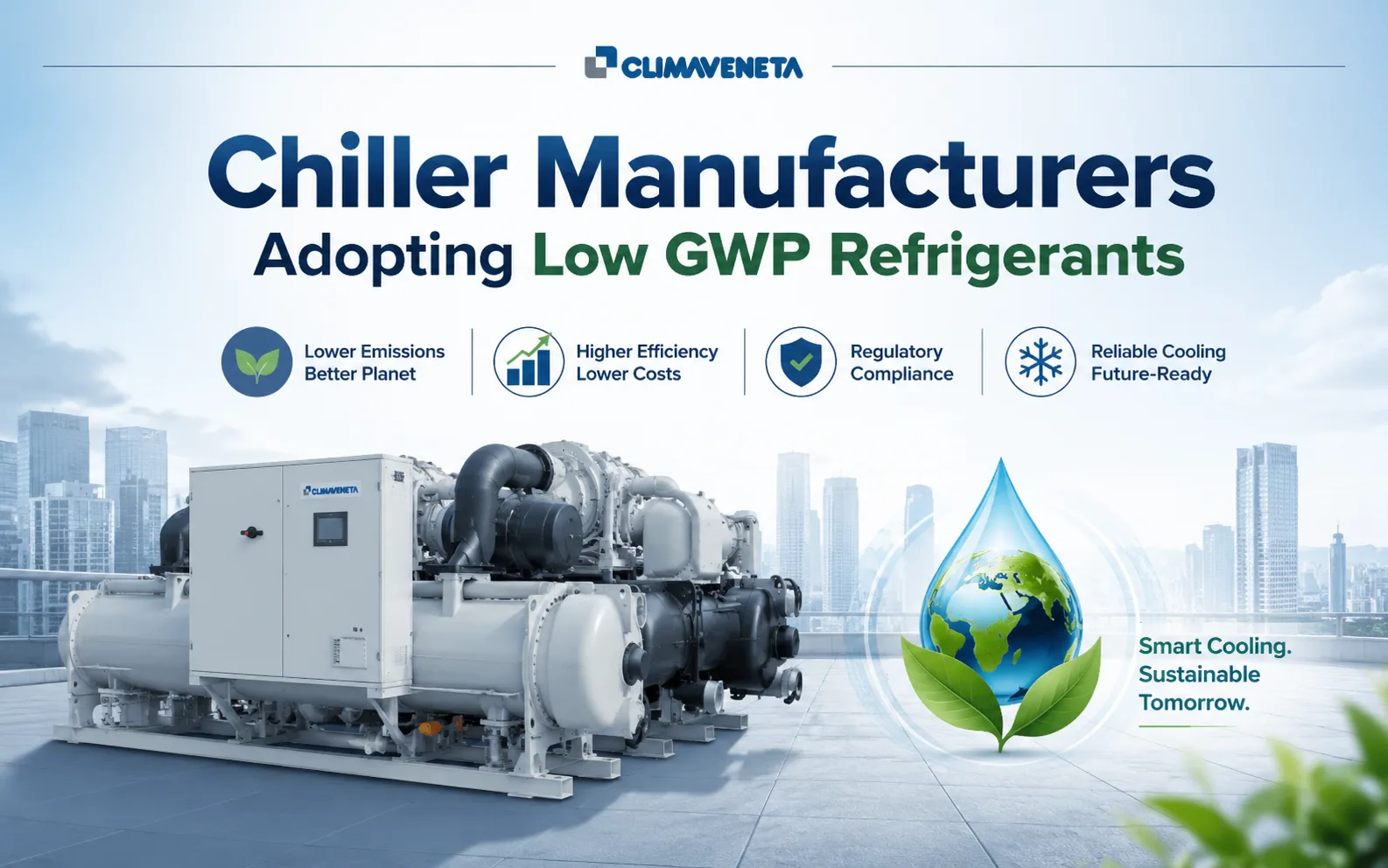
One of the biggest changes driving this transformation is the adoption of low Global Warming Potential (GWP) refrigerants. As regulations tighten and businesses focus on reducing their carbon footprint, chiller manufacturers are redesigning their systems to use refrigerants that deliver both high performance and lower environmental impact.
For organizations investing in Water Cooled Chillers, understanding this shift is essential for making a future-ready investment.
What Are Low GWP Refrigerants?
Global Warming Potential (GWP) measures how much heat a refrigerant can trap in the atmosphere compared to carbon dioxide. Traditional refrigerants such as R-134a and R-410A have relatively high GWP values, making them targets for global phase-down initiatives.
Modern low GWP refrigerants offer significantly lower environmental impact while maintaining the cooling performance required in commercial and industrial applications.
Why Chiller Manufacturers Are Moving to Low GWP Refrigerants
Compliance With Environmental Regulations
Governments across the world are introducing stricter refrigerant regulations to reduce greenhouse gas emissions. Regulations such as the European F-Gas Regulation and the U.S. AIM Act are encouraging manufacturers to transition toward environmentally responsible refrigerants.
For chiller manufacturers, adopting low GWP refrigerants ensures long-term compliance while preparing for future industry standards.
2. Supporting Sustainability Goals
Businesses are increasingly focusing on ESG commitments and carbon reduction targets. Commercial buildings, hospitals, manufacturing facilities, and data centers now evaluate HVAC systems based on both efficiency and environmental impact.
Using low GWP refrigerants in Water Cooled Chillers helps organizations reduce greenhouse gas emissions while supporting sustainable building initiatives.
3. Higher Energy Efficiency
Modern refrigerants work efficiently with advanced compressors and intelligent control systems. This improves part-load performance, reduces electricity consumption, and lowers operating costs.
Key benefits include:
- Reduced power consumption
- Lower operating expenses
- Better cooling efficiency
- Reduced carbon emissions
4. Lower Total Cost of Ownership
Although low GWP refrigerants may have a slightly higher initial cost, they often reduce expenses over the equipment's lifetime through:
- Lower maintenance costs
- Reduced refrigerant leakage
- Better system reliability
- Less downtime
- Longer equipment life
5. Improved Refrigerant Availability
Many high GWP refrigerants are being phased down globally, leading to price fluctuations and supply uncertainty.
By adopting low GWP alternatives, chiller manufacturers help customers reduce future supply chain risks while ensuring easier long-term maintenance.
6. Growing Demand for Green Buildings
Green certifications such as LEED and IGBC have become important considerations for commercial projects.
Modern Water Cooled Chillers using low GWP refrigerants contribute toward improved environmental performance while supporting sustainable construction practices.
7. Better Integration With Advanced Chiller Technology
Today's chillers include features such as:
- Variable speed compressors
- Smart controls
- Heat recovery
- Free cooling
- Remote monitoring
Low GWP refrigerants complement these technologies by delivering stable performance across different operating conditions.
8. Reduced Future Compliance Risks
Environmental regulations continue to evolve worldwide.
Selecting chillers that use low GWP refrigerants helps organizations minimize future retrofit costs, avoid compliance challenges, and protect long-term investments.
9. Future-Ready Cooling Solutions
Cooling demand continues to grow across commercial and industrial sectors. As regulations become more stringent, chiller manufacturers investing in sustainable refrigerants today are better positioned to meet tomorrow's market requirements.
10. Supporting Net-Zero Objectives
Many organizations have committed to reducing carbon emissions over the coming decades.
Low GWP refrigerants help lower the environmental impact of Water Cooled Chillers, making them an important part of long-term net-zero strategies.
Benefits of Choosing Low GWP Water Cooled Chillers
Organizations investing in modern cooling systems can expect several long-term advantages:
- Improved regulatory compliance
- Lower operating costs
- Higher energy efficiency
- Reduced greenhouse gas emissions
- Better refrigerant availability
- Increased asset value
- Long-term sustainability
Conclusion
The transition toward low GWP refrigerants is shaping the future of the HVAC industry. Rather than simply responding to regulations, chiller manufacturers are developing cooling systems that combine energy efficiency, environmental responsibility, and long-term reliability.
For businesses planning to invest in Water Cooled Chillers, selecting systems designed with low GWP refrigerants offers greater operational efficiency, reduced environmental impact, and stronger protection against future regulatory changes.