Pigmentation is one of the most common skin worries in India. Strong sun, pollution, hormonal changes, old pimples and even certain skin products can leave dark patches that refuse to fade. When people finally decide to see a professional, they usually hear two names: chemical peels and laser toning. Both are popular, both are used for pigmentation, and both are often described as “the solution”. The truth is that neither is a universal answer.
This article explains how the two treatments work, where each one is commonly used, what risks to be aware of, and how to decide what suits your skin.
Understanding Pigmentation First
Why skin develops dark patches
Pigmentation happens when skin produces extra melanin in certain areas. Common triggers include sun exposure, inflammation after acne, hormonal shifts, friction, and some medicines. The patch you see on your cheek may look similar to your friend’s patch, yet the cause could be completely different.
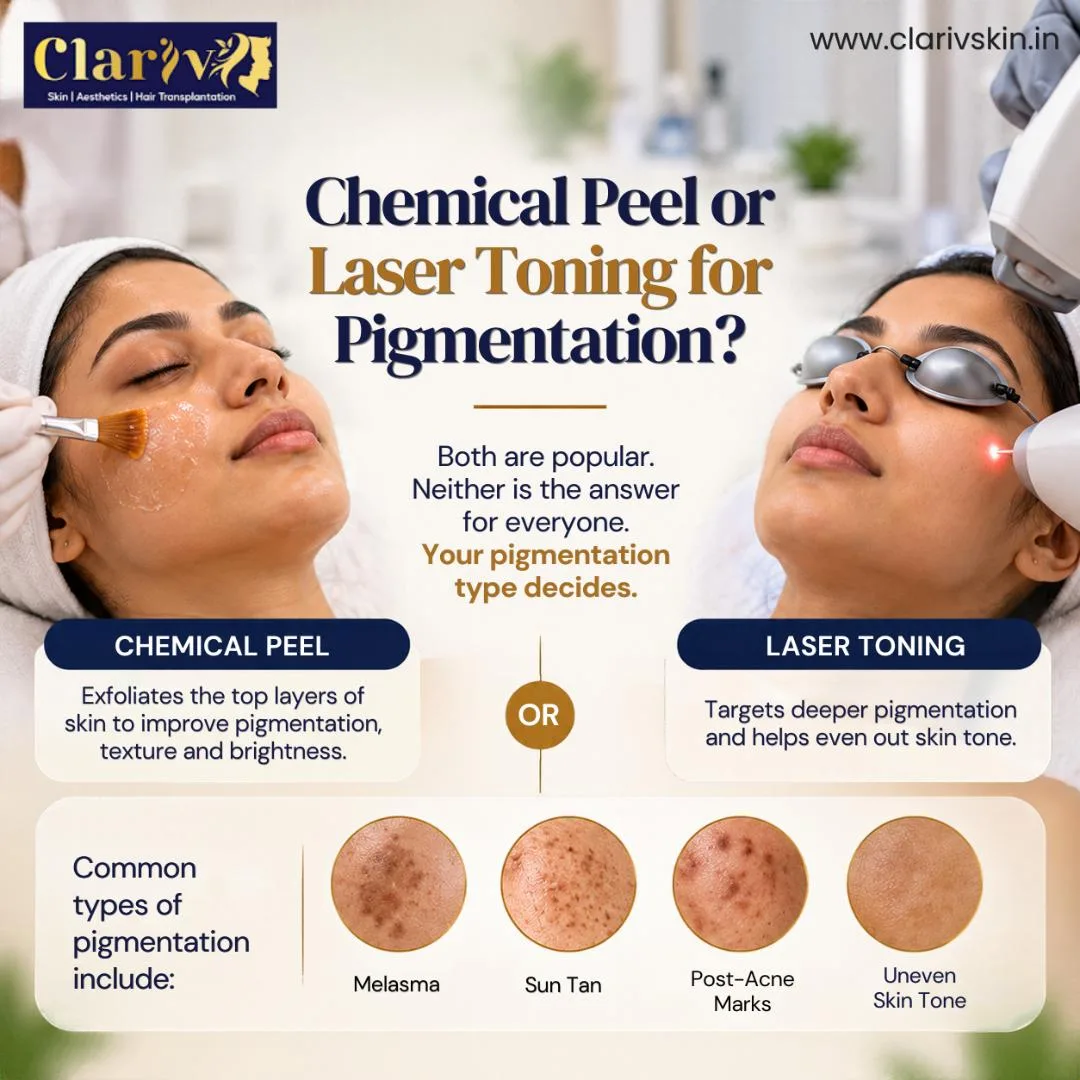
Common types people notice
• Tan and sun spots: patchy darkening on areas exposed to sunlight
• Post-acne marks: flat dark spots left after pimples heal
• Melasma: larger, symmetrical patches, often on the cheeks, forehead and upper lip
• Uneven tone: a general lack of evenness without distinct patches
Why diagnosis matters before treatment
Treating pigmentation without knowing its type is like taking medicine without knowing the illness. Melasma, for example, can react badly to heat and irritation, so an aggressive approach may make it darker. A skin examination by a qualified professional should always come before choosing a treatment.
How a Chemical Peel Works
The basic idea
A chemical peel uses a carefully selected acid solution on the skin for a measured time. It loosens dead, pigmented surface cells so that newer skin can come forward. Common ingredients include salicylic, glycolic, mandelic and lactic acids, each with different strengths and uses.
Concerns where peels are often considered
Peels are commonly discussed for tan, mild post-acne marks, dull skin, rough texture and clogged pores. Because the effect is on the skin’s surface layers, results build over a series of sessions and not in one visit.
What recovery usually looks like
Mild redness, dryness and flaking are common after a peel. Light peels settle in a few days, while stronger peels take longer. Sun protection during this time is essential.
Who may want to be careful
People with very sensitive skin, active infections, recent sunburn or certain skin conditions need to talk to a clinician first. Pregnancy and breastfeeding also call for extra caution.
How Laser Toning Works
The basic idea
Laser toning uses low-energy laser pulses that target pigment in the skin. The aim is to break up excess pigment gradually over multiple sessions without removing the top layer of skin the way a stronger resurfacing treatment does.
Concerns where laser toning is often considered
Laser toning is commonly discussed for stubborn pigmentation, uneven tone and some types of dark patches. It is usually done in a series of sessions spaced a few weeks apart.
What recovery usually looks like
Many people have little visible downtime, though mild redness or sensitivity can occur. Sun protection still matters just as much, because pigment can return when skin is exposed again.
Who may want to be careful
Skin that is freshly tanned or inflamed needs special handling, and the choice of settings matters, especially for deeper skin tones and for melasma. The skill and judgement of the person doing the treatment make a big difference.
Chemical Peel vs Laser Toning: A Side-by-Side View
How they work
A peel works through controlled exfoliation. Laser toning works through light energy targeting pigment. They reach pigmentation through different routes.
Typical use
Peels are often chosen for tan, mild marks and texture. Laser toning is often considered for more stubborn pigment. These are general patterns, not rules, and your own skin may not follow them.
Downtime
Peels can involve visible flaking for a few days. Laser toning usually shows less obvious peeling, although individual response varies.
Number of sessions
Both usually need several sessions. Anyone promising complete clearing in a single visit is overselling.
Cost and convenience
Costs differ from clinic to clinic and depend on the number of sessions and the area treated. Ask for a clear explanation of the plan before you commit, and do not decide on price alone.
Maintenance
Neither treatment is permanent on its own. If sun exposure continues without protection, pigmentation can return. Sunscreen and a simple routine matter more than any single procedure.
So, How Do You Decide?
Start with your skin type and pigment type
Light tan or mild post-acne marks may respond to a gentler peel series. Deeper or more stubborn patches may need a different approach, or a combination planned by a professional. Melasma in particular needs careful, conservative handling.
Think about your lifestyle
If you travel a lot, work outdoors or cannot avoid long sun exposure, tell your clinician. Recovery and aftercare need to fit your routine, or results will suffer.
Consider your skin’s sensitivity
If your skin reacts easily to products, a patch test or a gentler starting point is wise. Do not rush into a strong treatment because someone online had a good result.
Check the timeline
If you have an event coming up, start early. Treating pigmentation takes weeks to months, and skin needs rest between sessions.
Ask the clinic these questions
• What type of pigmentation do I have?
• Why do you recommend this treatment for my skin?
• How many sessions might I need, and what is realistic?
• What are the risks for my skin tone?
• What should I do at home between sessions?
A clinic that answers clearly, without pressure, is usually one worth trusting.
Looking for Chemical Peel Options Around Electronic City?
If you live or work in this part of Bangalore, you may be searching for chemical peel treatment in Konappana Agrahara or in nearby areas such as Hosa Road and Hulimangala. Since treatments need repeat visits, a location that is easy to reach helps you stay consistent. Still, the quality of assessment should always come before convenience.
Aftercare That Protects Your Results
Sunscreen every single day
Broad-spectrum sunscreen is the most important habit for anyone treating pigmentation. Apply it every morning, reapply if you are outdoors for long, and add a cap or umbrella during peak hours.
Keep the routine gentle
Use a mild cleanser and a plain moisturiser. Avoid scrubbing, picking at flaking skin, and starting several new products at once.
Follow the clinic’s instructions exactly
Aftercare is not optional extra advice. It is part of the treatment. If something feels wrong, such as severe burning, swelling, blisters or worsening pain, contact the clinic without delay.
How Clariv Skin Approaches Pigmentation Concerns
At Clariv Skin, the first step is understanding your skin, your history and what you hope to change. The conversation covers the type of pigmentation, your routine, sun exposure and any past reactions. A treatment is suggested only after that, and the plan is explained in simple terms, including what is realistic and what is not. Results vary from person to person, so every plan is built around the individual.
Frequently Asked Questions
Is a chemical peel or laser toning better for pigmentation?
Neither is better for everyone. The right choice depends on the type of pigmentation, your skin tone and sensitivity, and your lifestyle. A professional assessment is the best way to decide.
Can I combine both treatments?
Sometimes clinicians plan a combination or alternate approaches, but this must be decided by a professional after examining your skin. Do not try to combine treatments on your own.
Will pigmentation come back after treatment?
It can, especially if you spend time in the sun without protection or if hormonal or other triggers continue. Maintenance, sunscreen and follow-ups help keep results stable.
How long before I see a change?
Most people need several sessions and some weeks before a visible difference appears. Be cautious of anyone promising fast, guaranteed results.
Is it safe for Indian skin tones?
Both treatments are used on Indian skin, but deeper skin tones are more prone to post-treatment darkening if the strength or technique is wrong. Choose a clinic that understands this and plans carefully.
Final Thoughts
Choosing between a chemical peel and laser toning is less about which treatment is popular and more about what your skin actually needs. Understand your pigmentation, ask honest questions, and be wary of quick promises. If you are searching for chemical peel treatment in Konappana Agrahara or nearby, a consultation at Clariv Skin is a simple way to understand your options before you decide.
Contact Details
Clariv Skin — Hair, Skin & Aesthetic Clinic
📞 Phone: +91 77600 56665
📧 Email: [email protected]
Follow Us on Social Media
Facebook | Instagram | Pinterest | YouTube | X (Twitter)