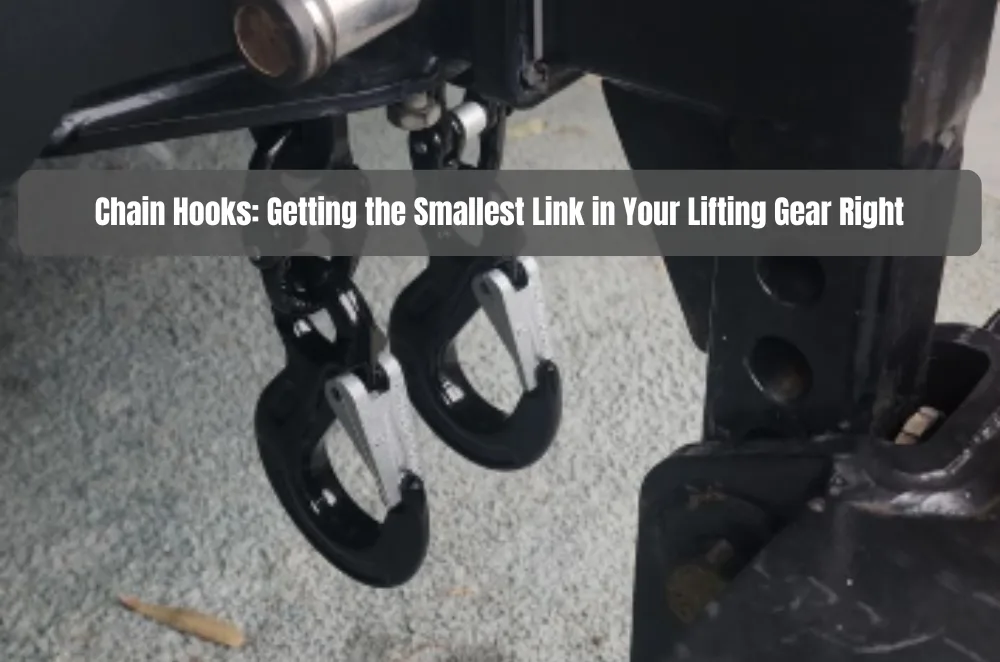
We talk a lot about cranes, winches and synthetic slings, yet the humble hook often decides whether a lift finishes smoothly or grinds to an expensive halt. A chain hook’s size, grade and latch design all shape how safely a load rises, swings and lands. Skip the detail and that two-dollar part can undermine gear worth thousands.
Why Hook Selection Still Matters in 2026
Building schedules keep tightening, especially on inner-city sites where road closures and crane windows cost serious money. The right chain hook range keeps lifts moving because it slots straight into the chain grade, doesn’t foul the sling eye and meets the load rating at a glance. Treat hooks as consumables and they’ll fail the visual inspection long before a test bench ever sees them.
Over the past year manufacturers have narrowed tolerances and improved latch springs, yet field breakages are still traced back to mismatched components. A Grade 100 chain can only live up to its rating if every hook in the assembly shares that grade. Stick a lower-grade connector in the middle and the working load limit drops to the weakest part without warning.
Spotting the Telltale Signs a Hook Doesn’t Fit the Job
Hairline nicks at the saddle, bent latch pins or even paint rubbed off around the throat are all precursors to failure. They often appear after a single overload or when a rigger twists the sling to make a cramped pick point. Surface fatigue shows first because hardened alloy steels hide internal damage until it’s too late. Keeping hooks in sealed boxes rather than loose in the toolbox also prevents that slow grind of grit that widens the throat opening.
Site audits in Brisbane and Perth last quarter revealed another pattern: hooks swapped between chain and wire rope assemblies. The hardware might look similar, yet the hook eye diameter, latch spring pressure and even the alloy chemistry differ. That mismatch accelerates wear and shortens the inspection cycle, eating into hire margins and stopping work while replacements arrive.
Matching Hook Grades to Common Loads
Choosing a hook grade is simpler when the typical load categories stay in view. A 600 kg air-conditioning compressor demands far less than a 4-tonne precast panel, yet margin for surprise matters. Logistics teams often add extra fixtures—stillages, dunnage, bumpers—without telling the lifting crew. Building a comfortable buffer avoids nasty surprises on the day.
Below is a quick comparison many supervisors tape inside the site shed. It doesn’t replace the rigging plan, but it steers day-to-day swaps away from guesswork.
Common Load TypeTypical Mass (rounded)Suggested Chain GradeHook StyleKey Watch-PointRoof HVAC package0.6 – 1 t80Self-locking clevisEnsure latch closes fully around frame eyeBrick cage1.2 – 1.5 t80Swivel eyeCheck for side-loading when lowering in windFormwork bundle2 – 3 t100Grab hookNever use where sling angles exceed 60°Precast wall panel4 – 6 t100Foundry hookConfirm throat opening suits lifting clutchSite generator7 – 8 t120*Sling hookVerify actual plate thickness before engaging*Grade 120 hooks are still rolling out across Australia and may not yet appear on every supplier’s shelf.
Chain hooks quickly become the workhorse item crews reorder. When inspecting stock, pull apart a sample set and run the part numbers through the manufacturer catalogue. If they don’t trace back to the same grade, retire the outliers.
A full catalogue picture helps when supervisors need to source extras at short notice. The printable comprehensive chain hook catalogue groups hooks by grade first, then style, reducing those frantic calls asking which latch they should grab.
Grade numbers alone won’t save a job. Look at throat opening, eye diameter and latch style. A grab hook handles shortening duties beautifully yet can bite into a sling eye if the contact surface is too small. Swivel hooks prevent load rotation from twisting the chain, but their extra moving parts require tighter inspection intervals.
Ready to take the next step? Visit our Learn more to find out more.
Keeping Compliance Front and Centre
Australian Standard AS 3775 sets the inspection cadence and discard criteria for chain slings and their components. While third-party inspectors mark the formal schedule, supervisors still shoulder the day-to-day checks. Each hook needs a traceable mark showing grade, manufacturer and batch. Miss that and the gear can be tagged out even if it’s brand-new.
Load charts change from one OEM to the next, so laminate the sheet that matches the hook brand on your rack. In a mixed-fleet environment, colour-code the tags—one colour per grade—so a rigger spots an 80 series hook in a 100 series sling before the lift starts.
Beyond the standards, workplace regulators watch lifting gear closely. Current Safe Work Australia guidance reinforces that duty holders must keep equipment in a condition that will not put anyone at risk. Translating that into practice usually means tightening pre-start checklists: measure the throat opening with callipers, verify the latch spring pushes home without binding and photograph serial numbers after any short-term rental returns.
An underrated compliance edge lies in staff rotation. The operator who uses the same hook daily can miss subtle changes. Swapping inspection duties every fortnight introduces fresh eyes and catches wear earlier.
Small Gear, Big Safety
Spend a little time matching hook grade, style and rating to the real-world lifts on your programme, and most headaches evaporate. When the load rises smoothly, nobody notices the hook—or the planning behind it. That silence is the surest sign the smallest link in the chain is finally pulling its weight.