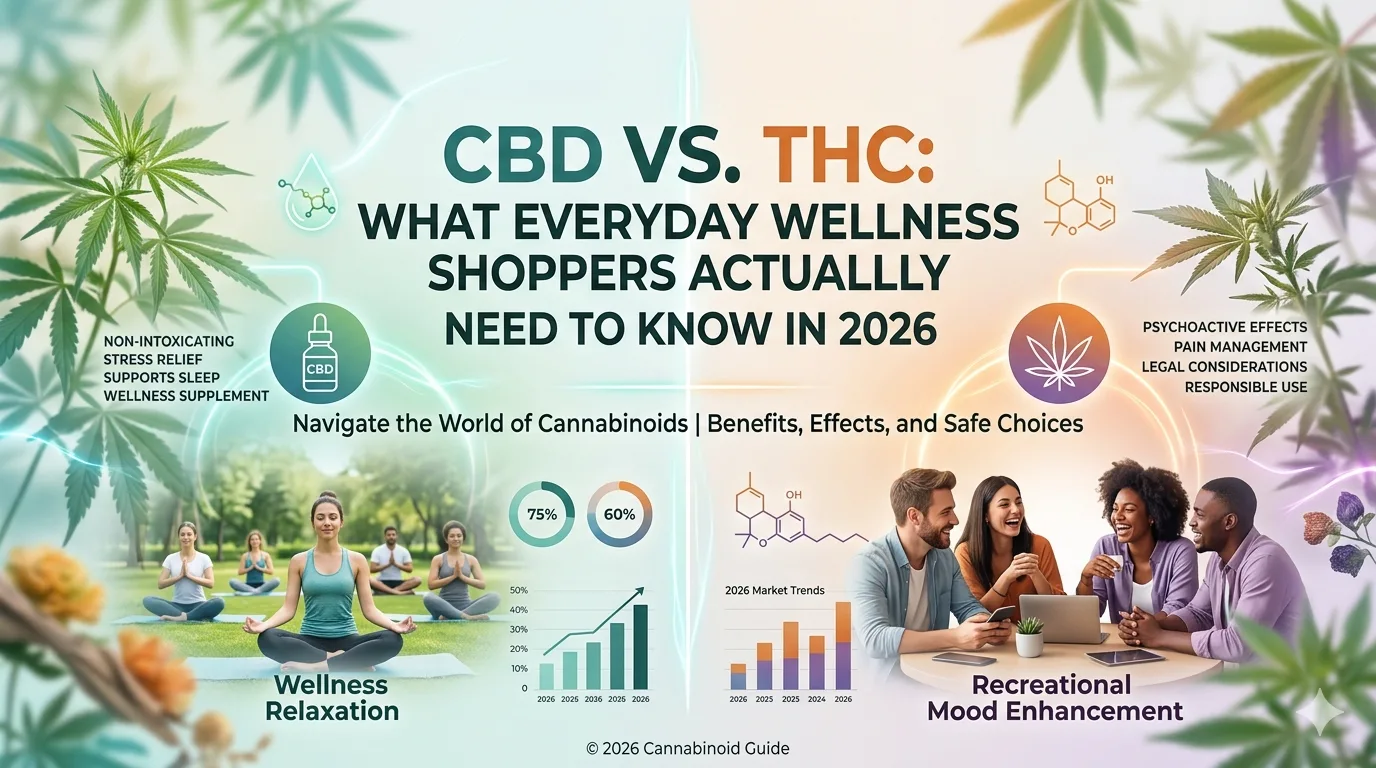
If you've spent any time in a hemp shop or scrolled through a wellness brand's website lately, you've probably seen CBD vs THC mentioned in the same breath — sometimes interchangeably, sometimes as opposites. The confusion is understandable. Both come from the cannabis plant, both have passionate supporters, and both are showing up in everything from gummies to tinctures to vapes.
But they are not the same thing. And if you're shopping for wellness benefits — better sleep, less anxiety, relief from daily aches — knowing the difference can save you money and a lot of trial and error.
Here's what I've learned from working with customers at Hemp & Barrel in Pineville, NC, day in and day out.
They Come From the Same Plant, But Work Very Differently
Cannabis plants produce hundreds of chemical compounds called cannabinoids. CBD (cannabidiol) and THC (tetrahydrocannabinol) are the two most abundant and most studied. They share an almost identical molecular structure — but that one small difference in atomic arrangement changes everything about how your body responds to them.
THC binds directly to the CB1 receptors in your brain. That binding is what produces the "high" — the altered perception, the euphoria, the sometimes uncomfortable racing thoughts if you take too much. It's a powerful interaction.
CBD works differently. Rather than binding to those receptors directly, it modulates the endocannabinoid system in a more indirect way. It doesn't produce intoxication. Most people describe the effect as a quiet calm — not a buzz, just a noticeable reduction in tension.
The Legal Landscape in 2026
This is the part most shoppers find confusing, and honestly, it changes frequently enough that it pays to stay current.
Hemp-derived CBD is federally legal in the United States under the 2018 Farm Bill, as long as the product contains less than 0.3% Delta-9 THC by dry weight. That's what makes hemp shops like ours possible — we sell CBD oils, capsules, and topicals that comply with that threshold.
Hemp-derived THC is more nuanced. THCA (tetrahydrocannabinolic acid) is a non-intoxicating precursor to THC that exists in raw hemp flower. When heated — through smoking or vaping — THCA converts to Delta-9 THC. Many hemp retailers now carry THCA flower and vapes that are technically compliant at the point of sale but behave similarly to traditional cannabis once consumed.
Marijuana-derived THC remains a Schedule I controlled substance federally, though many states have legalized it for medical or recreational use.
The bottom line: what's legal depends on where you live and what specifically you're buying. When in doubt, ask. Any reputable hemp retailer should be able to walk you through the compliance status of every product they carry.
What Are People Actually Using These For?
I'll be honest: neither CBD nor THC is FDA-approved to treat or cure anything (with one exception — a CBD-based drug called Epidiolex is approved for certain seizure disorders). What I can share is what customers tell us they use these products for, and what the research landscape looks like.
CBD is most commonly used for:
- General stress and anxiety relief
- Improved sleep quality
- Mild inflammation and joint discomfort
- Recovery support after workouts
- Pet wellness (yes, CBD pet products are a real and growing category)
THC is most commonly used for:
- Deeper sleep support (particularly useful for people who wake during the night)
- Appetite stimulation
- More significant pain relief, especially chronic pain
- Recreational enjoyment
Research is ongoing for both compounds. The evidence for CBD and anxiety is among the most promising in the literature. The evidence for THC and pain is more established but comes with the caveat that intoxication is a side effect many daytime users want to avoid.
How People Consume Them
The delivery method matters as much as the compound itself. How you consume CBD or THC affects how quickly it works, how long it lasts, and how intense the experience is.
Oils and tinctures — held under the tongue for 30–60 seconds before swallowing — typically kick in within 15–45 minutes and last 4–6 hours. They offer precise dosing.
Edibles and capsules take longer (30 minutes to 2 hours) because they pass through the digestive system first, but the effects tend to be longer-lasting — sometimes 6–8 hours. This delay is also why people sometimes accidentally overconsume; they don't feel anything and take more before the first dose has hit.
Vapes and flower are the fastest onset — within minutes — because the compound enters the bloodstream through the lungs. Effects are shorter-lived, usually 1–3 hours. For people who need rapid relief, vaping is often the preferred method.
Topicals (creams, balms, patches) work locally — they don't enter the bloodstream in meaningful amounts, so they won't produce any systemic or intoxicating effects. They're popular for joint and muscle discomfort applied directly to the site of pain.
The Entourage Effect: Why "Full Spectrum" Matters
Here's something that doesn't get enough attention in basic CBD vs. THC explainers: cannabinoids don't work in isolation. Your body has an endocannabinoid system that responds to dozens of plant compounds simultaneously — cannabinoids, terpenes, flavonoids — and research suggests they work better together than any single compound alone. This is called the entourage effect.
That's why you'll often see hemp products labeled as:
- Full spectrum — contains CBD plus trace amounts of THC (under 0.3%), along with other cannabinoids and terpenes
- Broad spectrum — similar to full spectrum but with THC removed
- Isolate — pure CBD with everything else stripped out
For most wellness shoppers, full spectrum tends to deliver the most complete experience. But if you're subject to drug testing at work, broad spectrum or isolate is the safer bet — trace THC in a full spectrum product can, in some cases, produce a positive drug test.
Start Low, Go Slow
This is the single most important piece of advice I give every first-time customer. Whether you're starting with CBD or exploring a low-THC product, begin with the smallest dose the product recommends. Give it time — at least a week at a consistent dose — before deciding it isn't working. And talk to your doctor if you're managing a medical condition or taking prescription medications, since cannabinoids can interact with certain drugs (CBD, in particular, can affect how your liver processes some medications).
Hemp and cannabis products are not one-size-fits-all. Body chemistry, metabolism, and the specific condition you're addressing all play a role. What works for a neighbor may not work for you at the same dose.
Where to Start If You're New
If you're completely new to hemp products, CBD oil or a CBD gummy is the lowest-risk entry point. No intoxication, legal everywhere hemp is sold, and easy to control your dose.
If you've tried CBD and want something stronger — or you're in a state where hemp-derived THCA products are available — a THCA vape or THCA flower gives you a closer experience to traditional cannabis while still sitting within the hemp category.
Either way, buy from a retailer who can show you a Certificate of Analysis (COA) — a third-party lab test that verifies the cannabinoid content and confirms the product is free of pesticides, heavy metals, and solvents. Any retailer who can't produce one for any product they sell is a retailer to avoid.