The living room is one of the most frequently used spaces in a home. It needs to be comfortable enough for relaxing, practical enough for everyday life and stylish enough to feel like a considered part of the property.
Creating that balance does not necessarily require a complete redesign. Often, choosing furniture with the right proportions and combining practical pieces with comfortable seating can transform the way a room feels.
From choosing the right sofa to positioning a coffee table and adding occasional seating, a few thoughtful decisions can make a significant difference.
Start With the Room's Layout
Before buying new furniture, look at the layout of the room. Consider where people naturally walk, where natural light enters and which areas are most suitable for conversation.
The sofa will usually be the main focal point, so its position should form the foundation of the layout. Avoid pushing every piece of furniture against the walls simply because there is more floor space in the centre. Depending on the room, bringing furniture slightly inward can create a more intimate seating area.
Think about how many people need to use the room at once. A family living room may require several seating options, while a smaller room may benefit from fewer but better-proportioned pieces.
Choose Seating for Comfort
Comfort should be one of the most important considerations when selecting living room furniture. A sofa may look impressive, but if it is uncomfortable to sit on, the room will not work as well as it should.
Consider the depth of the seat, the height of the back and the amount of support provided. Your preferred seating style will depend on how you use the room.
If you enjoy relaxing, watching television or reading for long periods, deeper and more supportive seating may be preferable. If the room is used mainly for conversations and entertaining, a more upright seating arrangement could be suitable.
It can also be useful to include different types of seating rather than relying entirely on one sofa.
Add Flexible Seating With Armchairs
An armchair can provide additional seating without requiring the space of another full-sized sofa. It can also introduce a different shape, texture or colour into the room.
When looking at armchairs for sale, consider both the chair's dimensions and how it will interact with the rest of your furniture.
A large armchair can become a statement piece, while a smaller design may be better suited to a compact living room. The chair should leave enough space for people to move around comfortably.
Positioning is important too. An armchair placed opposite the sofa can create a natural conversation area. Alternatively, placing one beside a window can create a dedicated reading corner.
Don't Overlook the Coffee Table
A coffee table is a practical addition that can also help bring a seating arrangement together. It provides a convenient surface for drinks, books, decorative objects and other everyday items.
The size of the table should relate to the surrounding furniture. A coffee table that is too large can make a room feel cramped, while one that is too small may look disconnected from the seating area.
A coffee table should also leave enough space around it for people to move comfortably. Think about the distance between the table and sofa as well as the pathways through the room.
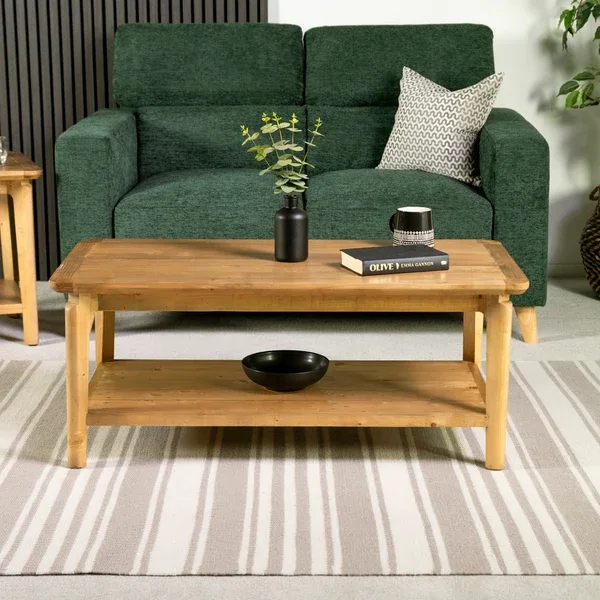
Shape can make a difference. A rectangular coffee table can work well with a traditional sofa arrangement, while round or oval designs may help soften rooms with lots of straight lines.
Create a Balanced Colour Scheme
Colour can influence the atmosphere of a living room considerably. Neutral furniture can provide a versatile foundation, while cushions, throws, artwork and accessories can introduce additional colour.
You do not need every item to match perfectly. In fact, using complementary tones and different textures can create a more interesting interior.
For example, a neutral sofa can be paired with a textured armchair, wooden coffee table and patterned accessories. This creates visual variety without making the room feel overly busy.
Consider the colours already present in the room, including flooring, walls, curtains and larger decorative pieces.
Introduce Natural Materials
Natural materials can help make a living room feel warmer and more inviting. Wood, in particular, can introduce texture and character.
A wooden coffee table can provide a useful contrast against upholstered sofas and chairs. Wooden details can also be repeated through shelving, side tables, flooring or decorative accessories.
The aim is not to fill the room with one material but to create a mixture of textures that gives the space depth.
Leave Enough Space to Move
One of the most common mistakes when furnishing a living room is trying to fit too much furniture into the available space.
A room can have beautiful individual pieces but still feel uncomfortable if there is insufficient space to walk between them. Before purchasing furniture, measure the available floor area and mark out the approximate dimensions of each piece.
Remember to account for doors, windows, radiators and other fixed features. A visually appealing layout still needs to work practically.
Think About How the Room Will Be Used
Every living room has a different purpose. Some are primarily used for watching television, while others are designed around conversation, reading or entertaining.
If the room is family-focused, durability and easy maintenance may be priorities. If it is mainly an entertaining space, you may want to create several comfortable seating positions.
For multifunctional rooms, flexible furniture can be particularly valuable. An armchair can provide a reading position during the day and additional seating when guests arrive.
Finish With Personal Details
Once the main furniture is in place, accessories can help make the room feel personal. Cushions, throws, artwork, plants and decorative objects can introduce colour and texture.
Avoid adding accessories simply to fill empty surfaces. Instead, choose pieces that reflect your personality or complement the room's overall style.
A comfortable living room should ultimately feel lived-in rather than staged.
Creating a Room That Feels Right
A successful living room combines comfort, proportion and personality. Start with the layout, choose seating that suits the way you live and add practical pieces such as a coffee table.
Armchairs can provide flexibility, while carefully chosen materials and accessories can bring warmth and character to the space.
Rather than following every interior trend, focus on creating a room that works for your household. When furniture is comfortable, appropriately sized and thoughtfully arranged, even a relatively simple living room can become one of the most enjoyable spaces in the home.