I Almost Repacked My Entire Backpack
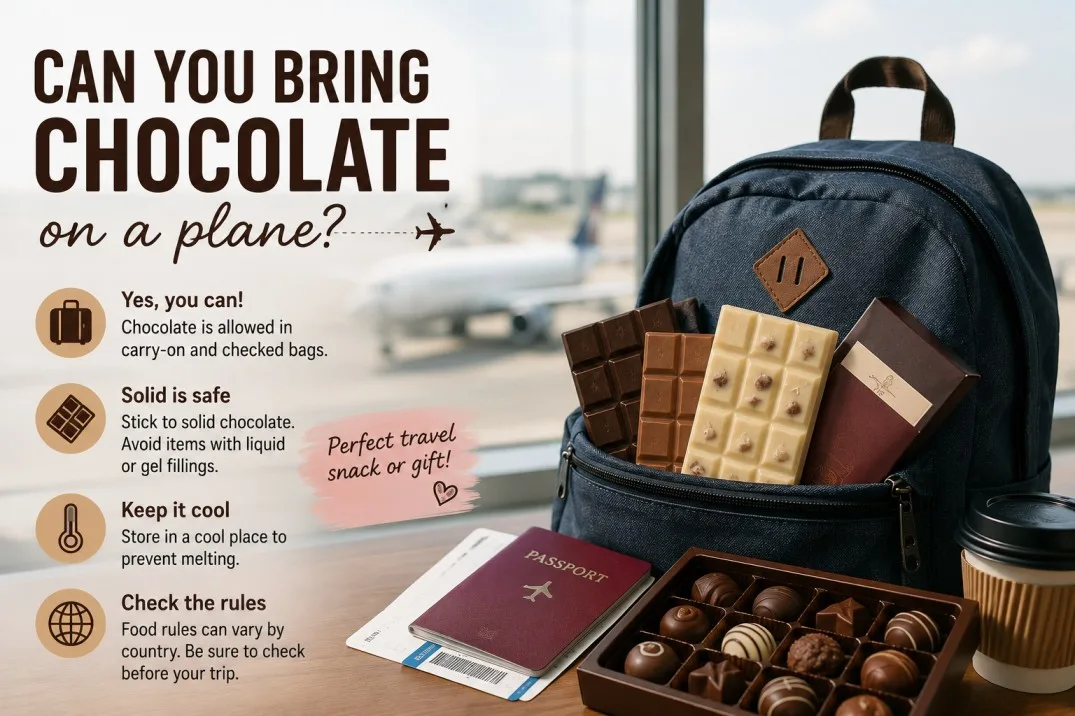
On a recent flight from New York to Mumbai, I had one small backpack that I planned to keep under the seat in front of me. It contained my passport, headphones, charger, a book, and a few snacks for the long journey.
Just before leaving for the airport, I added three boxes of chocolates that I had bought for my cousins in India. The moment I zipped the bag, I hesitated.
I wasn’t worried about the weight. I was worried about airport security and food restrictions on international flights.
That simple moment taught me more about carry-on food rules, restricted items, and carrying chocolates during air travel than any airline FAQ page I had read before.
What Security Officers Actually Care About
Before this trip, I assumed that chocolates might attract attention during screening. After speaking with frequent travelers and going through security myself, I realized that officers are usually much more focused on items that create safety or security risks.
The most common concerns are:
- Large liquid containers
- Sharp objects
- Aerosol products
- Spare lithium batteries
- Flammable materials
- Unknown electronic devices
My chocolates were factory sealed solid food items, which made them far less interesting to the scanner than the tangle of charging cables in my bag.
The Difference Between Restricted and Allowed Food Items
One thing that confuses many travelers is that not all food is treated the same way.
Usually Easier to Carry
- Chocolate bars
- Boxed chocolates
- Wrapped candies
- Biscuits and cookies
- Dry snacks and crackers
May Be Treated as Liquids or Gels
- Chocolate syrup
- Nutella or other chocolate spreads
- Melted chocolate sauces
- Cream-based dessert fillings
This distinction is important because liquid-style chocolate products may be subject to carry-on liquid restrictions, while solid packaged chocolates are generally much simpler to transport.
My Security Check Experience
At JFK Airport, my backpack was pulled aside for an additional check. For a few seconds, I was convinced the chocolates were the reason.
The officer opened the bag, moved aside the chocolate boxes, and immediately focused on a portable battery pack and several charging adapters that were stacked together. After a quick inspection, everything—including the chocolates—was returned to me without any problem.
That experience completely changed my perspective on carrying chocolates through airport security.
A Better Way to Pack Chocolates for Flights
After that trip, I started following a much smarter packing routine.
For Carry-On Bags
- Keep chocolates in their original sealed packaging
- Place them in a separate pouch or packing cube
- Keep them away from toiletries and perfumes
- Avoid crushing them under heavy electronics
For Checked Baggage
- Wrap chocolate boxes in soft clothing
- Place them near the center of the suitcase
- Avoid putting them next to hard objects that could crack the packaging
This method has worked well on several long international flights since then.
Why Chocolates Are a Popular Travel Gift
For many people flying between countries, chocolates are one of the easiest gifts to bring because they are:
- Lightweight
- Widely available
- Easy to share with family and friends
- Less fragile than many souvenirs
- Usually accepted as packaged food items during travel
In my case, the chocolates became the first thing my cousins asked about when I arrived, long before they asked about the flight itself.
Common Restricted Items Travelers Forget About
While chocolates are often straightforward, these items are much more likely to create problems if packed incorrectly:
In Carry-On Luggage
- Large shampoo or lotion bottles
- Full-size aerosol sprays
- Pocket knives and multi-tools
- Lighters with fuel refills
- Large jars of spreads or sauces
In Checked Baggage
- Spare power banks
- Loose lithium batteries
- Fireworks or sparklers
- Fuel canisters
- Strong chemical products
I now spend two minutes checking these items before every flight, and it has prevented several potential airport delays.
The Carry-On vs. Checked Bag Question
Here’s the rule I follow today:
ItemCarry-OnChecked BagSmall chocolate bars✓ Best option✓Premium gift boxes✓ Recommended✓Bulk family packsPossible✓ Better optionChocolate spread jarsLimited✓ Usually easierHomemade chocolate dessertsNot recommendedUse cautionFor expensive or delicate chocolates, I almost always choose carry-on luggage so I can control the temperature and prevent crushing during baggage handling.
A Small Travel Habit That Helps a Lot
Now, before every international trip, I ask myself three quick questions:
1. Is it solid or liquid?
If it behaves like a liquid, I treat it according to the liquid rules.
2. Is it factory sealed?
Sealed packaging is usually much easier for security and customs officers to identify.
3. Would I be comfortable opening my bag and showing it to an officer?
If the answer is yes, it is probably packed appropriately.
The Real Lesson From That Flight
What started as a simple worry about carrying chocolates on an international flight turned into a broader lesson about smart airport packing.
The chocolates were never the real problem. The real issue was not understanding which items are genuinely restricted and which ones only seem confusing because of travel myths.
Once I focused on the actual high-risk categories—batteries, liquids, aerosols, sharp objects, and flammable materials—packing became much less stressful.
Final Thoughts
If you are preparing for a domestic or international trip and wondering whether carrying chocolates on a plane is likely to cause problems, my experience suggests that solid, commercially packaged chocolates are usually among the easiest food items to travel with when they are packed carefully.
The more important step is checking your bag for the items that airport security officers are actually trained to look for:
- Oversized liquids
- Aerosols
- Sharp tools
- Spare lithium batteries
- Flammable or hazardous products
After several long-haul flights, I’ve learned that a well-organized carry-on bag creates far less stress than memorizing dozens of complicated travel myths. And if that organized bag happens to include a few chocolate boxes for family waiting at the other end of the journey, that is usually the sweetest part of traveling home.
Frequently Asked Questions
Are chocolates allowed in hand luggage?
Solid packaged chocolates are generally allowed in carry-on luggage on most domestic and international flights.
Can I pack chocolates in checked baggage?
Yes. Chocolates can usually be packed in checked baggage, especially larger gift boxes or bulk quantities.
Which chocolate products may cause issues at security?
Chocolate spreads, syrups, melted chocolate sauces, and other liquid or gel-style products may be subject to carry-on liquid restrictions.
What items are more likely to be restricted than chocolates?
Large liquids, aerosols, sharp objects, spare lithium batteries in checked baggage, and flammable materials are far more likely to create problems during airport security screening.
What is the safest way to carry chocolates on a long flight?
Keep chocolates sealed, protected from heat, wrapped in soft clothing or an insulated pouch, and separated from toiletries and electronics for the safest travel experience.