For a small commercial vessel, having the right safety equipment onboard is about more than ticking boxes on a checklist. Owners, operators and skippers need to make sure essential medical supplies are available, suitable for the vessel and maintained in good condition.
A Category C First Aid Kit is an important part of the medical stores carried by certain UK vessels, including relevant harbour vessels, boats and craft operating very close to shore. Lifeboats and liferafts are also required to carry Category C stores under current MCA guidance.
This guide explains what Category C medical stores are, who may need them, what to consider when buying one and how they fit into your wider marine safety equipment requirements.
What Is a Category C First Aid Kit?
A Category C First Aid Kit is a marine medical kit designed for vessels operating within the conditions defined for Category C medical stores.
According to the latest MCA guidance, Category C covers harbour vessels, boats and craft staying very close to shore or vessels with no cabin accommodation other than a wheelhouse. Lifeboats and liferafts also require Category C stores.
The purpose of Category C stores is to provide immediate medical care where a minor delay in receiving further treatment is considered acceptable.
However, vessel operators should not assume that every small boat requires exactly the same medical provisions. The vessel's operation, equipment, working environment and risks should all be considered.
The MCA also states that where a vessel's activities create additional medical risks, the owner or master should consider whether additional items identified for risk assessment are appropriate.
Which UK Vessels May Need Category C Medical Stores?
The correct medical stores depend on the vessel's category and operating conditions.
Category C requirements can apply to:
- Harbour vessels
- Small boats and craft operating very close to shore
- Certain small commercial vessels
- Lifeboats
- Liferafts
- Other applicable survival craft
For small commercial vessel operators, it is important to check the relevant MCA requirements and applicable Code of Practice rather than relying solely on the vessel's size.
The current MCA guidance interprets "very close to shore" in relation to the vessel's distance from a safe haven, while also making clear that owners and skippers need to assess whether their particular voyages fall within the definition.
This makes checking the operating area an important part of selecting your marine safety equipment.
What Does a Category C First Aid Kit Contain?
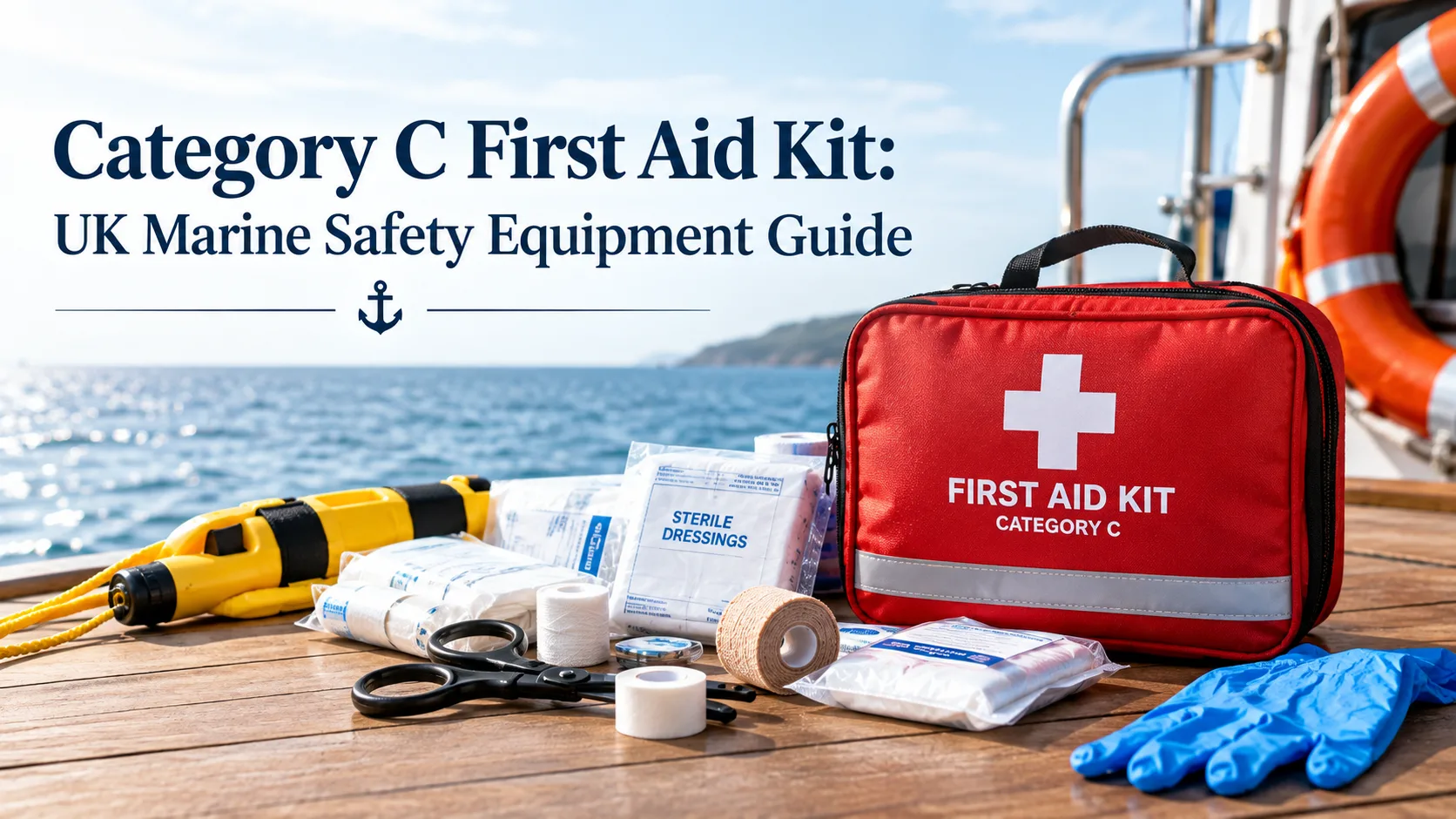
The exact contents should be checked against the current requirements applicable to your vessel. A suitable Category C First Aid Kit can contain a combination of medicines, dressings and emergency medical supplies.
For example, the ADEC Marine Category C kit currently includes:
- Anti-seasickness and anti-diarrhoea tablets
- Analgesics and ibuprofen
- Standard and large dressings
- Sterile paraffin gauze dressings
- Triangular bandages
- Adhesive plasters
- Adhesive sutures
- A resuscitation pocket mask
- Disposable gloves
- Burn treatment supplies
- Scissors and safety pins
- Antiseptic wipes and cream
ADEC Marine states that its Category C kit is UK MCA and Lloyds Register of Shipping Type Approved for Category C vessels, including lifeboats and liferafts.
The contents of a kit should not be treated as a substitute for checking the applicable MCA schedule. Requirements can vary according to vessel category and operational risk.
How to Choose the Right Category C First Aid Kit
Choosing a Category C First Aid Kit involves more than checking the number of items inside the box. The kit should be appropriate for the vessel and its operating requirements.
Check the Approval and Suitability
Look for clear information about the kit's approval status and intended application. If you need equipment for a commercial vessel, make sure the product is specifically intended for the relevant marine use.
Consider Marine Storage Conditions
Medical equipment onboard a vessel can be exposed to moisture, movement and challenging storage conditions. A robust storage container can make the kit easier to protect and access when needed.
Check the Contents
Before purchasing, compare the kit's contents with the requirements applicable to your vessel. Do not assume that a general household or recreational boat first aid kit will meet commercial marine requirements.
Check Expiry Dates
Medical supplies and medicines have expiry dates. A kit may be complete but still unsuitable if its contents are out of date.
ADEC Marine states that its Category C kit has a minimum two-year life and is supplied in a green plastic stowage box, with an alternative soft-pack option available.
Category C First Aid Kit vs Standard Boat First Aid Kit
A standard first aid kit and a Category C First Aid Kit are not necessarily interchangeable.
A general first aid kit may be designed for everyday injuries and recreational activities. Category C medical stores are intended for specific maritime applications and include medicines and equipment relevant to the applicable MCA requirements.
For a commercial vessel, therefore, the key question is not simply whether a first aid kit is onboard. The question is whether the medical stores are appropriate for the vessel's category and operation.
This is particularly important when reviewing your wider marine safety equipment inventory.
What Other Marine Safety Equipment Should a Small Commercial Vessel Carry?
A first aid kit is only one part of a vessel's safety arrangements. Depending on the vessel and its operating category, other marine safety equipment may include:
- Lifejackets and buoyancy equipment
- Lifebuoys
- Liferafts
- Distress flares and signals
- Marine VHF radios
- Fire-fighting equipment
- Navigation and signalling equipment
- Emergency lighting
- Personal protective equipment
- Medical and first aid stores
The exact requirements should always be checked against the applicable MCA regulations and Code of Practice for the vessel.
For operators, maintaining a complete inventory of marine safety equipment can make routine inspections and replacement planning much easier.
How to Maintain Your Marine Medical Stores
Buying a compliant Category C First Aid Kit is only the first step. The kit needs to remain complete, accessible and suitable throughout its service life.
The MCA states that a checklist of required medicines and equipment should be kept onboard and reviewed at least annually by a competent person. The inspection should confirm that stores are complete, medicines are in good condition and medicines are on date.
A practical maintenance routine should include:
- Check the kit regularly for missing items.
- Review medicine expiry dates.
- Replace anything that has been used or damaged.
- Keep the kit in an accessible location.
- Protect medical stores from unsuitable storage conditions.
- Maintain an onboard inventory.
- Review the vessel's risk assessment when operations change.
Regular checks are particularly important because medical supplies may be used without the operator immediately replacing them.
Common Mistakes When Buying Marine Safety Equipment
Small commercial vessel operators can run into problems when safety equipment is selected without considering the vessel's actual requirements.
Common mistakes include:
- Buying a general first aid kit instead of appropriate medical stores
- Failing to check the vessel's operating category
- Choosing equipment without verifying its approval or suitability
- Allowing medicines to expire
- Failing to replace used supplies
- Storing emergency equipment where it is difficult to access
- Assuming the same equipment requirements apply to every vessel
- Relying on outdated MCA guidance
Keeping current with MCA requirements is an important part of responsible vessel management.
Why Choose ADEC Marine for Marine Safety Equipment?
For vessel owners and operators looking for marine medical stores, ADEC Marine provides Category C medical equipment alongside a wider range of marine safety products.
Its Category C First Aid Kit is listed as UK MCA and Lloyds Register of Shipping Type Approved for Category C vessels, including lifeboats and liferafts. ADEC Marine also states that it holds an MHRA Wholesale Distribution Authorisation for the distribution of Category C First Aid Kits.
When choosing marine safety equipment, look beyond the product name. Check its intended use, approval information, contents, storage requirements and suitability for your vessel.
For operators who need a Category C First Aid Kit, reviewing the product specifications and applicable MCA requirements before ordering can help ensure that the medical stores selected are appropriate for the vessel.
Category C First Aid Kit Checklist for UK Vessel Operators
Before heading out, use this quick checklist:
- Confirm the vessel's applicable medical-store category
- Check the latest MCA requirements
- Choose an appropriate Category C First Aid Kit
- Verify approval and suitability information
- Check the contents against the relevant requirements
- Review expiry dates
- Replace missing or used items
- Store the kit where it is protected and accessible
- Keep an onboard medical-store checklist
- Review the stores at least annually
Final Thoughts
A Category C First Aid Kit should be viewed as part of a wider approach to vessel safety rather than an isolated purchase. For UK small commercial vessel owners, operators and skippers, selecting appropriate medical stores starts with understanding the vessel's category, operating area and applicable MCA requirements.
Regular inspections are equally important. Keeping medical stores complete, in date and accessible ensures that the equipment is ready when it is needed.
Alongside the right Category C First Aid Kit, maintaining suitable marine safety equipment across the vessel can help operators meet their responsibilities and prepare for emergencies.
For Category C medical stores and other marine safety products, ADEC Marine provides equipment designed for professional marine applications. Always check the latest MCA guidance and your vessel's specific requirements before making a purchase.