
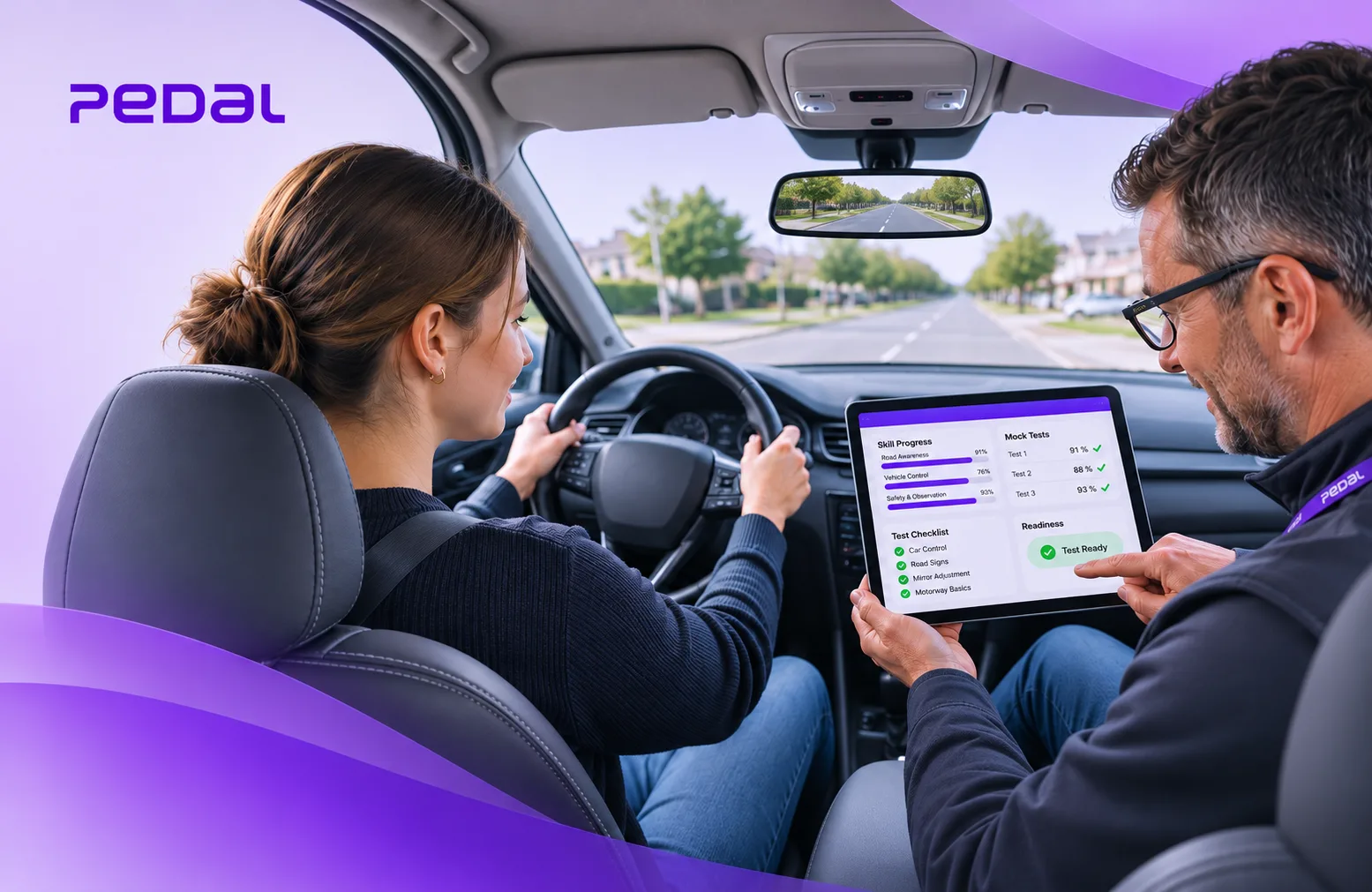
Preparing a learner for a driving test involves more than completing a set number of lessons. Instructors need to know whether the student has developed the required skills, corrected recurring mistakes, and gained enough confidence to drive safely under test conditions. When this process depends on memory, handwritten notes, or disconnected spreadsheets, important details can easily be missed.
Driving Instructor Software gives instructors a structured way to record progress, identify skill gaps, and decide when a learner is genuinely ready for the practical test. It turns test preparation into a measurable process rather than a subjective judgement.
Why Test Readiness Is Difficult to Measure
Every learner progresses at a different pace. Some students quickly understand vehicle control but struggle with observation and hazard awareness. Others may drive confidently on familiar roads but become nervous during mock tests or unfamiliar routes.
Without a central tracking system, instructors may find it difficult to compare performance across lessons. Notes may be incomplete or inconsistent, especially when several instructors work with the same learner.
Driving Instructor Software brings lesson records, skill assessments, instructor comments, and test preparation milestones together in one place. This provides a clearer view of the learner’s overall development.
Recording Skills After Every Lesson
One of the most useful features of Driving Instructor Software is the ability to record student performance immediately after each lesson. Instructors can assess specific skills such as:
- Steering and vehicle control
- Mirror and observation routines
- Junctions and roundabouts
- Parking and manoeuvres
- Speed management
- Hazard awareness
- Independent driving
- Test route confidence
Recording these details consistently helps instructors understand which skills are improving and which areas still require attention. It also reduces reliance on general comments such as “good lesson” or “needs more practice,” which offer limited guidance for future sessions.
Creating a Clear Readiness Profile
Some platforms allow instructors to assign progress levels to each skill, such as introduced, developing, competent, or test-ready.
These ratings create a clear readiness profile. Instead of judging a student based on one strong or weak lesson, the instructor can review performance over time. A learner who completes a manoeuvre correctly once may still need more practice before it becomes consistent.
A structured profile also helps instructors explain why a student is or is not ready for the test. This makes recommendations easier to understand and reduces disagreements about booking too early.
Identifying Repeated Mistakes
A single error may not be a major concern, but repeated mistakes can reveal a deeper skill gap. Driving Instructor Software makes patterns easier to identify by storing lesson-by-lesson observations.
For example, the system may show that a learner regularly forgets mirror checks before changing direction or struggles with speed control near junctions. Once the pattern is visible, the instructor can plan future lessons around that issue.
This targeted approach improves lesson efficiency. Instead of repeating broad training sessions, instructors can focus on the exact behaviours that may prevent the learner from passing.
Supporting Mock Test Assessments
Mock tests show how a learner performs without constant instructor guidance. Driving Instructor Software can help instructors record mock test results in a consistent format.
The instructor can document serious faults, minor errors, route challenges, hesitation, observation problems, and situations where intervention was required. Comparing several mock tests helps show whether the learner is becoming more consistent under pressure.
This gives both the instructor and student a realistic view of readiness. It also helps prevent test bookings based only on confidence rather than demonstrated ability.
Improving Continuity Between Instructors
In larger driving schools, students may learn with more than one instructor. Without shared records, a new instructor may have limited knowledge of the student’s progress, previous mistakes, or current lesson plan.
Driving Instructor Software solves this by giving authorised instructors access to the same progress history. They can review completed skills, recent feedback, and outstanding training needs before the lesson begins.
This creates a more consistent learning experience and avoids wasting lesson time repeating areas that have already been covered.
Giving Students Visibility Into Progress
Test readiness tracking becomes more effective when students can also see where they stand. Many systems provide access to lesson feedback, progress summaries, and skills that still need improvement.
This visibility encourages students to take more responsibility for their learning. They can review instructor comments, practise specific areas, and understand what must improve before a test is booked.
Clear records also help manage expectations. When a learner is not ready, the decision is supported by recorded performance rather than a simple verbal opinion.
Planning More Focused Lessons
Driving Instructor Software does not only record past performance. It also helps instructors plan the next stage of training.
If the system shows that the learner is confident with basic control but weak in independent driving, the instructor can focus future lessons on route planning, decision-making, and unfamiliar roads. If mock test results reveal nervousness, more test-like sessions can be introduced gradually.
This makes lesson planning more personalised and ensures that each session contributes directly to test readiness.
Reducing Premature Test Bookings
Booking a driving test too early can lead to failure, extra costs, and reduced confidence. A digital readiness record gives instructors a stronger basis for their recommendation.
They can show which skills have been completed, which areas remain inconsistent, and what must improve before the test. This supports safer decisions and helps learners understand that readiness depends on consistent performance, not only the number of lessons completed.
Conclusion
Driving Instructor Software gives instructors a reliable way to measure, document, and improve test readiness. By recording skill development, identifying repeated mistakes, supporting mock tests, and sharing progress records, it replaces guesswork with clear evidence.
For students, this means better feedback, more focused lessons, and a clearer understanding of what is required to pass. For driving schools, it supports consistent training standards and more confident test recommendations.
With the right Driving Instructor Software, test readiness becomes easier to track, explain, and achieve.