Market Overview:
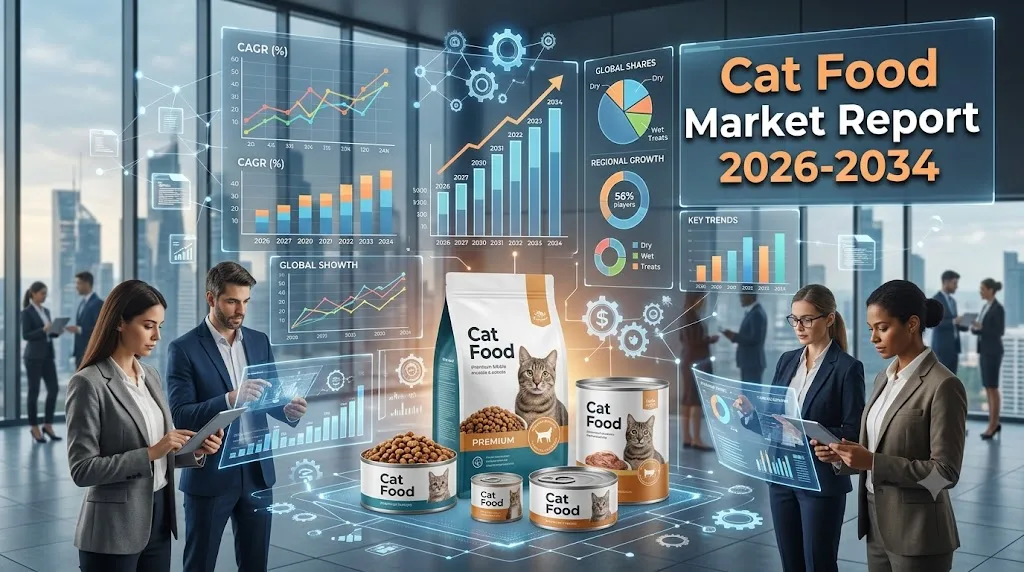
According to IMARC Group’s latest research publication, “Cat Food Market: Global Industry Trends, Share, Size, Growth, Opportunity and Forecast 2026-2034”, The global cat food market grew from USD 38.2 Billion in 2025 to USD 39.4 Billion in 2026. Looking forward, IMARC Group estimates the market to reach USD 50.3 Billion by 2034, exhibiting a CAGR of 3.10% from 2026-2034.
This detailed analysis primarily encompasses industry size, business trends, market share, key growth factors, and regional forecasts. The report offers a comprehensive overview and integrates research findings, market assessments, and data from different sources. It also includes pivotal market dynamics like drivers and challenges, while also highlighting growth opportunities, financial insights, technological improvements, emerging trends, and innovations. Besides this, the report provides regional market evaluation, along with a competitive landscape analysis.
How the Cat Food Industry Is Evolving Across the Globe
- North America dominates the market in 2025, accounting for approximately 30.0% of the global cat food market share, driven by high pet ownership rates, strong product innovation, and rising demand for premium and functional formulations.
- Dry cat food leads the product type segment with approximately 44.6% market share in 2025, favored for its convenience, longer shelf life, cost-effectiveness, and availability across a wide range of dietary formulations.
- Animal-derived ingredients dominate the ingredient segment with a share of 72.9% in 2025, reflecting the obligate carnivore nature of cats and the growing consumer preference for high-protein, meat-based cat food products.
- In September 2026, Purina Europe expanded its Gourmet portfolio by launching a new range of homestyle-inspired, slow-cooked wet cat food, responding to growing consumer awareness around the quality and care behind feline nutrition choices.
- In June 2025, Hill’s Pet Nutrition launched new urinary care and hairball control cat food formulas, developed specifically to address two of the most common dietary health concerns among cat owners and pet wellness professionals.
Key Trends in the Cat Food Market
Download a sample PDF of this report: https://www.imarcgroup.com/cat-food-market/requestsample
- Rising Cat Ownership and Humanization Trend: Cats accounted for 32.3% of the global pet food market in 2022, growing by 55.8% between 2017 and 2022 alongside an 18.8% increase in the global cat population. Over 70% of pet owners in countries such as Russia and the United States regard their cats as family members or companions, a sentiment that drives higher spending on nutritionally tailored, premium cat food products. This humanization trend is one of the most consistent structural forces reshaping cat food market demand globally.
- Premium and Functional Product Development: Pet owners are increasingly seeking specialized cat food that addresses specific health concerns such as obesity, diabetes, food allergies, digestive health, and coat condition. In the United States, 40% of pet parents purchased premium pet food in 2022, while in Hong Kong, premium cat food represented 75% of all pet food sales that same year. Manufacturers are investing in research and development to formulate functional cat foods with added probiotics, omega-3 fatty acids, and immune-supporting nutrients, responding to a consumer base that treats feline health as a core priority.
- E-Commerce Expansion and Digital Retail Growth: Online pet food sales are growing at a rapid pace, accounting for more than 40% of pet food sales in select Asia Pacific markets. In Europe, e-commerce channels comprise approximately 35% of all cat food sales, according to industry estimates. Subscription-based delivery models, personalized recommendation engines, and expanded product visibility through digital platforms are reshaping how consumers discover and purchase cat food, with urban and younger demographics leading this transition.
- Innovation in Sustainable and Novel Protein Formats: The market is seeing a rise in cultivated meat-based formulations and plant-derived innovations in cat food. In 2025, Friends and Family Pet Food received regulatory approval in Singapore for the first commercially available cultivated meat-based pet food product, while UMAMI Bioworks partnered with the company to pilot cultivated pet food across Singapore, the United Kingdom, and European Union markets. These developments reflect a broader industry direction toward ethical, sustainable, and novel protein sources in feline nutrition.
- Growing Demand Across Asia Pacific and Emerging Markets: The Asia Pacific region is expanding rapidly in cat food consumption, driven by urbanization, rising disposable incomes, and increased awareness of pet nutrition. The Chinese pet consumer market reached USD 41.9 Billion in 2024, growing 7.5% from the prior year. Chinese households spend an average of USD 286 per pet annually, representing 6.73% of total household expenditure, significantly higher in proportion than comparable figures in other global markets. South Korean and Japanese consumers are also driving demand for functional and freeze-dried cat food formats.
We explore the factors driving the growth of the market, including technological advancements, consumer behaviors, and regulatory changes, along with emerging cat food market trends.
Growth Factors in the Cat Food Market
- Rising Pet Population and Ownership Rates Worldwide: The American Pet Products Association’s 2023-2024 National Pet Owners Survey found that 46.5 million US households owned a cat as of 2023, with cat-owning households increasing from 23% to 24% between 2018 and 2022. In Europe, 127 million cats lived across 26% of households in 2022, according to FEDIAF, with approximately 91 million European households owning at least one pet. These figures underpin consistent, long-term demand for cat food products across all segments.
- Expansion of Production Capacity by Global Manufacturers: Major players are scaling up operations to meet rising demand. In October 2023, Nestle commissioned two new production lines at its Purina pet food facility in Hungary, raising annual capacity from approximately 150,000 metric tons to 250,000 metric tons, a 66% increase. Such investments signal long-term confidence in market growth and position global players to meet rising volume requirements across North America, Europe, and Asia Pacific.
- Thriving European Pet Food Industry: According to FEDIAF, the European pet food industry reached EUR 29.1 Billion (USD 31.1 Billion) in 2022, reflecting an average annual growth rate of 5.1% over three years. The federation’s more recent data from June 2025 confirmed the sector had grown 9% since 2021, reaching USD 33.7 Billion. With 150 pet food companies employing over 118,000 people across approximately 200 production sites, Europe represents a deeply entrenched and growing market for cat food.
- Pet Care Culture Growth in Middle East and Africa: The United Arab Emirates alone has over 1.5 million pet owners, and the country’s pet care sector is valued at USD 300 Million, with consistent upward momentum driven by expatriate communities and changing urban lifestyles across GCC nations. Premium, internationally sourced cat food is in particularly high demand in this region, with moist and wet formats preferred for their higher nutritional content and palatability.
- Latin American Middle Class Driving Spending on Pet Wellness: In Latin America, surveys indicate that 94% of Argentine pet owners are willing to pay for their animals’ happiness and well-being. Data from Condusef, the Mexican government financial regulator, suggests that families in the country spend over 20% of their monthly income on pets. This willingness to invest in pet health is propelling demand for grain-free, high-quality, and specialty cat food products across the region.
Leading Companies Operating in the Global Cat Food Industry:
- Mars Petcare
- The J.M. Smucker Company (Big Heart Pet Brands)
- Colgate-Palmolive (Hill’s Pet Nutrition Inc.)
- Nestle Purina PetCare
- Blue Buffalo Co., Ltd.
- CANIDAE Pet Foods
Cat Food Market Report Segmentation:
Breakup by Product Type:
- Dry Cat Food
- Cat Treats
- Wet Cat Food
Dry cat food leads the market with approximately 44.6% share in 2025, driven by convenience, cost-effectiveness, longer shelf life, and versatility in formulations addressing dental health and weight management.
Breakup by Pricing Type:
- Mass Products
- Premium Products
Mass products dominate with approximately 44.5% market share in 2025, as affordability, wide retail availability, and economies of scale in manufacturing make them accessible to a large base of budget-conscious pet owners globally.
Breakup by Ingredient Type:
- Animal Derivatives
- Plant Derivatives
Animal derivatives lead with approximately 72.9% share in 2025, reflecting the biological necessity for high-protein, meat-based nutrition in cats as obligate carnivores, and the aligned consumer preference for protein-rich formulations.
Breakup by Distribution Channel:
- Supermarkets and Hypermarkets
- Specialty Stores
- Online Stores
- Others
Supermarkets and hypermarkets dominate with approximately 23.5% market share, leveraging extensive store networks, promotional programs, and product variety to serve a wide range of consumer preferences. PetSmart, the largest pet specialty retail chain in North America, had 1,669 stores as of March 2022.
Breakup by Region:
- North America
- Western Europe
- Asia Pacific
- Latin America
- Eastern Europe
- Middle East and Africa
North America holds approximately 30.0% of the global market in 2025, supported by high cat ownership rates, strong per-capita spending on pet wellness, and continuous product innovation from leading manufacturers including Nestlé Purina, Mars Petcare, and Hill’s Pet Nutrition.
Recent News and Developments in the Cat Food Market
- September 2026: Purina Europe launched a new range of homestyle-inspired, slow-cooked wet cat food under its Gourmet portfolio, targeting a growing segment of cat owners who apply greater care and consideration to the food they choose for their pets, reflecting the broader premiumization shift across the European cat food market.
- June 2025: Hill’s Pet Nutrition introduced new urinary health and hairball control cat food formulas as part of its product expansion during Cat World Domination Day, addressing two of the most prevalent dietary health concerns among cat owners and extending the company’s portfolio of scientifically formulated therapeutic and preventive feline nutrition products.
- May 2025: Nestlé acquired a minority stake in Drools Pet Food, an Indian pet nutrition brand, signaling increased strategic interest in the fast-growing Asia Pacific market where rising cat ownership, expanding middle-class households, and growing awareness of pet nutrition are driving demand for organized, quality pet food brands.
Note: If you require specific details, data, or insights that are not currently included in the scope of this report, we are happy to accommodate your request. As part of our customization service, we will gather and provide the additional information you need, tailored to your specific requirements. Please let us know your exact needs, and we will ensure the report is updated accordingly to meet your expectations.
About Us:
IMARC Group is a global management consulting firm that helps the world’s most ambitious changemakers to create a lasting impact. The company provides a comprehensive suite of market entry and expansion services. IMARC offerings include thorough market assessment, feasibility studies, company incorporation assistance, factory setup support, regulatory approvals and licensing navigation, branding, marketing and sales strategies, competitive landscape and benchmarking analyses, pricing and cost research, and procurement research.
Contact Us:
IMARC Group
134 N 4th St. Brooklyn, NY 11249, USA
Email: [email protected]
Tel No: (D) +91 120 433 0800
United States: +1-201-971-6302