Fleas are more than a minor nuisance for cats. These tiny parasites can cause persistent itching, skin irritation, allergic reactions, and, in severe cases, other health problems. If you are considering cat flea treatment in Keysborough, it is important to understand when home treatment may be enough and when professional veterinary care is the safer choice. Knowing the warning signs can help you protect your cat and prevent a small flea problem from becoming a serious infestation.
Understanding Fleas in Cats
Fleas are small, fast-moving parasites that survive by feeding on blood. They can be difficult to spot because they move quickly through your cat's fur and may be especially hard to see in cats with thick or dark coats.
Common signs of fleas include:
- Frequent scratching or biting at the skin
- Excessive grooming
- Red or irritated skin
- Small scabs, particularly around the neck and back
- Hair loss or thinning fur
- Restlessness
- Flea dirt that looks like tiny black or brown specks
- Visible fleas moving through the coat
Even if you only see one or two fleas, there may be more hiding in your cat's environment. Flea eggs and larvae can develop in bedding, carpets, furniture, and other areas around the home.
When Should You See a Vet for Fleas?
Not every flea problem requires an immediate veterinary visit. However, certain symptoms indicate that your cat may need professional assessment and treatment.
1. Your Cat Is Scratching Constantly
Occasional scratching can happen, but persistent scratching, biting, or licking may indicate that your cat is having a significant reaction to flea bites.
Some cats develop flea allergy dermatitis, an allergic response to substances in flea saliva. Even a small number of bites can cause intense itching in an affected cat. If your cat is uncomfortable, losing hair, developing scabs, or repeatedly damaging its skin, speak with a veterinarian.
2. There Are Open Sores or Skin Infections
Excessive scratching can break the skin and create wounds. Bacteria can then enter these damaged areas, potentially causing infection.
Signs that may indicate a skin infection include redness, swelling, discharge, unpleasant odour, crusting, or painful areas. Veterinary treatment may be necessary to address the underlying flea problem as well as any secondary skin infection.
3. Your Kitten Has Fleas
Fleas can be particularly concerning in young kittens. A large flea infestation can cause significant blood loss, and kittens have smaller blood volumes than adult cats.
If a kitten has numerous fleas, appears weak, has pale gums, is unusually sleepy, or is not feeding normally, veterinary attention should be sought promptly. Young cats can become unwell more quickly than healthy adult cats.
4. Your Cat Seems Weak or Unwell
Fleas are not simply an external irritation. A heavy infestation can contribute to anaemia, particularly in kittens, elderly cats, or cats that are already unwell.
Watch for symptoms such as unusual tiredness, weakness, pale gums, reduced appetite, or changes in normal behaviour. These signs should not be ignored.
5. Flea Treatments Are Not Working
If you have already treated your cat but continue to see fleas, several factors could be responsible. The product may not be appropriate for your cat, it may have been incorrectly applied, or fleas may still be developing in the home environment.
A veterinarian can help identify why the infestation is continuing and recommend an appropriate treatment plan. Treating only the cat without addressing the environment may allow the flea life cycle to continue.
Be Careful With Flea Products
One of the most important reasons to consult a vet is that not every flea product is safe for cats. Some products designed for dogs can contain ingredients that are toxic to cats.
Never assume that a product is safe simply because it is intended for another pet. Always check the label carefully and use a product specifically formulated for cats, following the correct instructions for your cat's age and weight.
If your cat develops drooling, vomiting, shaking, weakness, difficulty walking, seizures, or unusual behaviour after receiving a flea product, seek veterinary advice immediately.
Why Treating the Home Matters
Getting rid of adult fleas from your cat is only part of the solution. Fleas have several life stages, and eggs can fall from your pet into the surrounding environment.
This means a cat may appear better after treatment but become exposed to newly emerging fleas later. Effective flea control usually involves a consistent prevention plan and appropriate environmental management.
Regularly washing pet bedding, vacuuming carpets and furniture, and keeping the areas where your cat spends time clean can help reduce environmental flea stages. Your veterinarian can provide guidance on the most suitable approach for your household.
Can Fleas Affect Other Pets?
Yes. If you have multiple pets, fleas can spread between animals. Dogs, cats, and other household pets may all contribute to an ongoing infestation.
If one pet has fleas, it is worth discussing flea prevention for all susceptible pets with your veterinarian. Treating only one animal may allow the infestation to continue.
It is also important to remember that some flea products are species-specific. Never use a product on another pet without confirming that it is safe and appropriate for that animal.
How Vets Can Help
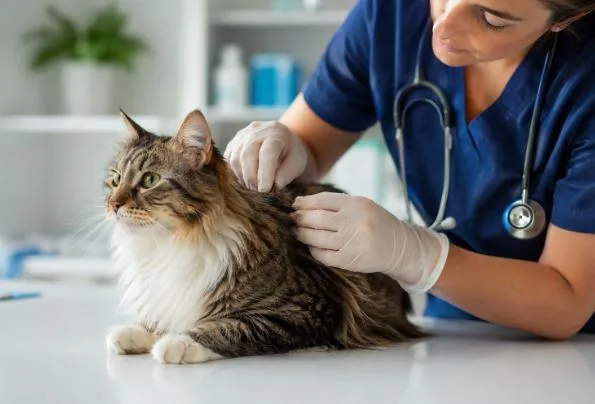
A veterinarian can examine your cat's skin and coat, assess the severity of the infestation, and look for complications such as flea allergy dermatitis, skin infections, or anaemia.
Depending on your cat's condition, the vet may recommend an appropriate flea-control product and advise you on how frequently it should be used. They can also help develop a long-term prevention strategy rather than simply treating fleas after an infestation appears.
This is particularly valuable for cats that repeatedly experience flea problems or have sensitive skin.
Preventing Future Flea Problems
Prevention is generally easier than dealing with a severe infestation. Your veterinarian can recommend a flea prevention schedule based on your cat's lifestyle, age, health, and exposure risk.
Cats that spend time outdoors may have greater exposure to fleas, but indoor cats are not completely protected. Fleas can enter homes through other animals, clothing, shoes, or previously infested environments.
Regular grooming can also help you notice changes in your cat's skin and coat early. While grooming alone will not provide reliable flea control, it can help you identify signs of parasites before the problem becomes extensive.
When Is a Flea Problem an Emergency?
Most flea infestations are not emergencies, but certain situations require prompt veterinary attention. Contact a veterinarian quickly if your cat is a young kitten with many fleas, appears weak or lethargic, has pale gums, develops extensive skin wounds, or experiences unusual symptoms after flea treatment.
A suspected reaction to a flea-control product should also be taken seriously. If your cat shows neurological symptoms, severe weakness, breathing difficulties, or other sudden serious changes, seek urgent veterinary care.
Final Thoughts
Fleas can be uncomfortable for cats and, when left untreated, may lead to skin problems and other health concerns. Early action can make treatment easier and help prevent the infestation from spreading throughout your home. If your cat is excessively itchy, developing sores, losing fur, showing signs of weakness, or continuing to have fleas despite treatment, a veterinary examination is a sensible next step.
With the right treatment, regular prevention, and appropriate household hygiene, most flea problems can be brought under control. If you are unsure which flea treatment is suitable for your cat, consulting a veterinarian is one of the safest ways to protect your pet and choose an effective long-term prevention strategy.