Cast steel gate valves are widely used in piping systems that require full-bore flow, positive shut-off, and dependable service under elevated pressure and temperature conditions. A Cast steel gate valve manufacturer in USA supplies valves for oil and gas, petrochemical, power generation, water transmission, chemical processing, and refinery pipelines where isolation of process media is required. These valves are commonly selected for on-off service rather than throttling, as the gate moves completely out of the flow path when fully open.
Cast Steel Gate Valve Construction
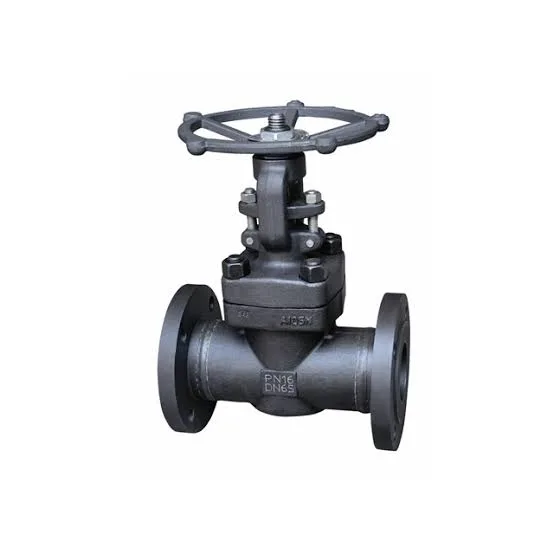
A cast steel gate valve is built with a valve body, bonnet, wedge or gate disc, seat rings, stem, gland arrangement, and handwheel or actuator mounting. The body is produced from cast carbon steel, low-temperature carbon steel, or alloy steel grades depending on pressure class, fluid properties, and service temperature. Common body materials include ASTM A216 WCB, ASTM A352 LCB, and ASTM A217 WC6 or WC9 for higher temperature applications.
The closure element is generally a solid wedge, flexible wedge, or split wedge design. A flexible wedge is frequently used in cast steel gate valves because it can compensate for minor seat distortion caused by thermal expansion and pressure loading. The stem may be rising stem outside screw and yoke (OS&Y) type or non-rising stem depending on installation and maintenance requirements. For industrial pipeline isolation, OS&Y construction is commonly preferred because the stem position clearly indicates valve status.
Working Principle of Cast Steel Gate Valves
The valve operates by moving the gate vertically through the stem threads. When the handwheel or actuator rotates the stem, the gate travels upward to open the passage and downward to seal against the seats. In the fully open position, the gate is lifted away from the flow stream, creating minimal pressure drop. In the closed position, the gate contacts the seating surfaces and blocks the line media.
Because the seating surfaces are designed for tight shut-off, cast steel gate valves are used where bidirectional isolation and low leakage are required. They are not typically recommended for partially open operation, as continuous throttling can damage the seating surfaces and cause vibration, erosion, and uneven wear.
Material Grades and Pressure Classes
A cast steel gate valve manufacturer in USA generally offers valves across multiple pressure ratings such as ASME Class 150, 300, 600, 900, 1500, and 2500. Material selection depends on corrosion allowance, operating temperature, process medium, and design pressure.
Typical material grades include:
- ASTM A216 WCB – carbon steel for general industrial and hydrocarbon service
- ASTM A352 LCB / LCC – low-temperature carbon steel for sub-zero applications
- ASTM A217 WC6 / WC9 – alloy steel for elevated temperature and steam service
- Trim materials – 13Cr stainless steel, SS304, SS316, Stellite hardfacing, Monel, or duplex stainless steel based on wear and corrosion requirements
Seat rings may be integral or renewable type, and hardfaced seating is often used in higher pressure or abrasive applications to improve resistance against galling and seat damage.
End Connections and Design Features
Cast steel gate valves are available with flanged ends, butt weld ends, socket weld ends, and pressure seal bonnet designs depending on service conditions. Bolted bonnet construction is widely used for ASME Class 150 to 600, while pressure seal bonnet gate valves are selected for high-pressure and high-temperature lines.
Additional design features may include:
- Outside screw and yoke construction
- Backseat arrangement for stem sealing support
- Flexible wedge disc for improved seat contact
- Renewable seat rings
- Graphite or PTFE packing based on service temperature
- Gear operation or actuator mounting for larger valve sizes
Standards and Testing
A Cast steel gate valve manufacturer in USA typically manufactures valves in accordance with API 600, API 603, ASME B16.34, ASME B16.10, ASME B16.5, and ASME B16.25 depending on valve type and end connection. Fire-safe and fugitive emission requirements may also be considered for refinery and hydrocarbon applications.
Inspection and testing generally include:
- Shell hydrostatic test
- Seat leakage test
- Backseat test
- Positive material identification when specified
- Non-destructive examination such as radiography, MPI, or ultrasonic inspection for project requirements
Applications of Cast Steel Gate Valves
Cast steel gate valves are used in crude oil lines, steam systems, condensate lines, gas pipelines, boiler feed lines, tank farms, offshore piping, and process isolation networks. Their full-port flow path, robust cast body construction, and suitability for high-pressure service make them a common choice for industrial shut-off applications requiring long service life and dimensional compliance with international standards.