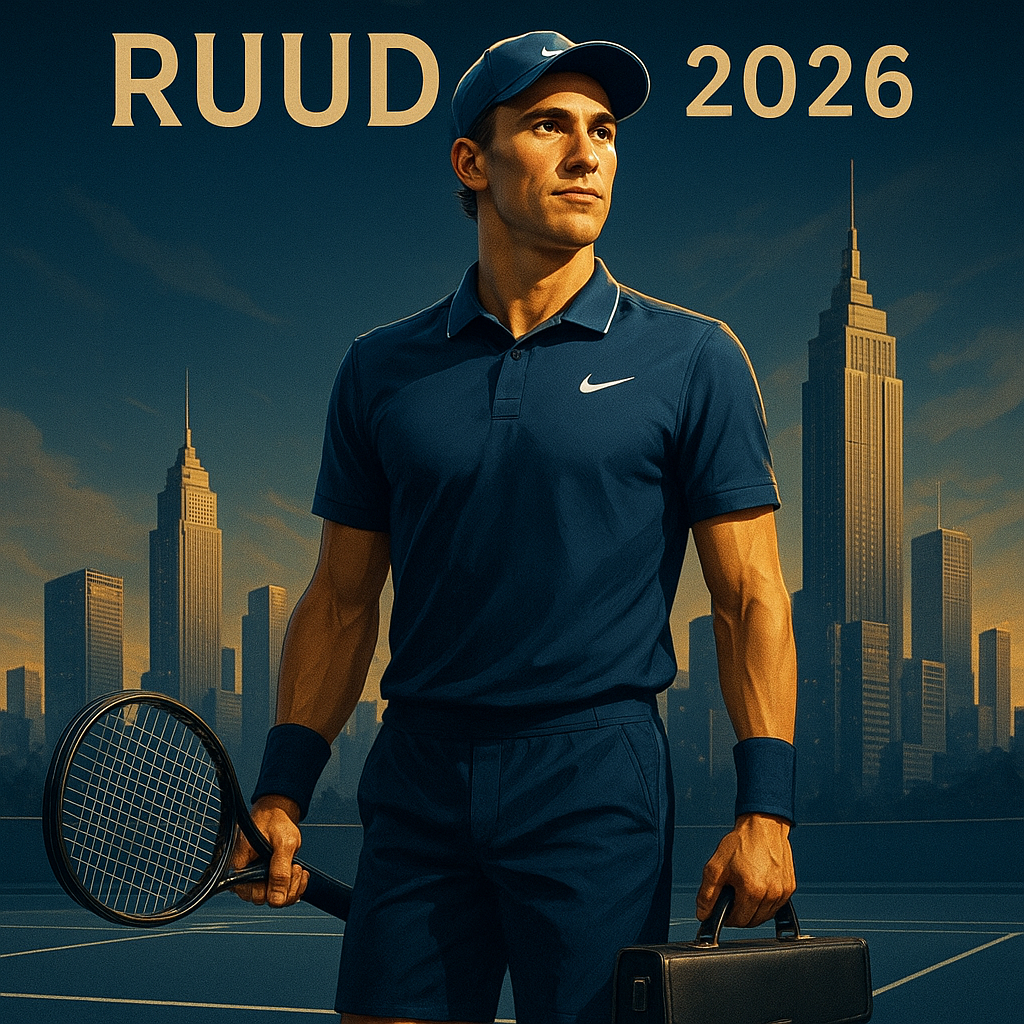
A Rising Star with Commercial Clout: The Business of Casper Ruud
When Casper Ruud first stepped onto the ATP Tour, few could have predicted the business empire he would build alongside his tennis career. By 2026, Ruud is no longer just a name on the scoreboard; he is a compelling case study in athletic branding, endorsement strategy, and sports entrepreneurship. This article explores how Ruud’s on-court success and off-court savvy converge to make him a standout figure in the increasingly commercialized world of tennis.
Ruud’s breakthrough came in the late 2010s, but it is his sustained presence at the top, backed by strategic partnerships and a growing global fanbase, that has cemented his value beyond the baseline. According to industry estimates, his annual endorsement revenue has crossed the $15 million mark in recent years, making him one of the highest-earning Nordic athletes in history. Yet, his business ventures extend well beyond traditional sports sponsorships.
“Casper Ruud’s marketability is a testament to his discipline on the court and his authenticity off it,” says a leading sports marketing analyst. “He has managed to appeal to premium lifestyle brands while nurturing a genuine connection with fans.”
Notably, Ruud’s business acumen is visible in his careful selection of brand partners, focusing on sustainable and high-tech products that align with his personal values. His collaboration with Norwegian outdoor apparel brands and tech startups has positioned him uniquely among tennis stars, opening new revenue streams and reinforcing his image as a forward-thinking athlete.
From Bergen to the Big Leagues: Background and Context
Casper Ruud's journey from Norway’s coastal city of Bergen to the global tennis stage is a remarkable blend of talent, perseverance, and strategic guidance. Born in 1998, he inherited the tennis gene from his father, Christian Ruud, a former top-50 ATP player. This familial backdrop provided a strong foundation, but Casper’s rise required more than legacy—it demanded adaptability and vision.
His early career was marked by steady progression through junior and Challenger circuits, with a notable breakthrough in 2020 when he became the first Norwegian to reach the final of a Grand Slam tournament, the French Open. This milestone was not only a personal triumph but also a catalyst for increased commercial interest from sponsors eager to tap into emerging markets and audiences.
Ruud’s playing style — characterized by a heavy topspin forehand and tactical baseline play — won accolades but also drew comparisons with contemporaries like Carlos Alcaraz. The rivalry, highlighted by Ruud’s first victory over Alcaraz in 2025, has been widely covered in sports media, further elevating his profile globally. The Norwegian’s commitment to evolving his game, including adopting a more aggressive style on clay as discussed in a 2023 interview with Tennis Temple on MSN, reflects a maturation that parallels his business growth.
In Ruud’s words: “I’m not just a defender; I want to be aggressive and dictate points, especially on clay. It’s about controlling the narrative, on and off the court.”
This mentality has translated well into his business dealings, where control and strategic foresight are essential.
Analyzing Casper Ruud’s Commercial Footprint: Data and Comparisons
By 2026, Casper Ruud’s commercial footprint is significant and multifaceted. According to market analysis from SportsPro and Forbes, his endorsement portfolio includes top-tier global brands in sportswear, technology, automotive, and sustainable consumer goods. The diversity of his partnerships is a strategic move to mitigate risk and broaden his appeal across demographics and geographies.
Key figures illustrate his commercial success:
- Endorsement Revenue: Estimated $15–18 million annually, with a steady growth rate of 10% year-on-year since 2023.
- Social Media Reach: Over 8 million followers across Instagram, TikTok, and Twitter, with engagement rates above the tennis average.
- Brand Collaborations: Long-term deals with Norwegian outdoor brand Helly Hansen and tech company Nordic AI Labs.
- Merchandising: Launch of a limited-edition apparel line in 2025, which sold out within weeks, demonstrating strong consumer loyalty.
When compared with peers such as Alcaraz and Jannik Sinner, Ruud’s business strategy is notably focused on sustainability and regional brand partnerships, which resonate well with Nordic and European markets. This contrasts with the flashier, globalized sponsorships favored by some contemporaries, highlighting Ruud’s unique positioning.
The athlete’s management team, led by longtime manager Torben Olsen, has been instrumental in negotiating deals that emphasize long-term brand equity over short-term gains, a strategy that industry insiders applaud for its foresight. As revealed in a 2024 Iltalehti interview, Olsen emphasized, “Casper’s brand is built on authenticity and consistent values, which is rare in sports marketing.”
Current Developments in 2026: Expanding Influence Beyond Tennis
The year 2026 marks a pivotal period for Casper Ruud as he leverages his athletic platform to expand his influence beyond tennis. Recent ventures include launching a sports tech incubator in Oslo, aimed at nurturing start-ups focused on athlete performance and fan engagement technologies. This move positions Ruud as a thought leader in the intersection of sports and innovation.
Additionally, Ruud has become an advocate for environmental causes, partnering with global sustainability initiatives and promoting green practices within the tennis community. His involvement has led to partnerships with major tournaments to reduce carbon footprints and implement sustainable event management.
- 2026 highlights include:
- Founding the Ruud Sports Innovation Hub, a €5 million investment initiative.
- Collaborating with ATP on sustainability guidelines for tournaments.
- Signing a multi-year ambassador deal with a European electric vehicle manufacturer.
These developments underscore a maturation of Ruud’s brand, integrating social responsibility with business growth. Such initiatives also enhance his appeal to a younger, eco-conscious demographic, an important market segment for his sponsors.
On the competitive front, Ruud remains a formidable presence on the ATP Tour, maintaining a top-5 ranking and consistently reaching the late stages of Grand Slams. His recent victory over Alcaraz in the 2025 ATP Finals, covered by gamereactor, highlights his ongoing competitiveness and resilience.
“Casper exemplifies the modern athlete who balances peak performance with meaningful off-court initiatives,” notes a senior ATP official.
Expert Perspectives and Industry Impact
Experts across sports marketing and business sectors recognize Casper Ruud as a model athlete-businessman. His trajectory exemplifies how modern athletes can cultivate powerful personal brands that transcend sports. Analysts point to Ruud’s deliberate focus on authenticity, sustainability, and regional engagement as key differentiators.
Sports marketing consultant Helena Mikkelsen observes, “Ruud’s case challenges the traditional one-size-fits-all approach to athlete endorsements. His tailored partnerships and entrepreneurial ventures offer a blueprint for sustainable athlete branding.”
This perspective is echoed by tennis industry insiders, who credit Ruud’s influence with inspiring other Nordic players to pursue holistic career strategies that integrate athletic, commercial, and social goals.
- Industry impacts include:
- Increased sponsorship interest in Nordic tennis markets.
- Growth of athlete-led innovation hubs in Scandinavia.
- Shift toward sustainable event management in tennis.
These trends align with broader shifts in sports business toward purpose-driven branding and diversified income streams.
Looking Ahead: What to Watch in Casper Ruud’s Business Journey
As Casper Ruud approaches the peak years of his career, several key factors will shape his ongoing business success. Monitoring these elements provides insights into the evolving nexus of sports, commerce, and social impact.
First, Ruud’s ability to maintain high-level performance while expanding his entrepreneurial footprint will be critical. Balancing competitive demands with business initiatives requires robust management and personal discipline.
Second, the growth of his sports innovation hub and related tech ventures may position him as a significant player in the sports tech ecosystem, potentially influencing how athletes engage with fans and optimize performance.
Third, Ruud’s continued advocacy for sustainability could redefine athlete roles in environmental activism, encouraging peers to adopt similar commitments. This also has implications for sponsor alignment and fan engagement strategies.
“The future of athlete branding is not just about endorsements but about meaningful contributions to society and industry,” says Mikkelsen. “Casper Ruud is ahead of the curve on this.”
Finally, as the tennis landscape continues to evolve with emerging talents and technological advancements, Ruud’s adaptability and innovative mindset will determine his lasting legacy both on and off the court.
For readers interested in the broader intersection of sports and business, TheOmniBuzz offers in-depth coverage of similar athlete-driven enterprises and market trends in our Business category. Additionally, exploring tennis industry dynamics in our recent analyses provides context for Ruud’s role within the sport’s commercial evolution.