
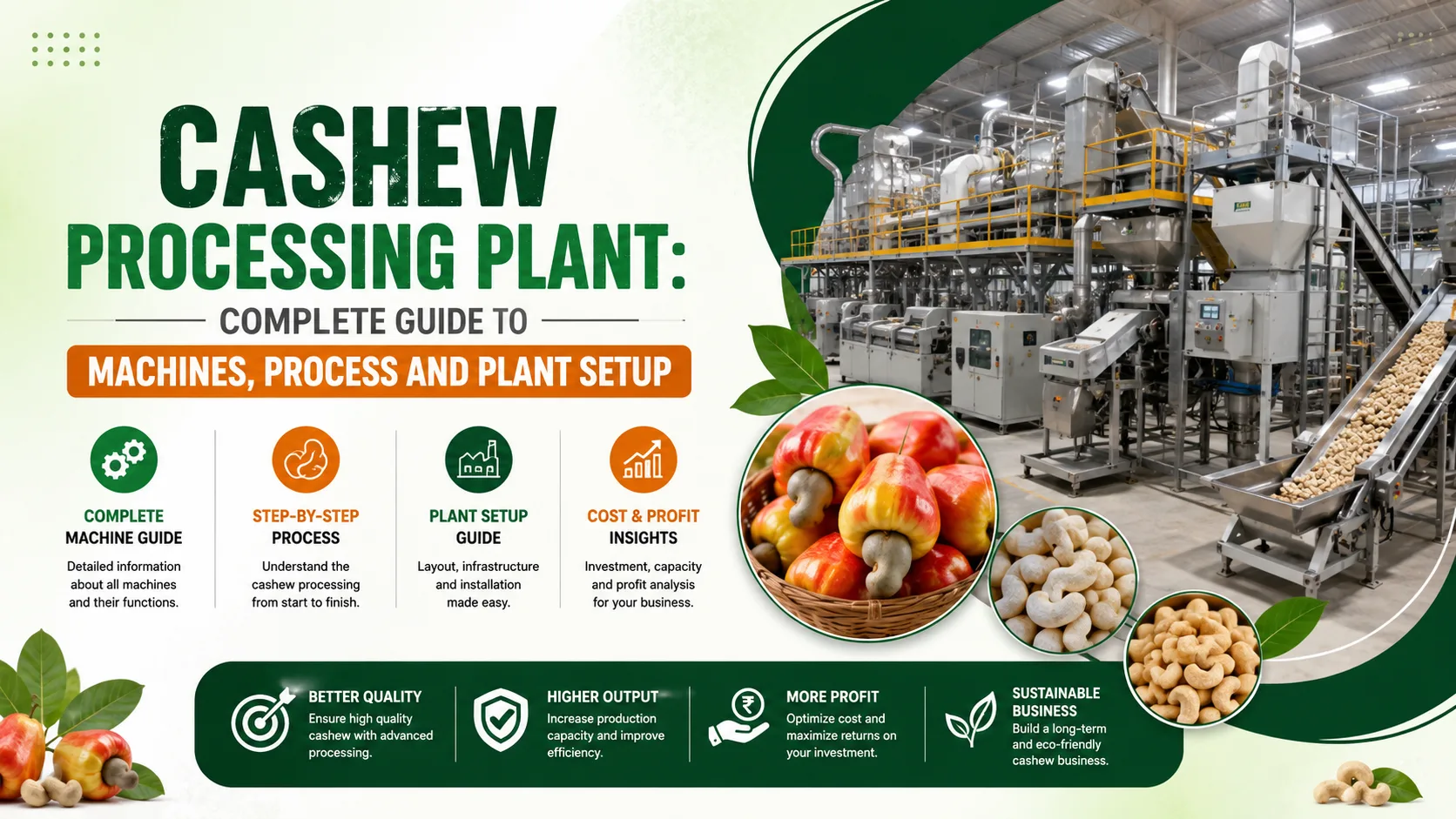
The global demand for cashew kernels continues to grow, making cashew processing plants an important part of the agricultural and food processing industry. Instead of exporting raw cashew nuts, many countries and businesses are investing in modern processing facilities that can transform raw nuts into high-quality kernels ready for domestic consumption and international markets.
A well-designed cashew processing plant uses advanced machines for processing cashew nuts to ensure efficient production, maintain kernel quality, and reduce manual labor. This guide explains how modern cashew processing plants work, the machines involved, and why choosing the right cashew nut processing plant manufacturer is essential for long-term success.
What Is a Cashew Processing Plant?
A cashew processing plant is a facility where raw cashew nuts are processed through several stages to produce edible kernels. The process requires specialized equipment that handles steaming, shell cutting, kernel separation, peeling, drying, and grading.
Modern plants often use a combination of semi-automatic or fully automatic cashew processing plant systems to increase productivity and maintain consistent quality. Automation helps reduce processing time, improve safety, and increase kernel recovery.
Key Machines Used in a Cashew Processing Plant
A complete cashew nut processing machine setup includes several machines working together in a step-by-step process.
Cashew Boiler Machine
The first step in the processing cycle involves steaming raw cashew nuts using a boiler machine. Steaming softens the shell and makes it easier to remove the kernel without damage.
Cashew Cutting or Shelling Machine
After steaming, the nuts are transferred to a cashew shelling or cutting machine. This machine carefully cuts open the shell to extract the kernel while minimizing breakage.
Cashew Scooping Machine
Once the shell is cut, kernels may remain attached to shell fragments. A scooping machine helps separate the kernels efficiently, reducing manual work.
Cashew Peeling Machine
After drying, kernels still have a thin brown skin that needs to be removed. A cashew peeling machine removes this skin to improve the appearance and quality of the kernels.
Cashew Grading Machine
The final stage involves grading the kernels based on size and quality. A grading machine sorts kernels into different categories before packaging.
Together, these machines form the backbone of a modern plant for processing cashew nuts.
Advantages of Fully Automatic Cashew Processing Plants
Many modern factories now prefer fully automatic cashew processing plants because they offer several advantages:
- Higher production capacity
- Reduced dependence on manual labor
- Better kernel recovery with minimal breakage
- Consistent processing quality
- Improved hygiene and safety standards
Automation also allows processing plants to scale production while maintaining efficiency.
Choosing the Right Cashew Nut Processing Plant Manufacturer
Selecting the right manufacturer for a cashew nut processing plant is one of the most important decisions when setting up a processing facility. A reliable manufacturer provides not only high-quality machines but also technical guidance, installation support, and after-sales service.
Working with an experienced cashew processing machinery manufacturer ensures that the machines are durable, efficient, and designed to meet the specific needs of modern processing plants.
Importance of Modern Cashew Processing Technology
Modern cashew nut processing machines are designed to improve productivity while maintaining the quality of cashew kernels. Advanced machinery helps processing plants.
- Increase efficiency and processing speed
- Reduce kernel breakage during processing
- Improve consistency and product quality
- Meet international food safety standards
These improvements allow businesses to compete more effectively in the global cashew market.
Conclusion
A modern cashew processing plant plays a crucial role in converting raw cashew nuts into high-quality kernels ready for export and consumption. By using advanced cashew nut processing machines, processing plants can improve efficiency, reduce labor costs, and maintain consistent product quality.
Whether you are planning to establish a new facility or upgrade an existing one, investing in the right machinery and working with a trusted cashew nut processing plant manufacturer can help ensure long-term success in the rapidly growing cashew processing industry.
FAQs
1. What machines are required in a cashew processing plant?A complete cashew processing plant typically includes a cashew boiler machine, cashew shelling machine, cashew cutting machine, scooping machine, cashew peeling machine, dryer, and cashew grading machine. These machines work together to produce high-quality cashew kernels efficiently.
2. How does a cashew nut processing plant work?
A cashew nut processing plant processes raw nuts through several stages, including steaming, shelling, cutting, scooping, drying, peeling, grading, and packaging. Modern cashew processing machinery helps improve efficiency and kernel quality throughout the process.
3. What are the benefits of a fully automatic cashew processing plant?
A fully automatic cashew processing plant increases production capacity, reduces labor costs, improves kernel recovery, minimizes breakage, and ensures consistent product quality for domestic and export markets.
4. How do I choose the right cashew nut processing plant manufacturer?
When selecting a cashew nut processing plant manufacturer, consider machine quality, production capacity, technical support, installation services, after-sales service, and industry experience. A reliable manufacturer helps ensure long-term operational success.
5. How can modern cashew processing machinery improve kernel recovery?
Advanced cashew processing machinery, including shelling machines, cutting machines, scooping machines, peeling machines, and grading machines, helps reduce kernel breakage, improve processing efficiency, and maximize whole kernel recovery.