
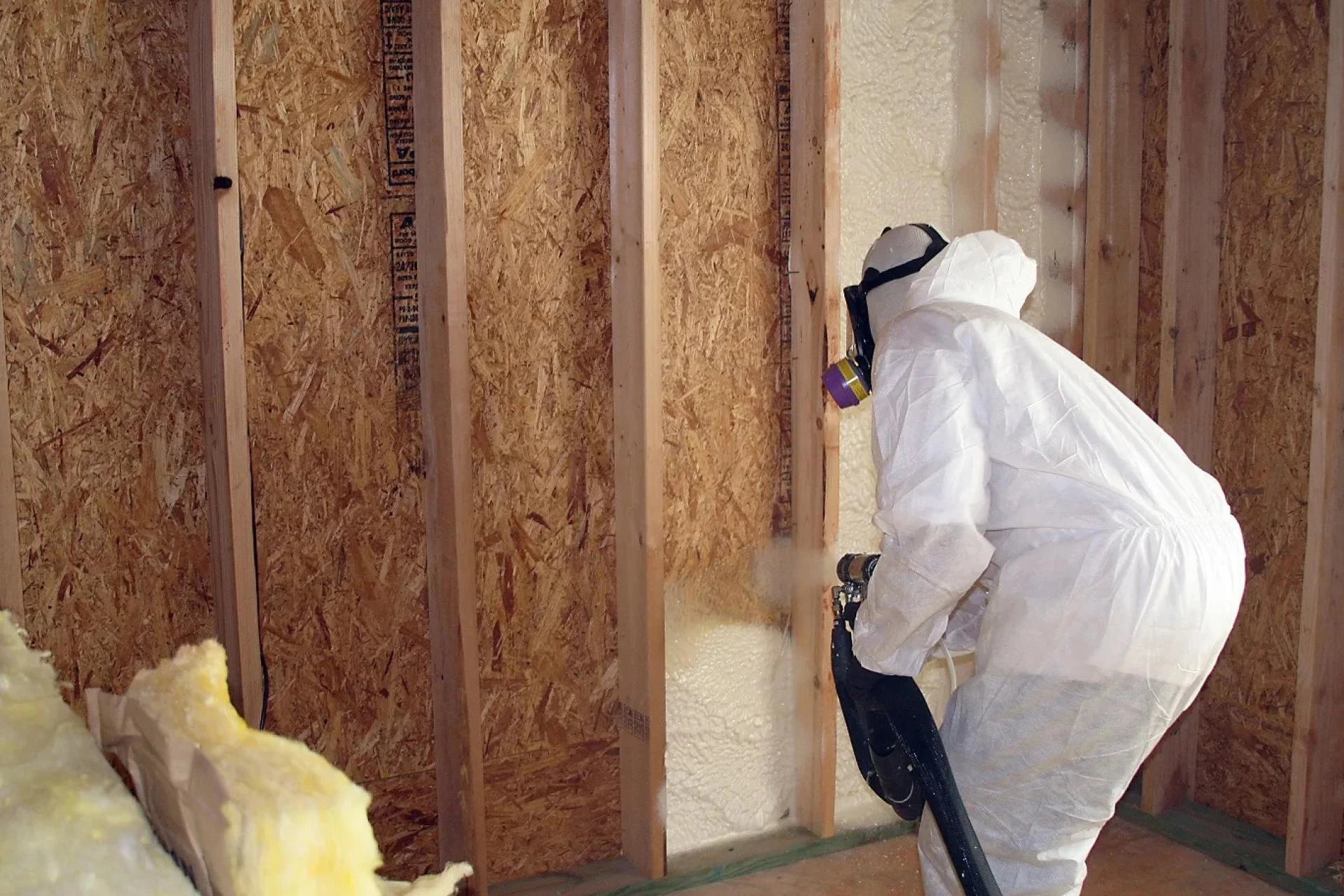
Spray foam insulation in Shoreline, WA, delivers long-term comfort and measurable energy savings for property owners. Our work focuses on sealing buildings at the source to reduce heat loss, air leakage, and moisture problems.
Quick answers that matter most
- Creates an airtight building envelope for consistent indoor comfort
- Reduces energy waste caused by drafts and thermal bridging
- Supports long-term durability in residential and commercial spaces
Why Spray Foam Insulation Makes Sense in Shoreline, WA
Shoreline’s marine climate brings cool winters, damp air, and shifting temperatures. Buildings here need insulation that does more than slow heat transfer.
Spray foam addresses energy loss, moisture control, and indoor comfort in one system. It expands on contact, sealing gaps that traditional insulation misses. This makes it ideal for both older homes and modern commercial structures.
Airtight Performance That Cuts Energy Loss
Air leakage is one of the biggest drivers of energy waste. According to guidance from the U.S. Department of Energy insulation air sealing overview, uncontrolled air leaks can account for up to 30 percent of heating and cooling losses in buildings.

Spray foam insulation forms a continuous air barrier. This helps stabilize indoor temperatures and reduces strain on HVAC systems throughout the year.
Moisture Resistance For Coastal Conditions
Moisture intrusion can lead to mold growth and material degradation. Closed-cell spray foam resists water absorption and adds structural rigidity, which makes it well suited for crawl spaces, foundations, and exterior walls exposed to damp conditions.
The U.S. Environmental Protection Agency’s indoor air quality guidance explains how proper insulation and air sealing help limit moisture movement and improve indoor air quality at the same time.
Open-Cell vs Closed-Cell Spray Foam Options
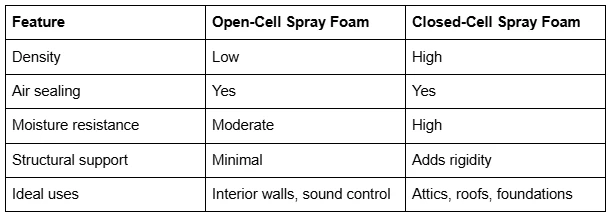
Choosing the right spray foam type depends on building use, location, and performance goals. Both options deliver air sealing, but they behave differently.
Open-cell spray foam works well for interior walls and sound control. Closed-cell spray foam offers higher density and moisture resistance.
Performance Comparison Table
We guide property owners through these choices based on how the building is used and where insulation delivers the most impact.
Residential Spray Foam Applications That Deliver Results
Homes in Shoreline often suffer from drafts, uneven room temperatures, and high energy bills. Spray foam solves these issues at their source.
We focus on targeted applications that improve daily comfort and long-term efficiency without unnecessary disruption.
Attics And Wall Systems
Heat rises, making attics a primary energy loss point. Spray foam seals rooflines and wall cavities, reducing temperature swings between floors and improving overall comfort.
Research shared by Building Science Corporation on air barrier systems highlights how continuous air barriers play a critical role in controlling heat and moisture movement through building assemblies.
Commercial Spray Foam for Performance-Driven Buildings
Commercial properties demand insulation that supports energy control, durability, and operational efficiency.
Spray foam insulation performs well in offices, warehouses, retail spaces, and mixed-use buildings throughout Shoreline.
Roofing And Exterior Insulation Systems
Spray foam roofing adds insulation and waterproofing in a single application. It conforms to irregular surfaces and reduces thermal bridging, which helps stabilize interior conditions and protect the roof assembly.

For commercial owners, this translates into lower energy demand and extended roof lifespan.
Conclusion: A Smarter Insulation Choice for Shoreline Properties
Spray foam insulation offers airtight performance, moisture control, and lasting energy efficiency. For Shoreline property owners, it supports comfort in residential spaces and operational efficiency in commercial buildings.
By sealing gaps and strengthening the building envelope, spray foam delivers measurable results without relying on short-term fixes.
Take the Next Step Toward Better Building Performance
Insulation plays a direct role in how efficiently a building operates. When air leaks and moisture issues stay uncontrolled, comfort and energy costs suffer.
We help property owners improve building performance with targeted spray foam solutions designed for Shoreline’s climate. Cascadia Spray Foam Insulation of Seattle supports performance-driven residential and commercial projects with precision and care.
Call (425) 386-3500 to discuss your insulation goals today.
FAQs
How does spray foam support long-term energy efficiency?
Spray foam creates an airtight seal that reduces heat loss and air infiltration. This helps HVAC systems run more efficiently and maintain stable indoor temperatures.
Can spray foam be used in both walls and roofs?
Yes. Spray foam works well in walls, attics, roof decks, and foundations. Each application targets a specific source of energy loss.
Does spray foam help with noise control?
Open-cell spray foam absorbs sound effectively, which helps reduce noise transfer between rooms and floors.
Is spray foam appropriate for mixed-use buildings?
Spray foam adapts well to mixed-use structures by supporting insulation, air sealing, and moisture control across different building zones.
How does spray foam affect indoor air quality?
By limiting uncontrolled air movement, spray foam helps keep outdoor pollutants and moisture from entering the building envelope.
Reviewer: Olivia Thompson has spent 10 years working in spray foam insulation, helping companies grow their visibility. She reviewed this article and provided valuable suggestions on how to better align the content with the needs and expectations of customers, ensuring it resonates with the target audience.