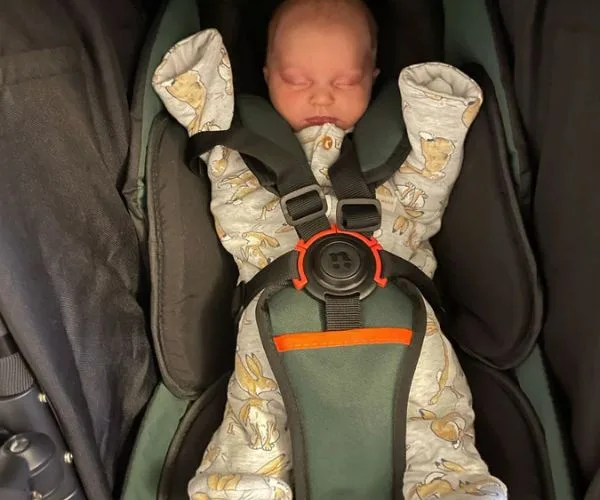
Few decisions feel as weighty as choosing where your baby will sleep and travel in those first few months. Walk into any baby shop and you'll quickly meet two options: the traditional carrycot and the lie-flat seat. Both claim to be safe and comfortable, yet they work quite differently. This guide breaks down the differences so you can choose with confidence.
Why Newborn Positioning Matters
Newborns have weak neck muscles, developing spines and small airways. For that reason, safe sleep guidance from organisations such as The Lullaby Trust recommends that babies lie flat on their backs on a firm, flat surface. A semi-upright position can cause a baby's head to slump forward, which may restrict breathing. Whichever option you choose, a fully flat position is the priority in the early weeks.
When you're comparing a newborn pram setup, this principle should guide every other decision.
What Is a Carrycot?
A carrycot is a separate, enclosed, bassinet-style unit that clips onto the pushchair chassis. It has a firm base, a snug mattress and high sides, making it a dedicated sleeping space.
Advantages of a Carrycot- Truly flat surface: The rigid base keeps your baby in the ideal sleeping position.
- Protection from the elements: Deep sides and a hood shield against wind, rain and sun.
- Dual purpose: Many can be lifted off the chassis and used as a bed at home or at a friend's house.
- Familiar feel: A cosy, cocooned space can help settle newborns who like to feel secure.
- Limited lifespan: Most babies outgrow it between three and six months, or once they start rolling or sitting up.
- Extra bulk: It adds weight and takes up boot space.
- Higher cost: Unless it's included in a bundle, buying one separately can add noticeably to your budget.
What Is a Lie-Flat Seat?
A lie-flat seat is the main pushchair seat unit with a reclining backrest that lowers to a near-horizontal position. Because it is one unit, there is nothing extra to carry or store.
Advantages of a Lie-Flat Seat- Longer use: The same seat carries your child from birth through toddlerhood.
- Lighter and more compact: There's no second unit to lift or fit in the car.
- Better value: You avoid buying a separate carrycot, which suits tighter budgets.
- Easy transition: There's no switching between parts as your baby grows.
- Not always fully flat: Some seats stop short of a true 180-degree recline, so check the angle carefully.
- Less enclosed: Your baby is more exposed to weather without a proper cover or footmuff.
- Limited off-chassis use: You can't usually carry the seat indoors as a bed.
Safe Sleep Guidance to Keep in Mind
Regardless of which option you choose, follow these basics:
- Place your baby on their back with their feet near the bottom.
- Use only the mattress supplied, with no extra pillows or padding.
- Avoid heavy blankets, and keep the area around the face clear.
- Check that your baby isn't overheating, particularly under hoods or covers.
- Treat prams as short-term sleepers, then move your baby to a cot or Moses basket for longer sleeps.
Prams are designed for travelling, not for overnight sleep, so always supervise naps.
How Long Can Each Be Used?
A carrycot typically suits babies from birth to around six months, depending on weight limits and developmental milestones. Once your baby can push up, roll over or sit unaided, it's time to move on. A lie-flat seat, by contrast, remains in use for years, though the flat recline matters most in the first six months. Always check the manufacturer's weight and age limits.
Portability and Lifestyle
City Living and Public TransportIf you juggle buses, lifts and narrow shop doors, a lie-flat seat's compact build is hard to beat. Less to carry means less stress.
Country Walks and Active ParentsIf you spend time on rougher ground, a carrycot's added cocoon and sturdy support can feel reassuring. Pairing one with an all-terrain travel system gives you a smooth ride on gravel, grass and uneven paths.
Budget Considerations
A lie-flat seat usually wins on cost, since it's part of the standard pushchair. Carrycots add expense but can pay off if you plan to use one for a second child or resell it. Bundles that include both often give the best overall value, so compare what's in the box before buying.
So, Which Should You Choose?
Choose a carrycot if you want a dedicated, enclosed sleeping space, plan on frequent outdoor walks, and don't mind the extra cost and bulk.
Choose a lie-flat seat if you prefer a lighter, simpler setup that lasts longer and keeps costs down.
Final Thoughts
Neither option is universally better. The right choice depends on your daily routine, living space and budget. Whatever you pick, prioritise a genuinely flat position, follow safe sleep guidance, and test the pushchair in person if you can. Your baby will thank you with longer, calmer naps.