Moving to a new city often comes with one big question: What should you do with your car? Driving long distances may sound exciting at first, but traffic fatigue, fuel expenses, tolls, and unexpected breakdown risks quickly make it stressful. That’s why many people relocating from now prefer car transportation in Mumbai by train, a practical and cost-effective alternative backed by Indian Railways.
Train-based vehicle transport offers a balance of affordability, safety, and convenience, especially for long-distance moves. This guide explains everything clearly — from eligibility rules and booking steps to costs and delivery timelines — so you know exactly what to expect.
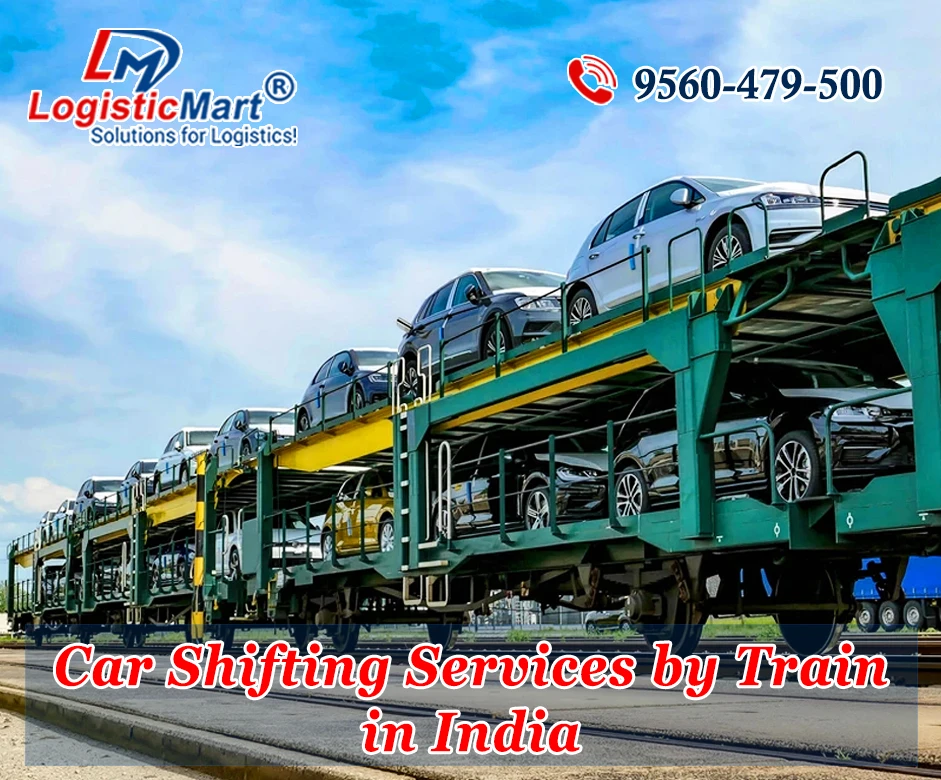
Why Choose Car Transportation by Train in Mumbai?
Mumbai is one of India’s busiest metropolitan cities, and relocating vehicles out of the city can be challenging. Transporting your car by train helps eliminate several moving hassles.
Key advantages include:
- Lower transportation cost compared to dedicated car carriers
- Reduced wear and tear on the vehicle
- Safe long-distance transit
- Environment-friendly transportation option
- Suitable for intercity relocations across India
Indian Railways transports cars using specialized wagons designed to hold vehicles securely during transit.
Rules for Car Transportation by Train
Before booking your car transport service, it’s important to understand the basic regulations set by Indian Railways.
Vehicle Eligibility Rules
Not every vehicle is accepted without inspection. Railways typically allow:
- Private cars registered for personal use
- Vehicles with valid registration certificates
- Operational vehicles capable of being loaded and unloaded safely
Commercial or heavily modified vehicles may require additional approvals.
Documentation Requirements
You must carry the following documents during booking:
- Original Registration Certificate (RC)
- Valid government-issued ID proof
- Address proof
- The booking form is provided at the parcel office
- Insurance documents (recommended)
Photocopies are usually submitted while originals are verified.
Fuel and Safety Guidelines
Railways enforce strict safety standards:
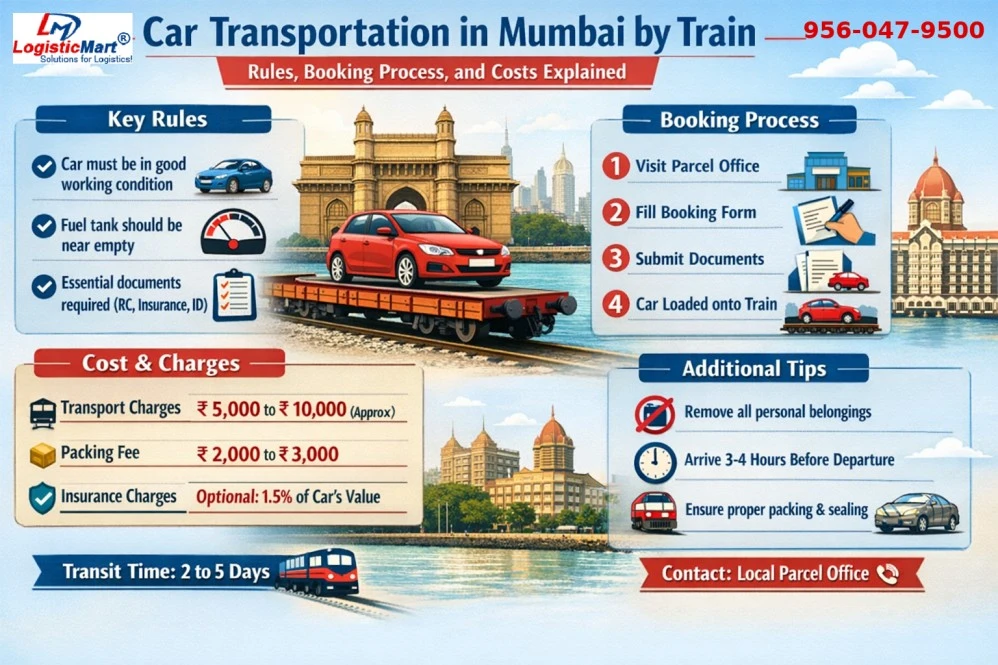
- The fuel tank must be nearly empty (usually less than 5 liters allowed)
- No personal belongings inside the car
- Battery connections may be checked
- The vehicle must be clean for inspection
Failure to follow these rules can delay shipment approval.
Booking Process for Car Transportation by Train
The booking process may look complicated initially, but it becomes straightforward once you understand the steps.
Step 1: Visit the Railway Parcel Office
In Mumbai, major booking facilities are available at stations like Lokmanya Tilak Terminus (LTT), Mumbai Central, and Dadar. Visit the parcel office at least 2–3 days before your intended travel date.
Step 2: Submit Documents and Request Booking
Provide vehicle details and submit required documents. Officials check wagon availability based on destination routes.
You can transport your car in two ways:
1. Parcel Mode
- The car travels independently
- You do not need to travel on the same train
- Slightly higher cost
2. Luggage Mode
- The car travels on the same train as the passenger
- Requires a confirmed passenger ticket
- Generally cheaper
Step 3: Vehicle Inspection
Railway staff inspect the car's condition and note existing scratches or dents. This record helps prevent disputes during delivery.
Step 4: Payment and Receipt
After weight and distance calculations, charges are generated. Once payment is completed, you receive a railway receipt (RR), which acts as your tracking and collection document.
Step 5: Vehicle Loading
On the scheduled day, bring your car for loading several hours before departure. Railway staff handle positioning and securing the vehicle inside the wagon.
Cost of Car Transportation by Train from Mumbai
Costs vary depending on distance, vehicle size, and transport mode.
Average Cost Estimates
Destination Approximate Cost Range
Mumbai to Delhi Rs. 6,000 – Rs. 9,000
Mumbai to Bangalore Rs. 7,000 – Rs. 10,000
Mumbai to Kolkata Rs. 8,000 – Rs. 11,000
Mumbai to Chennai Rs. 7,000 – Rs. 10,500
Factors Affecting Cost
- Distance between cities
- Vehicle dimensions and weight
- Mode chosen (parcel vs luggage)
- Insurance charges (optional but recommended)
- Handling and loading fees
Compared to road transport, train transport can save 20–40% in many cases.
Delivery Timeline and Vehicle Collection
Transit Time
Car delivery timelines depend on train schedules and destination distance.
- Nearby cities: 2–4 days
- Long-distance routes: 5–10 days
Delays may occur due to operational schedules rather than transit issues.
Delivery Process
Once the car reaches the destination:
- Visit the destination parcel office.
- Present your railway receipt and ID proof.
- Inspect the vehicle before taking delivery.
- Sign acknowledgment after verification.
Always check the car condition carefully before leaving the station premises.
Tips for Safe Car Transportation by Train
Preparation Checklist
- Remove valuables and accessories
- Take photos of the car before loading
- Fold mirrors and secure loose parts
- Keep a copy of documents handy
- Opt for transit insurance for peace of mind
These small precautions help ensure a smooth experience.
Train Transport vs Road Transport: Quick Comparison
Factor Train Transport Road Carriers
Cost Lower Higher
Wear & Tear Minimal Moderate
Speed Moderate Faster
Availability Route-dependent Flexible
Safety High Depends on the transporter
Train transport works best for planned relocations rather than urgent deliveries.
When Should You Choose Train Transportation?
Car transport by train is ideal if:
- You are relocating to another major city
- Budget is a priority
- Delivery urgency is low
- You want minimal vehicle usage during transit
For remote locations without railway connectivity, road transport may still be necessary.
Conclusion
Car shifting by train remains one of the most economical and reliable solutions for long-distance vehicle relocation in India. Understanding the rules, preparing documents in advance, and following safety guidelines can make the entire experience smooth and hassle-free.