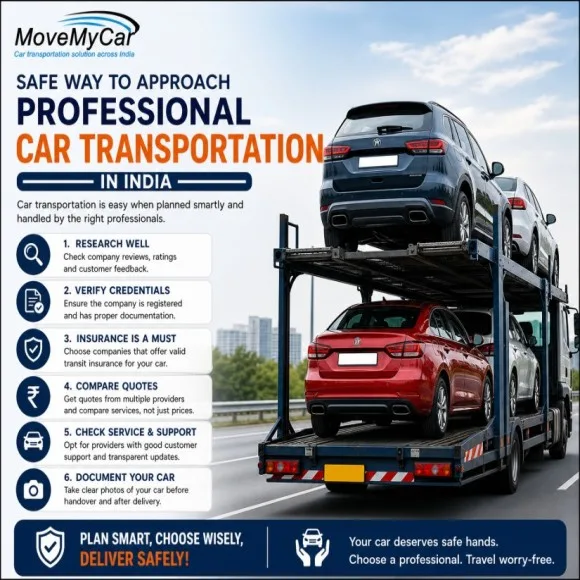
Moving to a new city for work, selling a car to a buyer in another state, or relocating your family? Car transportation in India has become a convenient alternative to driving long distances yourself. But with hundreds of operators, from large companies to small brokers, choosing the right one takes some care. This checklist will help you decide.
1. Check Registration and Experience
A reliable company should be a registered business with a GST number, a physical office, and verifiable contact details. Look for operators with several years in the industry and a presence across major routes such as Delhi to Mumbai, Bengaluru to Hyderabad, or Chennai to Pune. Beware of anyone who only communicates through a mobile number.
2. Ask About the Type of Carrier
Most companies use either open or closed carriers. Open carriers are more affordable and common for everyday cars. Closed carriers protect the vehicle from dust, rain, and road debris, and suit luxury or vintage cars. Ask which one your quote includes.
3. Confirm Insurance Coverage
This is the most important item on the list. Ask whether the company provides transit insurance, what it covers, and how claims are handled. Request the policy details in writing. Your own car insurance may not cover damage during transportation, so don’t assume it does.
4. Understand Car Transportation Charges in India
Car transportation charges in India vary widely, and the cheapest quote is rarely the best. The main factors are:
- Distance: Longer routes cost more, but the rate per kilometre usually falls on longer trips.
- Car size and type: SUVs and luxury cars cost more than hatchbacks.
- Carrier type: Closed carriers cost more than open ones.
- Service type: Door-to-door pickup and delivery costs more than terminal-to-terminal.
- Season and demand: Rates can rise during peak relocation months.
Always get a written, itemised quote and ask about extra costs such as GST, loading charges, or waiting fees.
5. Read Online Reviews and Ask for References
Check Google reviews, social media, and independent platforms. Pay attention to how the company responds to complaints, not just the star rating. A good provider will gladly share customer references.
6. Look for GPS Tracking and Regular Updates
Reliable companies let you track your vehicle or at least provide regular status updates. This gives you peace of mind and shows the company is accountable.
7. Review the Documentation Process
A professional company will give you a booking confirmation, a vehicle condition report at pickup, and a delivery receipt. Photograph your car from every angle before handing it over. Typical documents include your RC copy, ID proof, and an authorisation letter.
8. Avoid Large Advance Payments
Be cautious if a company demands full payment upfront. A small booking amount is normal, with the balance paid on delivery or as agreed in the contract.
9. Get Everything in Writing
Pickup date, estimated delivery time, charges, insurance terms, and the cancellation policy should all be in the agreement. Verbal promises are hard to enforce.
Quick Checklist
- Registered company with GST and an office
- Clear carrier type (open or closed)
- Written insurance details
- Itemised quote with no hidden fees
- Positive, verifiable reviews
- GPS tracking or regular updates
- Pickup and delivery condition reports
- Small advance only
- Signed agreement
Final Thoughts
The right company makes car transportation in India stress-free, while the wrong one can lead to delays, damage, and disputes. Compare at least three quotes, ask the questions above, and prioritise insurance and transparency over the lowest price. A little research up front protects your vehicle and your money.