When parents around the world hear that their child has relapsed leukemia, the search for options often crosses continents. In recent years, China has emerged as an unexpected powerhouse in pediatric CAR-T US, not by copying Western models but by developing its own distinct approach to this revolutionary treatment. Chinese researchers and clinicians have moved with remarkable speed, launching dozens of clinical trials and treating hundreds of children with CAR-T cells designed in local laboratories. What makes China’s story unique is the combination of rapid regulatory approval, lower manufacturing costs, and a sheer volume of patients that allows doctors to refine techniques faster than almost anywhere else. For families willing to travel, and for Chinese families facing a cancer diagnosis at home, these innovative programs are rewriting what’s possible in pediatric oncology.
How China’s Regulatory Path Accelerated Pediatric Access
Unlike the cautious, multi-year approval process typical in Western countries, China’s National Medical Products Administration created a faster pathway for CAR-T therapies specifically aimed at children with life-threatening cancers. This decision grew from a painful reality: tens of thousands of Chinese children are diagnosed with leukemia annually, and many relapse despite standard chemotherapy. The regulator allowed hospitals to conduct small, carefully monitored trials without waiting for complete Western approval data, a move that shaved years off development timelines. By 2021, China had more active CAR-T clinical trials than the United States, with a significant portion focused exclusively on pediatric populations. This regulatory boldness carries risks, of course, but it has also meant that Chinese children gained access to next-generation CAR-T constructs while their counterparts in other countries were still on waiting lists.
Targeting Different Cancer Proteins in Childhood Leukemia
Chinese pediatric CAR-T programs have distinguished themselves by not simply copying the CD19 target that dominates Western treatment. Recognizing that some children’s leukemia cells stop displaying CD19 as a way to hide from therapy, Chinese researchers aggressively pursued alternative targets. The most notable success has been CD22, a protein found on many of the same leukemia cells. Several Chinese hospitals now offer CD22-targeted CAR-T as a second option for children who relapsed after CD19 therapy, achieving remission rates around seventy percent in tough-to-treat cases. Researchers in Shanghai and Beijing have also pioneered dual-target CAR-T cells that attack both CD19 and CD22 simultaneously, making it nearly impossible for leukemia cells to escape. This layered approach represents a sophisticated understanding that childhood cancers are wily and require multiple angles of attack.
Managing Side Effects with a Distinctly Chinese Approach
Perhaps the most striking difference in Chinese pediatric CAR-T care lies in how doctors manage the intense immune reactions that follow infusion. While Western protocols rely heavily on tocilizumab and high-dose steroids to calm cytokine release syndrome, many Chinese centers have developed a stepped approach using lower-cost medications like ruxolitinib, which is already widely manufactured in China. More intriguingly, several large hospitals now use a technique called “dose fractionation,” where the CAR-T cells are infused over three to five days instead of a single push. This slower delivery gives the child’s immune system time to adjust, resulting in fewer cases of severe neurotoxicity. Pediatric intensivists in Chinese programs have become exceptionally skilled at predicting which children will experience severe CRS based on pre-infusion biomarkers, allowing them to intervene early with targeted therapies that cost a fraction of Western alternatives.

The Role of High-Volume Chinese Pediatric Centers
Numbers matter in cancer care, and Chinese pediatric hospitals treat CAR-T patients in volumes that most Western centers can only dream of achieving. The Children’s Hospital of Fudan University in Shanghai has infused over three hundred children with CAR-T cells since 2017, a caseload that has produced invaluable real-world data. When you treat that many children, rare complications become familiar, and protocols tighten with each patient. Doctors at high-volume Chinese centers have learned, for example, that younger children under six years old require different pre-infusion chemotherapy conditioning than teenagers, a nuance that took years to emerge in smaller Western trials. The sheer number of patients also means faster enrollment in clinical trials; a promising new CAR-T construct can go from laboratory to first pediatric patient in a matter of weeks, not months. This efficiency has made China an attractive partner for international pharmaceutical companies seeking to test novel CAR-T designs.
Cost Advantages Making CAR-T More Reachable for Families
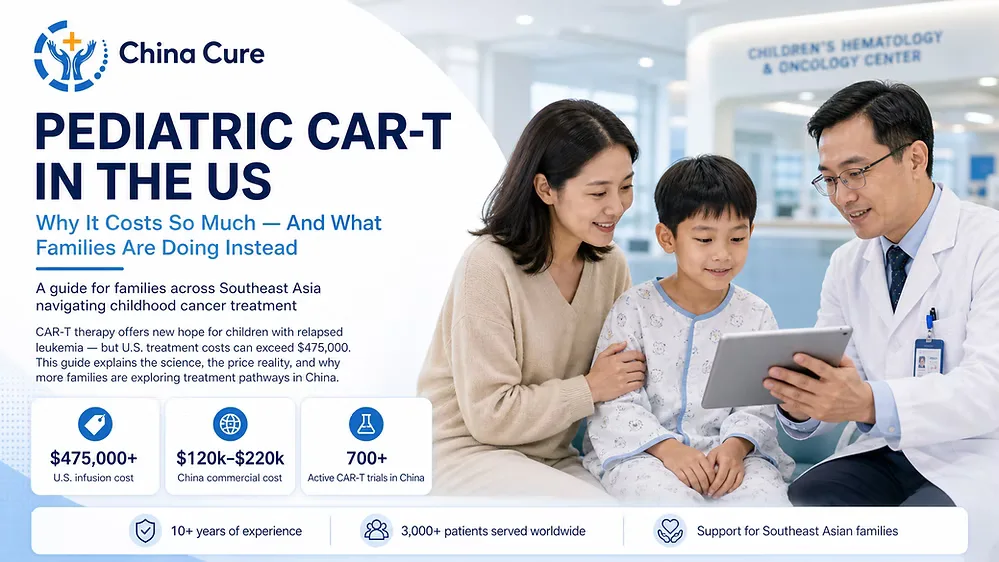
One uncomfortable reality of CAR-T therapy worldwide is its staggering price tag, often exceeding half a million dollars in the United States. China has dramatically changed this equation through local manufacturing and government negotiation. A pediatric CAR-T treatment course in a major Chinese hospital typically costs between fifty thousand and one hundred thousand US dollars, roughly one-tenth the American price. This affordability comes partly from domestic production of the viral vectors used to genetically modify T-cells, which had previously been an expensive import. The Chinese government has also included several CAR-T products in provincial insurance schemes, meaning families pay only a fraction out of pocket. For international families considering treatment abroad, this cost difference makes China a realistic option, though travel and lodging add additional expenses. Several Chinese hospitals have established international patient departments specifically for CAR-T referrals from Southeast Asia, the Middle East, and even Europe.
Current Limitations and Cautious Optimism for Solid Tumors
Despite remarkable progress, Chinese pediatric CAR-T programs face genuine limitations that families deserve to understand honestly. The vast majority of successfully treated children have B-cell acute lymphoblastic leukemia, the same cancer where CAR-T performs best worldwide. Results for pediatric solid tumors like neuroblastoma or brain cancers remain disappointing, with most trials showing only temporary responses. Chinese researchers are attacking this problem from new angles, including CAR-T cells designed to recognize multiple solid tumor antigens at once and “armored” cells that carry anti-tumor drugs directly to the cancer site. Early results from a Beijing trial targeting GD2-positive neuroblastoma have shown some complete remissions, though the numbers remain too small to celebrate broadly. For now, families seeking CAR-T therapy in China for solid tumors should understand they are entering experimental territory with uncertain outcomes, but for those with no remaining options locally, this frontier of pediatric cancer care continues to push forward with remarkable energy and hope.