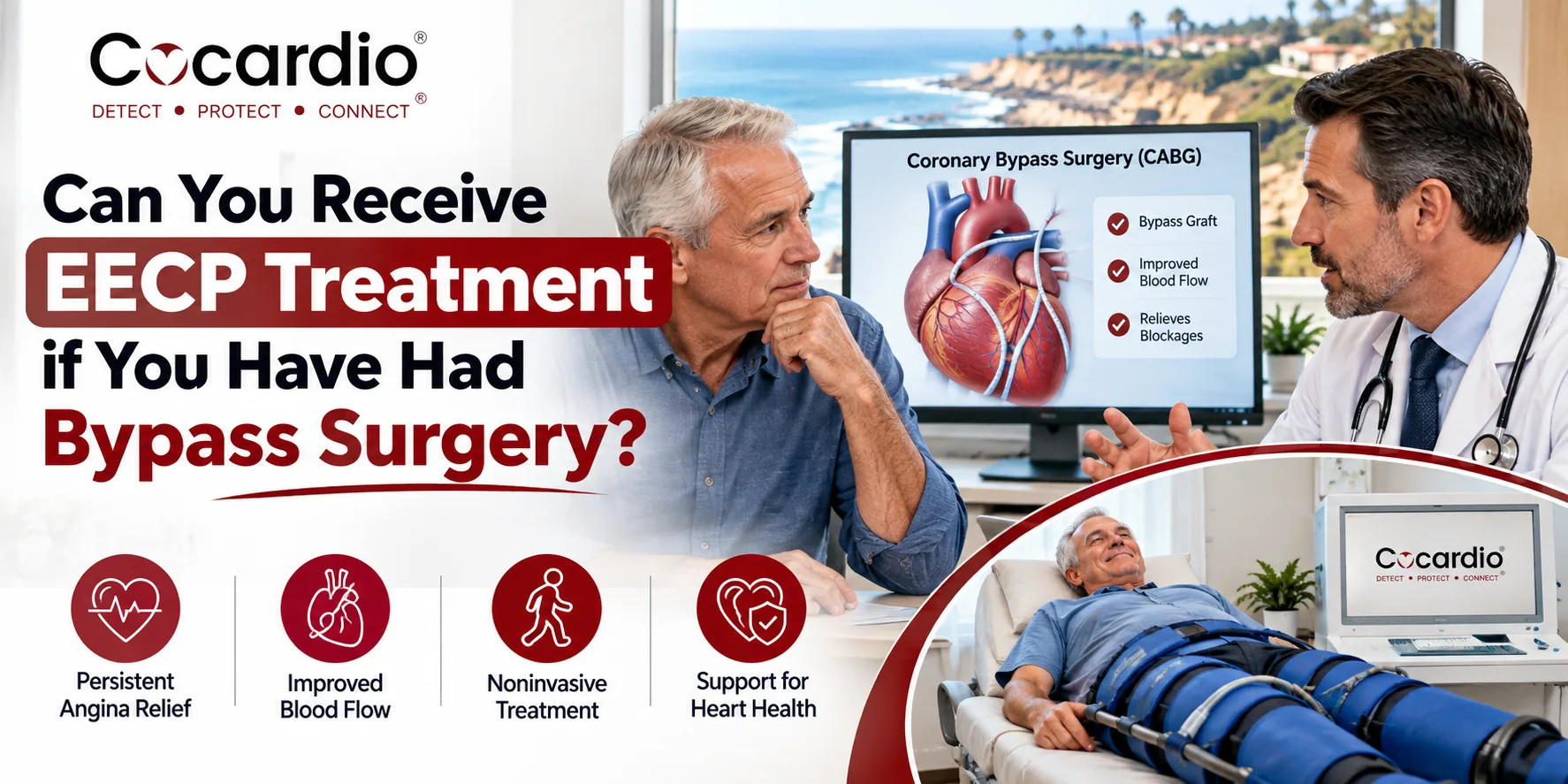
Coronary artery bypass grafting (CABG) helps restore blood flow to areas of the heart affected by significant coronary artery disease. However, some patients continue experiencing chest discomfort, pressure, or other angina symptoms months or years after surgery. If you are searching for eecp treatment near me, you may be wondering whether Enhanced External Counterpulsation (EECP) is an option after bypass surgery. For selected patients with persistent chronic stable angina, EECP may be considered when symptoms remain despite appropriate medical treatment and further revascularization is unsuitable.
At CoCardio® in Encinitas, CA, patients can inquire about whether EECP deserves consideration as part of their ongoing cardiac care. Having undergone bypass surgery does not automatically prevent someone from receiving EECP, but individual eligibility requires careful medical evaluation. Your cardiologist must consider your current symptoms, heart function, vascular health, and previous procedures. Understanding these factors can help you prepare for a productive consultation.
Why Can Angina Continue After Bypass Surgery?
Bypass surgery creates new routes for blood to travel around narrowed or blocked coronary arteries. Although the procedure can improve blood supply, it does not eliminate the underlying coronary artery disease. Some patients develop recurrent symptoms because of changes in their bypass grafts, progression of disease in native coronary arteries, or other cardiac conditions. Persistent chest discomfort should always be evaluated rather than assumed to be a normal consequence of previous surgery.
Can Bypass Grafts Become Narrowed Over Time?
Bypass grafts can develop narrowing or blockage, and the risk varies depending on the type of graft and individual medical factors. Coronary artery disease may also progress in vessels that were not originally bypassed. These changes can reduce blood flow to portions of the heart muscle and contribute to recurrent angina. Your cardiologist may recommend additional testing to determine whether reduced coronary blood flow is responsible for your symptoms.
Could Chest Pain Have Another Cause?
Not every episode of chest discomfort after bypass surgery represents recurrent angina. Musculoskeletal discomfort, gastrointestinal conditions, and other health problems can sometimes produce similar symptoms. Nevertheless, new, worsening, or unexplained chest pain requires prompt medical assessment because serious cardiac conditions must be excluded. Sudden or persistent chest pressure, particularly with shortness of breath, sweating, nausea, or fainting, warrants emergency medical attention.
Can Patients With Previous Bypass Surgery Receive EECP?
Previous bypass surgery is not, by itself, an absolute contraindication to EECP. Some patients with chronic stable angina may be considered for treatment when symptoms continue despite guideline-directed medical therapy and additional procedures are not appropriate. Patients searching for eecp treatment near me should understand that eligibility depends on their current cardiovascular condition rather than their surgical history alone. A qualified clinician must determine whether the potential benefits and risks make EECP appropriate.
When Might EECP Be Considered After CABG?
EECP is generally considered for selected patients with chronic stable angina whose symptoms remain troublesome despite appropriate treatment. This may include patients who are not suitable candidates for additional coronary bypass surgery or percutaneous coronary intervention. The treatment is not intended to replace necessary emergency care, prescribed medication, or procedures that remain clinically indicated. Its potential role should be discussed with the cardiologist managing your coronary artery disease.
How Does EECP Therapy Work?
EECP uses inflatable cuffs positioned around the calves, thighs, and sometimes the buttocks. The cuffs inflate and deflate in coordination with the cardiac cycle, using electrocardiogram signals to time the pressure changes. This process is designed to augment blood flow during diastole and reduce the workload associated with blood ejection. Patients considering eecp therapy for angina should understand that symptom improvement varies and treatment does not reopen blocked bypass grafts.
Is EECP Safe for Every Patient With Previous Heart Surgery?
EECP is not suitable for everyone, including some patients with particular rhythm disorders, significant aortic valve disease, vascular problems, or other contraindications. Recent surgery, unstable cardiac symptoms, and certain circulatory conditions may also affect treatment decisions. Your clinician should review relevant medical history and assess whether cuff compression and ECG-synchronized treatment can be delivered safely. Never begin EECP solely because another patient with a similar surgical history received it successfully.
What Medical Information Should Your Cardiologist Review?
A thorough evaluation helps determine why symptoms continue and whether EECP is appropriate. Your cardiologist may review surgical records, current medications, recent cardiac investigations, and the severity of your angina. Information about heart rhythm, blood pressure, circulation, and other medical conditions can also influence eligibility. The exact testing required depends on your clinical history and whether existing records provide sufficient information.
Which Heart Tests May Be Relevant?
An electrocardiogram can provide information about heart rhythm and electrical activity. An echocardiogram may help assess cardiac structure, pumping function, and valve disease. Stress testing or coronary imaging may be considered when clinically indicated to investigate persistent symptoms or possible ischemia. These investigations are not automatically required for every patient, and your treating clinician should determine which are appropriate.
What Records Should You Bring to Your Consultation?
Bring your bypass surgery summary, available coronary angiography reports, recent cardiac test results, and an updated medication list. Information about previous stents, hospital admissions, and changes in chest pain symptoms can also be useful. CoCardio® patients preparing for an assessment can review the Medical Tests Before EECP Treatment – CoCardio® Patient Evaluation Checklist. Organizing these documents beforehand may help your clinical team evaluate your history more efficiently.
Why Does Your Medication History Matter?
Medications are an important part of managing coronary artery disease after bypass surgery. Your cardiologist may review antianginal treatment, antiplatelet therapy, cholesterol management, and medications for other cardiovascular conditions. This review helps determine whether symptoms persist despite appropriate medical management and whether further adjustments are needed. Do not stop or change prescribed medication in preparation for EECP unless your treating clinician specifically instructs you to do so.
How Does EECP Differ From Another Heart Procedure?
Unlike bypass surgery or coronary angioplasty, EECP is a noninvasive treatment that does not require an incision or catheter placement. Patients generally attend outpatient sessions while remaining awake during treatment. A commonly used course consists of approximately 35 one-hour sessions, although the prescribed schedule depends on clinical circumstances. EECP aims to improve symptoms in appropriately selected patients rather than mechanically remove coronary blockages.
Can EECP Replace Another Bypass Surgery?
EECP should not be viewed as a direct substitute for bypass surgery or another medically indicated coronary intervention. Some patients may need further investigation or revascularization to address significant coronary problems. Others may have limited procedural options and continue experiencing chronic stable angina despite appropriate medication. In these situations, EECP may be discussed as an additional symptom-management option following specialist assessment.
Does EECP Prevent Future Coronary Artery Blockages?
EECP is not established as a treatment that prevents future coronary artery blockages or replaces proven cardiovascular risk-reduction measures. Patients researching eecp for coronary artery disease prevention should distinguish potential symptom benefits from established prevention strategies. Cholesterol management, blood pressure control, smoking cessation, appropriate physical activity, and prescribed medication remain important after CABG. Your cardiologist should guide a comprehensive secondary prevention plan based on your individual risks.
What Should You Expect During an EECP Consultation?
An EECP consultation should begin with a review of your symptoms, cardiac history, and treatment goals. The clinical team may discuss whether your current condition warrants further cardiology evaluation before proceeding. Patients exploring EECP therapy near me should ask how eligibility is established and which medical records are required. A consultation provides an opportunity to understand potential benefits, limitations, scheduling requirements, and safety considerations.
How Long Does an EECP Treatment Course Take?
A conventional EECP course often involves 35 treatment hours delivered over approximately seven weeks, commonly with five sessions per week. Actual scheduling may vary according to clinical recommendations and provider availability. Consistent attendance is generally encouraged to complete the prescribed course. Patients should discuss transportation, work commitments, and other practical considerations before beginning treatment.
What Should You Ask About Treatment Costs?
Patients should clarify the recommended number of sessions, anticipated charges, and available payment arrangements before committing to treatment. Insurance coverage depends on the plan, medical circumstances, and applicable eligibility requirements. Information about EECP therapy cost can be requested directly from CoCardio®. The team can explain its available pricing and administrative processes, while coverage decisions should be confirmed with the relevant insurer.
Is ECP Different From EECP?
The terms external counterpulsation and enhanced external counterpulsation are sometimes used in related discussions about noninvasive cardiac treatment. Patients encountering the term ecp therapy should confirm which treatment system and protocol a provider offers. Equipment, clinical assessment, and treatment procedures should be explained before scheduling. Your cardiologist can help determine whether the proposed therapy is appropriate for your condition.
When Should You Request an EECP Consultation in Encinitas?
Consider requesting an evaluation if you have previously undergone CABG and continue experiencing chronic stable angina despite appropriate medical management. You may also wish to discuss EECP if your cardiologist has explained that further coronary procedures are unsuitable. Searching for eecp treatment near me can be a starting point, but choosing a provider should involve reviewing clinical screening and treatment procedures. CoCardio® in Encinitas, CA, can provide information about its consultation process and the records needed for an eligibility review.
What Questions Should You Ask Before Booking?
Ask whether your previous bypass surgery affects eligibility and whether your cardiologist should provide clearance or additional records. You should also ask about potential contraindications, expected treatment schedules, and how symptoms are monitored. Discuss what outcomes may be realistic for your particular condition and when treatment would need to be postponed or discontinued. These questions can help you make an informed decision with your cardiac care team.
How Can You Contact CoCardio®?
If persistent angina is affecting your daily activities after bypass surgery, contact CoCardio® to discuss the next steps for an eligibility assessment. You can request an EECP consultation through the online form and provide a brief description of your cardiac history. Include whether you have undergone CABG, when the surgery occurred, and whether you are currently under a cardiologist's care. For direct assistance, call +1(858) 500-1399 and ask about the consultation process in Encinitas.
Conclusion
Previous coronary bypass surgery does not automatically rule out EECP treatment, but eligibility requires an individualized cardiovascular assessment. Patients with persistent chronic stable angina may be considered when symptoms remain despite appropriate medical therapy and further revascularization is unsuitable. If you are researching eecp treatment near me, focus on clinical screening, realistic treatment expectations, and coordination with your cardiologist. Contact CoCardio® in Encinitas at +1(858) 500-1399 or complete the online consultation form to ask about the next steps.
Medical Disclaimer
This article is provided for general educational purposes and does not constitute medical advice, diagnosis, or an individualized treatment recommendation. EECP is not appropriate for every patient, and a history of bypass surgery does not establish eligibility. Treatment decisions must be made by a qualified healthcare professional after reviewing your symptoms, medical history, current medications, and relevant test results. If you experience new, severe, prolonged, or worsening chest pain, especially with breathlessness, sweating, nausea, or fainting, call 911 immediately rather than waiting for an outpatient consultation.