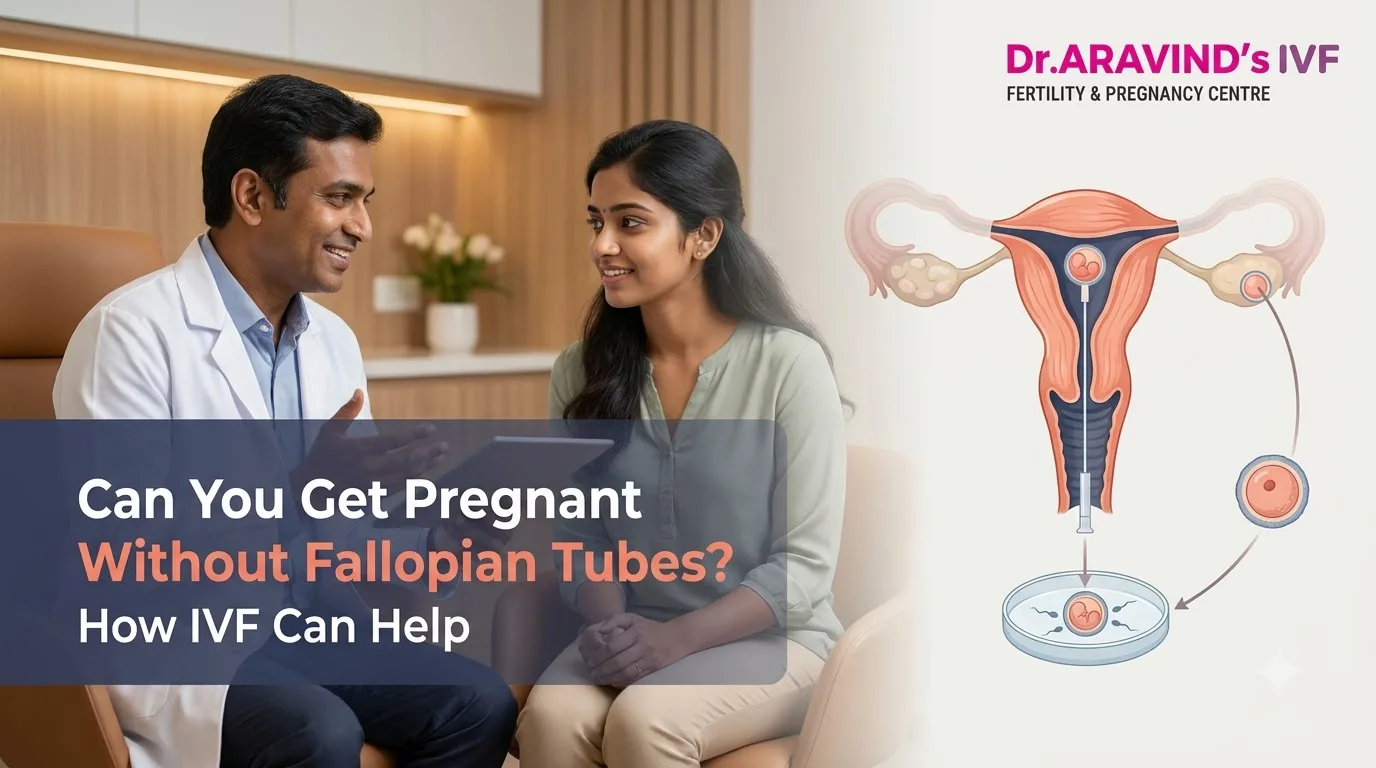
Can you get pregnant without fallopian tubes? Yes, pregnancy is possible with IVF even when both fallopian tubes have been removed or are no longer functioning. This is because IVF does not require the egg and sperm to meet inside the fallopian tubes. Instead, eggs are collected from the ovaries, fertilization takes place in a laboratory, and the resulting embryo is transferred directly into the uterus.
For women searching for a Fertility centre in Pollachi, understanding this difference can make a major concern feel more manageable. The fallopian tubes are important for natural conception, but they are not essential for carrying a pregnancy when IVF is used. A fertility specialist can assess the reason for tubal damage and recommend treatment based on the woman's overall reproductive health.
What Happens When You Do Not Have Fallopian Tubes?
The fallopian tubes normally help transport the egg from the ovary and provide the usual place where fertilization occurs. After fertilization, the early embryo travels through the tube toward the uterus.
When both tubes are removed, sperm and egg can no longer meet through this natural pathway. However, the ovaries can continue to release eggs, and the uterus can still support an embryo.
This is where IVF can help.
During IVF, fertility medicines are used to stimulate the ovaries so that several eggs can develop. The eggs are then collected through a procedure and combined with sperm in a laboratory. After fertilization and embryo development, an embryo can be transferred into the uterus.
In other words, IVF bypasses the fallopian tubes.
Can You Get Pregnant Without Tubes Through IVF?
Yes. Women without both fallopian tubes may still become pregnant through IVF if the ovaries can provide eggs and the uterus is suitable for pregnancy.
The absence of fallopian tubes does not automatically mean that the ovaries stop working. This is an important distinction. The ovaries produce eggs and reproductive hormones, while the fallopian tubes provide the pathway for natural fertilization.
Therefore, a woman may have functioning ovaries and a healthy uterus even after both tubes have been removed.
However, pregnancy success depends on several factors, including age, ovarian reserve, egg quality, sperm health, embryo development, uterine health, and overall medical history.
For this reason, couples should not assume that tubal surgery alone determines their IVF outcome.
Why Are Fallopian Tubes Sometimes Removed?
Fallopian tubes may be removed because of severe damage or certain medical conditions. One possible reason is a serious tubal infection or extensive scarring.
Other situations may include:
- Previous ectopic pregnancy
- Severe tubal blockage or damage
- Hydrosalpinx
- Extensive pelvic infection
- Significant endometriosis
- Certain pelvic or reproductive surgeries
In some cases, a damaged tube may affect fertility even when it has not been removed. For example, a fluid-filled fallopian tube known as a hydrosalpinx may require specific treatment before IVF.
The right approach depends on the condition of the tubes and the woman's complete fertility profile.
What If the Tubes Are Blocked but Still Present?
Having fallopian tubes is not always the same as having functioning fallopian tubes.
A tube may be partially blocked, completely blocked, scarred, or damaged. The effect on fertility depends on the location and severity of the problem.
Some women have no clear symptoms. Difficulty becoming pregnant may be the first indication that there is a tubal problem.
Women researching signs fallopian tube blockage should know that symptoms alone cannot reliably confirm whether a tube is open. A woman may have pelvic pain or symptoms from an underlying condition, while another woman may have no noticeable symptoms at all.
You can also learn more about fallopian tube blockage symptoms and how conditions such as pelvic infections can affect fertility.
How Does IVF Bypass the Fallopian Tubes?
IVF changes the location where fertilization takes place.
Normally, sperm travels through the reproductive tract and meets the egg inside a fallopian tube. With IVF, doctors collect eggs from the ovaries and fertilize them outside the body in a laboratory.
The basic process involves:
- Ovarian stimulation – Medication helps several eggs develop.
- Egg retrieval – Mature eggs are collected from the ovaries.
- Fertilization – Eggs are fertilized with sperm in the laboratory.
- Embryo development – Fertilized eggs are monitored as they develop into embryos.
- Embryo transfer – A selected embryo is placed into the uterus.
Because fertilization takes place outside the body, the fallopian tubes are not needed for the egg and sperm to meet.
This is why IVF can be an important treatment option for women with significant tubal-factor infertility.
When Is IVF Considered for Tubal Infertility?
IVF may be considered when both fallopian tubes are blocked or absent, particularly when natural conception is not possible through the normal tubal pathway.
It may also be considered when the tubes are severely damaged, when previous treatment has not restored fertility, or when other fertility factors are also present.
A consultation at a Fertility centre in Pollachi can help determine whether IVF is appropriate. The evaluation may include ovarian reserve testing, ultrasound, semen analysis for the male partner, medical history, and assessment of the uterus and previous fertility treatment.
The goal is not simply to recommend IVF. It is to understand why pregnancy has not occurred and choose the treatment that best fits the couple's circumstances.
What Affects IVF Success Without Fallopian Tubes?
Not having fallopian tubes does not by itself determine whether IVF will succeed.
Several other factors can influence the outcome. Female age is particularly important because egg quantity and quality generally change over time. Ovarian reserve, sperm quality, embryo development, uterine health, and certain medical conditions may also affect treatment outcomes.
This is why an ivf hospital in pollachi should provide individualized fertility assessment rather than giving the same treatment plan to every patient.
Couples comparing the best ivf centre in india should also look at the quality of fertility evaluation, embryology services, treatment planning, and follow-up care.
Is Pregnancy Possible After Both Tubes Are Removed?
Yes. If the ovaries are functioning and the uterus is capable of supporting pregnancy, IVF may allow pregnancy after both fallopian tubes have been removed.
The absence of the tubes mainly prevents natural fertilization from occurring in the usual way. IVF provides an alternative route by fertilizing the egg outside the body and transferring the embryo into the uterus.
However, every case is different. A fertility specialist should review the reason for tubal removal, ovarian function, uterine health, age, and other reproductive factors before recommending a treatment plan.
Conclusion
Can you get pregnant without tubes? Yes, IVF can make pregnancy possible even when both fallopian tubes are absent or severely damaged. The key is that IVF bypasses the normal pathway where fertilization takes place.
For women looking for a Fertility centre in Pollachi, an early fertility evaluation can help clarify whether the tubes are blocked, damaged, or absent and whether IVF may be appropriate. The treatment plan should also consider ovarian reserve, egg quality, sperm health, uterine health, age, and previous medical history.
Whether you are comparing an ivf hospital in pollachi or researching the best ivf centre in india, choosing evidence-based fertility care and receiving a personalized assessment can help you understand your options with greater confidence.
Frequently Asked Questions
1. Can you get pregnant without both fallopian tubes?
Yes. Pregnancy can be possible through IVF when both fallopian tubes have been removed or are not functioning. IVF allows fertilization to occur outside the body before an embryo is transferred into the uterus.
2. Can you get pregnant naturally without fallopian tubes?
If both fallopian tubes are completely absent, natural conception is not possible because the egg and sperm cannot meet through the normal reproductive pathway. IVF can bypass the need for the tubes.
3. Can you get pregnant with one fallopian tube?
Yes. Natural pregnancy may be possible with one healthy, functioning fallopian tube. The chances also depend on ovulation, sperm health, age, ovarian reserve, and other fertility factors.
4. What are the signs of fallopian tube blockage?
Blocked tubes often do not cause specific symptoms. Some women may experience pelvic pain or symptoms related to an underlying condition, while others may only discover the problem during a fertility evaluation. Testing is needed to determine whether the tubes are open.
5. How does IVF help if both fallopian tubes are blocked?
IVF bypasses the fallopian tubes. Eggs are collected from the ovaries, fertilized with sperm in a laboratory, and a resulting embryo is transferred directly into the uterus. This allows fertilization to occur without requiring the tubes.