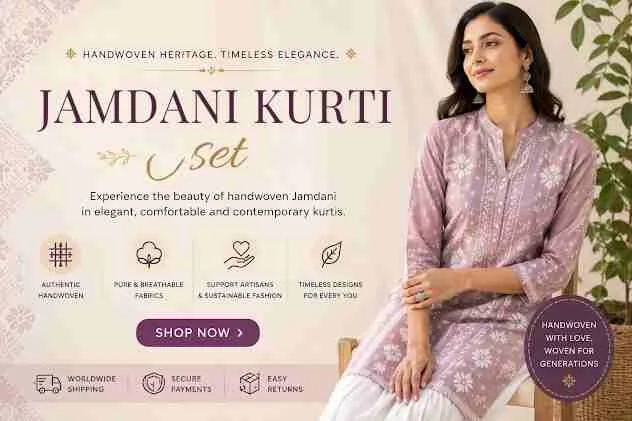
Jamdani suit sets continue to captivate women who value timeless elegance and authentic craftsmanship. Yet many discover that what appears as a premium handloom piece often turns out to be a power-loom imitation with printed motifs that fade quickly. If you have searched for breathable, intricately woven ethnic wear for weddings, family functions, or festive occasions only to feel disappointed by quality, this guide reveals exactly what makes genuine Jamdani suit sets special and how to choose them with confidence.
At Indeloom, we work directly with master weavers preserving this heritage craft. This pillar guide equips you with knowledge to select, style, and care for authentic Jamdani ensembles that honor tradition while meeting modern needs.
History and Origins of Jamdani Weaving in Bengal
Jamdani weaving traces its roots to ancient Bengal, with techniques refined over centuries along the banks of rivers like the Shitalakshya. The craft flourished under Mughal patronage, where artisans perfected the art of inserting supplementary weft threads to create floating motifs that seem to hover above the sheer base fabric.
The term "Jamdani" itself evokes the Persian influence during the Mughal era, meaning "flower vase," yet the foundational techniques belong to Bengal's handloom tradition. Today, regions in West Bengal and Bangladesh produce prized variations, with Indian handlooms gaining recognition through GI tags for distinctive styles.
This heritage makes Jamdani suit sets more than clothing—they represent living cultural legacy. Supporting genuine pieces helps sustain artisan families and keeps centuries-old skills alive.
Key Characteristics of Authentic Jamdani Suit Sets
True Jamdani suit sets stand out through several unmistakable features:
- Sheer yet durable base fabric: Usually pure cotton muslin that feels incredibly lightweight and breathable, ideal for India's humid climate.
- Discontinuous weft technique: Artisans weave each motif individually by hand, creating raised, textured patterns rather than flat prints.
- Intricate motifs: Geometric designs, floral bootis, paisleys, and nature-inspired elements in contrasting or tonal threads, often including gold or silver zari highlights in premium variants.
- Unstitched 3-piece construction: Kurta material, salwar/bottom fabric, and a coordinating dupatta with matching borders and pallu-like detailing.
- Natural drape and finish: The fabric flows gracefully without stiffness, with subtle variations that signal handloom origin.
These traits deliver comfort for long wear during weddings or poojas while maintaining a luxurious appearance that photographs beautifully.
How to Spot Genuine vs Fake Jamdani Fabrics
Many shoppers struggle with this pain point. Use this checklist to verify authenticity:
- Examine the weave under light — Genuine Jamdani shows motifs integrated into the fabric with visible thread transitions on the reverse side. Machine-made versions have uniform, printed patterns that look flat.
- Feel the texture — Authentic pieces feel soft with a slight natural crispness that softens with wear. Fakes often feel slippery or overly smooth.
- Check motif density — Real Jamdani features labor-intensive detailing; count the hours implied by complexity. A single suit set can require weeks of skilled work.
- Test the fabric weight — Pure cotton Jamdani is lightweight yet opaque enough for modest styling. Heavy or synthetic blends indicate imitation.
- Look for imperfections — Minor variations in motif alignment are hallmarks of handloom, not defects.
- Verify certifications — Seek handloom marks, GI tags, or artisan cooperative details.
Pro Tip: Gently pull a thread from an inconspicuous edge. Genuine cotton burns cleanly with a paper-like smell; synthetics melt.
Styling Jamdani Suit Sets for Weddings, Festivals & Daily Wear
Jamdani suit sets adapt effortlessly across occasions. For brides-to-be and mothers of the bride or groom, pair a heavily motifed set with traditional gold jewelry and juttis for a sophisticated ethnic look. South Indian textile lovers often choose lighter pastel shades for summer functions.
Festive styling ideas:
- Wedding reception: Rich maroon or bottle green base with gold zari motifs, draped dupatta for drama.
- Family gatherings: Pastel cottons with delicate floral bootis, styled with minimal accessories for effortless grace.
- Daily elegance: Solid or lightly patterned sets as kurtas with leggings for office or casual outings.
Handloom enthusiasts appreciate layering with contemporary jackets or belts for fusion appeal. Ethical fashion buyers love that each piece supports sustainable practices with minimal water and chemical use compared to fast fashion.
Benefits of Pure Cotton and Handloom Jamdani for Indian Climate
India's diverse weather demands thoughtful choices. Pure cotton Jamdani suit sets excel because:
- They allow excellent air circulation, keeping you cool during humid festivals.
- The natural fibers absorb moisture without clinging.
- Hypoallergenic properties suit sensitive skin, common among luxury ethnic wear consumers.
- Durability ensures pieces last years with proper care, offering better value than synthetic alternatives.
Handloom production also creates lower carbon footprints, aligning perfectly with conscious consumers who prioritize ethical fashion.
Care and Maintenance Guide for Longevity
Preserve your investment with these steps:
- Washing: Hand wash separately in cold water with mild detergent. Avoid machine washing to protect delicate motifs.
- Drying: Air dry in shade; direct sunlight can cause fading.
- Storage: Fold neatly in breathable cotton bags with neem leaves or lavender sachets to deter insects.
- Ironing: Use medium heat on the reverse side; never press directly on zari elements.
- Stain removal: Treat spills immediately with cold water—avoid harsh chemicals.
Following this routine keeps colors vibrant and fabric supple for generations.
Comparison: Jamdani vs Other Traditional Suit Sets
FeatureJamdani Suit SetsChanderi Suit SetsBanarasi Suit SetsFabric WeightLightweight, sheerLight to mediumHeavier, brocade-likeMotif TechniqueHandwoven discontinuousOften block-printedIntricate zari weavingBest ForDaily + festive comfortElegant occasionsHeavy wedding functionsBreathabilityExcellentGoodModeratePrice Range (premium)₹4,000–₹15,000+₹3,000–₹10,000₹8,000–₹25,000+DurabilityHigh with careHighVery high
Jamdani suit sets win for versatility and all-day comfort, making them favorites among saree lovers transitioning to suit sets.
Sustainable and Ethical Aspects of Supporting Jamdani Artisans
Choosing authentic Jamdani suit sets from reputable sources like Indeloom directly impacts weaver communities. The craft provides livelihood to thousands of families practicing generational skills. By prioritizing handloom, you support fair wages, traditional knowledge preservation, and reduced environmental impact through natural fibers and low-energy processes.
Frequently Asked Questions (FAQ)
1. What is the typical price range for genuine Jamdani suit sets? Premium unstitched sets range from ₹4,000 to ₹15,000+ depending on motif complexity, thread quality, and zari work. Indeloom offers transparent pricing reflecting true artisan value.
2. Are Jamdani suit sets suitable for South Indian weddings? Absolutely. Their lightweight nature and elegant drape complement South Indian aesthetics beautifully, especially in pastels or with traditional accessories.
3. How long does it take to weave one Jamdani suit set? Complex designs can require 2–6 weeks or more of dedicated handloom work by skilled artisans.
4. Can I wear Jamdani suit sets in summer? Yes—they are among the most breathable options, making them ideal for hot and humid conditions.
5. How do I ensure ethical sourcing? Choose brands that share artisan stories, provide traceability, and hold handloom certifications. Indeloom partners directly with weaving clusters.
Conclusion
The search for genuine Jamdani suit sets ends with informed choices that celebrate heritage while delivering everyday luxury. By understanding the craft's rich history, distinctive characteristics, and proper care, you can confidently add timeless pieces to your wardrobe that honor artisans and enhance your presence at every celebration.
Discover more about this UNESCO-recognized tradition through resources from the Directorate of Textiles, West Bengal.