
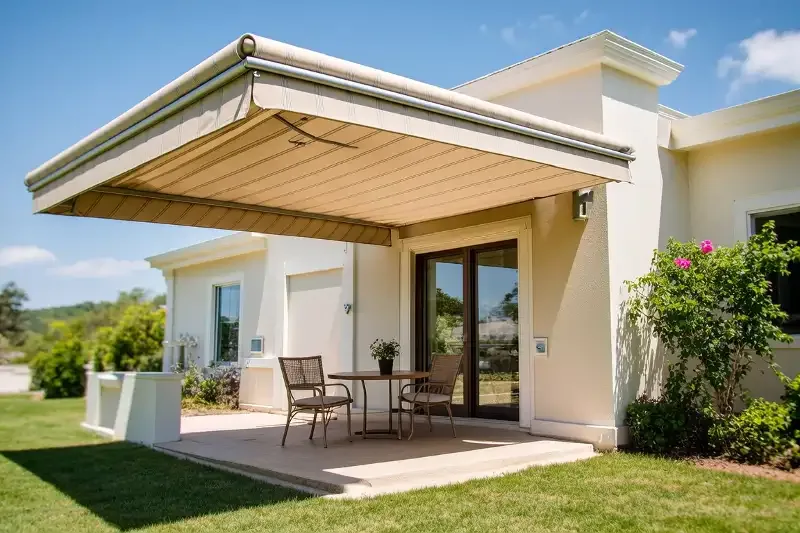
As a homeowner in Glendale, Arizona, you are fully aware of how intense the desert sun can get. With summer temperatures routinely climbing past 100 degrees Fahrenheit, maximizing your outdoor living space requires effective shade management. If you are looking to transform your backyard into a cool oasis, you might be asking: Can I install a retractable awning on my Glendale home?
The short answer is a resounding yes. Homeowners across the West Valley are discovering that adding a flexible, high quality shade system is one of the most practical home improvements possible. However, successfully completing a retractable awning Glendale installation involves understanding local design guidelines, choosing the right equipment for the desert climate, and partnering with experienced professionals. Phoenix Tent and Awning Company has crafted this comprehensive guide to help you navigate the entire process.
Why Retractable Awnings are Perfect for Glendale Architecture
Glendale neighborhoods feature a beautiful mix of architectural styles. You will find everything from classic midcentury ranch homes in the historic districts to expansive, contemporary stucco houses in Arrowhead Ranch. Despite their visual differences, these homes share a common challenge: dealing with intense solar radiation and the urban heat island effect characteristic of the Phoenix metropolitan area.
A fixed patio cover blocks the sun, but it also permanently cuts off natural light from flowing into your indoor living spaces during the shorter, cooler days of winter. This is where a retractable system shines.
By investing in a flexible shade system, you gain complete control over your home environment. On a blistering July afternoon, you can fully extend the fabric to shield your patio. When the sun goes down or when January brings milder afternoon weather, you can roll the fabric completely away to enjoy open views of the Arizona sky.
Exploring the Types of Patio Awnings for Houses
Before scheduling your installation, it helps to understand the market options. When evaluating the various types of patio awnings for houses, property owners typically choose between three main configurations:
1. Manual Retractable Awnings
These units open and close using a hand-crank mechanism. They are highly reliable, budget-friendly, and require zero electrical wiring. While they take a little physical effort to operate, modern gear ratios make cranking them open remarkably smooth.
2. Motorized Retractable Awnings
For ultimate convenience, motorized versions let you extend or retract your shade with the push of a button, a smartphone app, or a wall switch. Because they connect directly to your residential power grid, they provide effortless shade management.
3. Smart, Sensor-Equipped Awnings
The most advanced motorized awnings feature built-in environmental sensors. In the West Valley, where sudden afternoon monsoon winds or intense dust storms can spring up without warning, wind sensors are incredibly valuable. When these sensors detect high velocity vibrations, they automatically retract the awning to protect the mechanical arms and fabric from damage. Sun sensors can also trigger the awning to extend automatically when the afternoon sun hits a specific angle, keeping your home interior cool even if you are away at work.
Navigating Permits, HOAs, and Installation Requirements in Glendale
While installing a retractable shade is achievable for almost any property, you must cross a few administrative and technical item checkboxes before mounting any hardware.
Homeowners Association (HOA) Rules
A significant portion of residential properties in Glendale belong to an HOA. Communities like Arrowhead Lakes, Westgate areas, or master-planned neighborhoods often have strict rules regarding exterior modifications. These guidelines may govern the color of the fabric, the projection distance, and even the structural appearance of the housing cassette. Always submit an architectural review committee request before purchasing your system.
Building Permits
In many parts of the Valley, standard retractable awnings attached to a single-family home do not require a comprehensive building permit, provided they do not extend over public right-of-ways and are supported entirely by the exterior wall. However, if your project involves running new electrical lines for a heavy-duty motor, a basic electrical permit from the City of Glendale Building Safety Division might be necessary.
Structural Wall Support
A retractable shade operates like a cantilevered shelf. When fully extended, the weight of the frame and fabric exerts significant leverage on your house. Most Glendale homes utilize wood framing with a stucco exterior or concrete block construction. Standard mounting brackets must be anchored directly into solid internal framing studs or structural header beams, never just into the exterior stucco or fascia board.
The Ultimate Benefits of Adding an Awning to Your Property
If you are on the fence about moving forward with a Glendale awning installation, consider the long-term returns on your investment:
- Substantial Energy Savings: Did you know that shading your windows and glass patio doors can lower indoor temperatures and drastically cut your cooling costs? An extended awning stops solar heat gain before it ever touches your glass, giving your air conditioner a much-needed break.
- UV Protection for Furniture: The intense Arizona sun will quickly fade outdoor rugs, patio furniture cushions, and even interior hardwood flooring or drapes located near windows. Premium awning fabrics block up to 98% of harmful UV rays.
- Expanded Living Space: A customized shade system effectively adds a new, functional room to your house. Your patio transforms into a comfortable space for morning coffee, outdoor dining, or watching the kids swim without worrying about sunburn.
Choosing Professional Installation vs. DIY
It can be tempting to buy a one-size-fits-all product from a big-box home improvement retailer and attempt a DIY installation over the weekend. However, the unique environmental factors of Maricopa County make professional installation the smartest route.
A standard awning can weigh anywhere from 60 to over 150 pounds. Lifting this weight into place, ensuring it is perfectly level, and anchoring it securely enough to withstand sudden wind gusts requires specialized tools and technical expertise. A poorly anchored system can rip free from the wall, causing thousands of dollars in structural damage to your home stucco and framing.
By working with the best retractable awning installers Glendale has to offer, you guarantee that your shade system is tailored to your exact wall type, wind exposures, and aesthetic preferences. Experienced installers will accurately calculate the proper mounting height and pitch angle so that rainwater sheds correctly and the lead bar clears your patio doors safely.
Turn to the Top Awning Company Near Glendale AZ
When you are ready to upgrade your outdoor living space, look no further than Phoenix Tent and Awning Company. As a top awning company near Glendale AZ, we have spent decades serving homeowners across the valley with custom-engineered shade solutions built specifically to withstand the harsh desert environment.
We do not believe in cookie-cutter products. Our experienced team handles the entire process, including precision measurements, fabric selection assistance, and professional, secure installation. We use durable, rust-resistant frames and industry-leading, solution-dyed acrylic fabrics like Sunbrella, which are engineered to resist fading, rot, and mildew under the desert sun.
Contact Phoenix Tent and Awning Company today to schedule your complimentary on-site consultation. Let us help you design the perfect retractable shade system so you can start enjoying your Glendale backyard in cool comfort.
Frequently Asked Questions
How well do retractable awnings hold up against Glendale winds?
Our retractable systems are built with robust, tensioned arms that handle standard afternoon breezes with ease. However, they are designed primarily for sun protection rather than storm shelter. We always recommend retracting your awning during heavy storms, sudden monsoon bursts, or whenever wind speeds exceed 20 to 25 miles per hour. Installing an automatic wind sensor is an excellent way to protect your investment.
Can I mount a retractable awning directly onto my fascia or roof?
Yes, depending on your roof structure. While wall mounting into structural studs is the most common approach, we can also utilize specialized brackets to securely mount an awning to your roof rafters or to a heavy-duty structural fascia board. Our installation team will evaluate your home layout during your initial consultation to determine the safest anchor points.
What kind of maintenance does a desert awning require?
Maintenance in the desert is remarkably simple. We recommend hosing down the awning fabric with clean water a few times a year to prevent dirt and valley dust from settling into the weave. For deeper cleans, a mild soap and water solution with a soft bristle brush works beautifully. Avoid rolling the fabric up wet for extended periods, and keep the mechanical arms clear of debris.
How long does the fabric last before it starts to fade?
When you choose premium fabrics like Sunbrella through a professional installer, you are getting material where the fibers are saturated with highly UV-resistant pigments before the yarn is spun. These high-grade fabrics routinely last 10 years or longer in the Arizona sun without significant color loss or structural degradation.
How do I know what size awning my patio needs?
To maximize your shade, your awning should ideally be slightly wider than the window, door, or patio area you want to protect. The projection distance, or how far the awning extends out from the wall, typically ranges from 8 to 14 feet. Our project evaluators will measure your patio orientation and calculate the angle of the sun to recommend the ideal width and projection for your home.
Know more https://www.phoenixtent.com/blog/install-retractable-awning-glendale/