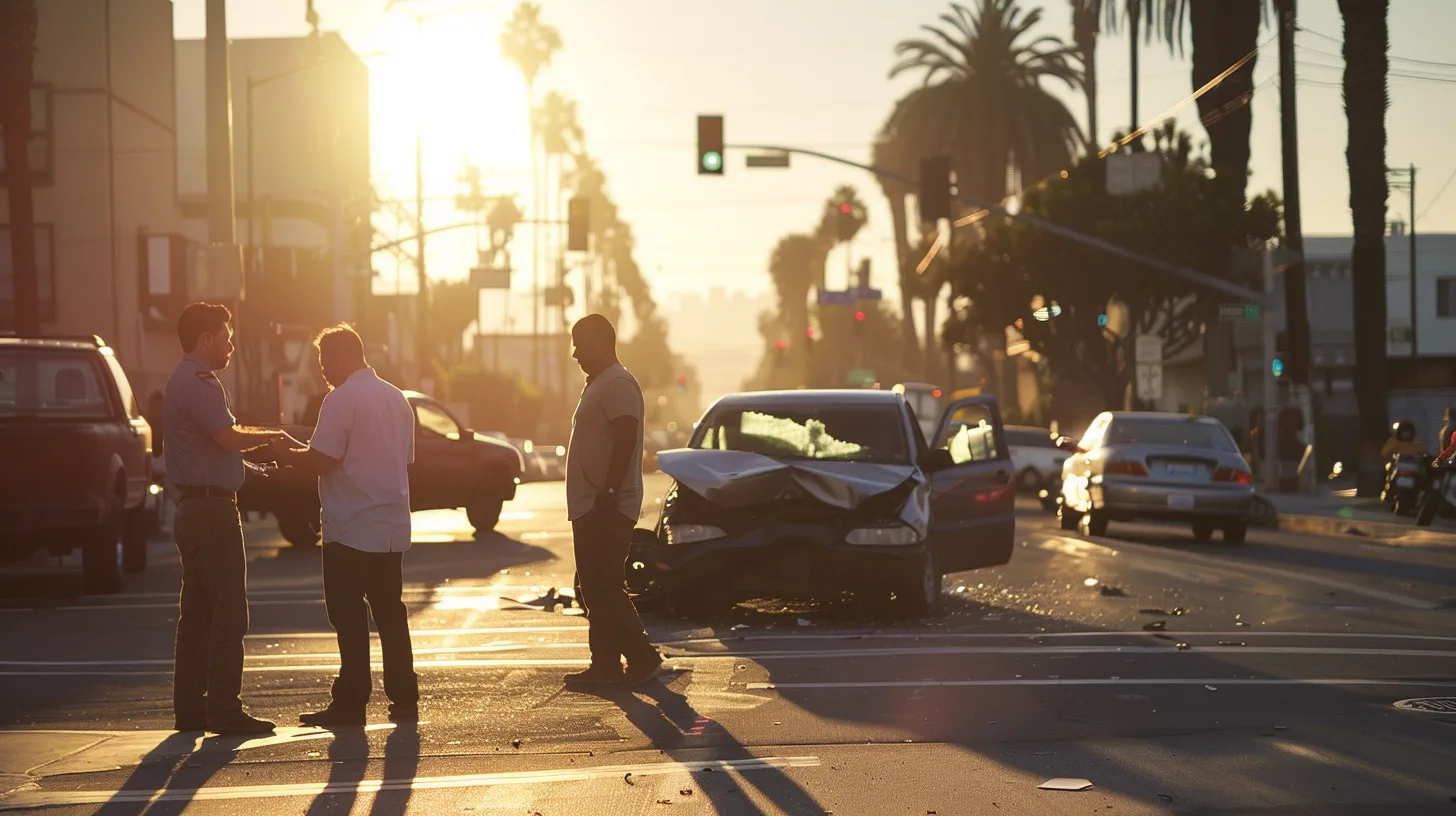
After a car accident, most drivers assume the claims process will be fairly straightforward. You exchange insurance information, report the collision, and expect the at-fault driver's insurer to handle the damages. However, that expectation can quickly change if you later learn the insurance information you were given was not valid.
Whether the driver presented an expired insurance card, provided fake policy details, or simply lied about having coverage, the situation can leave you wondering who will pay for your injuries and other losses.
Fortunately, an uninsured motorist lawyer can explain how uninsured motorist coverage works and whether you may still have a path to compensation when the at-fault driver was not actually insured.
Does Lying About Insurance Make the Driver "Uninsured"?
It can.
From a legal and insurance standpoint, what matters is whether valid insurance was in effect on the date of the accident, not what the driver told you at the scene.
For example, a driver may:
- Show an expired insurance card.
- Provide a policy that was canceled weeks earlier.
- Give information for a different vehicle.
- Present a fake insurance card.
- Claim to have coverage that never existed.
In each of these situations, the driver may ultimately be treated as uninsured, even if they initially appeared to have valid insurance.
Can You Still File an Uninsured Motorist Claim?
In many cases, yes.
If your auto insurance policy includes uninsured motorist (UM) coverage, you may be able to seek compensation through your own insurer instead of relying on the at-fault driver's nonexistent coverage. Although many claims move forward without major disputes, questions about coverage, liability, or policy interpretation can sometimes arise. In these situations, an uninsured motorist accident attorney can help explain how the claims process typically works and what documentation insurers may require.
Before approving a claim, however, your insurance company will usually verify that the other driver was uninsured at the time of the collision.
That's one reason it's important to keep every document related to the accident. The more information available, the easier it may be to confirm what happened and move the claim forward.
What Documents Can Help?
While every case is different, insurers often review records such as:
- The police accident report
- Photos or videos from the accident scene
- The insurance information was exchanged after the crash
- Written confirmation that the policy was canceled or invalid
- Medical records related to your injuries
- Statements from witnesses, if available
These records help establish both the driver's insurance status and the losses resulting from the accident.
What if Your Insurance Company Questions the Claim?
Many people assume their insurance company will automatically approve an uninsured motorist claim. In reality, insurers may conduct their own investigation before making a decision.
For example, they may look into:
- Whether the other driver's policy was active on the accident date
- Who was actually responsible for the collision
- The severity of your injuries
- Whether the treatment you received was related to the accident
Although this process is a normal part of handling a claim, delays or disagreements can sometimes arise if additional information is needed.
Does Uninsured Motorist Coverage Pay for All Damages?
That depends on your policy and the extent of your injuries.
UM coverage is often designed to help with financial losses that would normally be paid by the at-fault driver's insurance. Depending on your coverage limits, compensation may include medical expenses, lost income, future treatment costs, and other covered damages. In some situations, non-economic losses, such as pain and suffering, may also be available.
Because every insurance policy is different, reviewing the specific terms of your coverage is an important part of understanding what benefits may apply.
California's uninsured motorist laws can also influence how a claim is handled, particularly when questions arise about coverage or available benefits. An uninsured motorist accident attorney in California can explain how state-specific rules may affect the claims process.
Why Acting Early Can Make a Difference
Once you learn the other driver was not actually insured, it is best not to assume the issue will resolve itself. Insurance companies often need time to verify policy information, gather records, and investigate the accident. Delays in reporting the situation or providing requested documents can sometimes slow the claims process.
This is especially true in high-traffic areas where accident investigations can involve multiple insurers and extensive documentation. Whether the collision occurred in Los Angeles or another California community, an uninsured motorist lawyer in Los Angeles can help explain how these claims are typically evaluated.
Keeping copies of medical records, repair estimates, correspondence with insurers, and any information exchanged at the accident scene can make it easier to support your claim if questions arise later.
Moving Forward After an Uninsured Motorist Accident
Learning that another driver provided false insurance information can be frustrating, but it doesn't automatically prevent you from pursuing compensation. In many cases, your own uninsured motorist coverage may provide an important layer of financial protection when the at-fault driver fails to carry valid insurance.
The Law Offices of Eslamboly Hakim assists individuals throughout California with uninsured motorist accident claims. An experienced uninsured motorist lawyer can help explain how uninsured motorist coverage may apply and what factors could influence the outcome of a particular claim.
FAQs1. Can I file an uninsured motorist claim if the driver gave me fake insurance information?
Yes. If the at-fault driver did not have valid insurance at the time of the accident, your uninsured motorist coverage may apply, depending on the terms of your policy.
2. How can I tell if the other driver's insurance was valid?
Your insurance company will typically verify the policy with the listed insurer. A police report and the information exchanged at the scene may also help confirm coverage.
3. What happens if the other driver's insurance policy was canceled?
If the policy was canceled before the accident, the driver may be considered uninsured. In that case, your uninsured motorist coverage may be available if your policy includes it.
4. What evidence can support an uninsured motorist claim?
Helpful evidence includes the police report, photos of the accident, medical records, witness statements, and any insurance information exchanged after the crash.
5. Does uninsured motorist coverage apply to hit-and-run accidents?
In many cases, yes. Coverage often applies if the at-fault driver cannot be identified, although the specific requirements depend on your insurance policy.