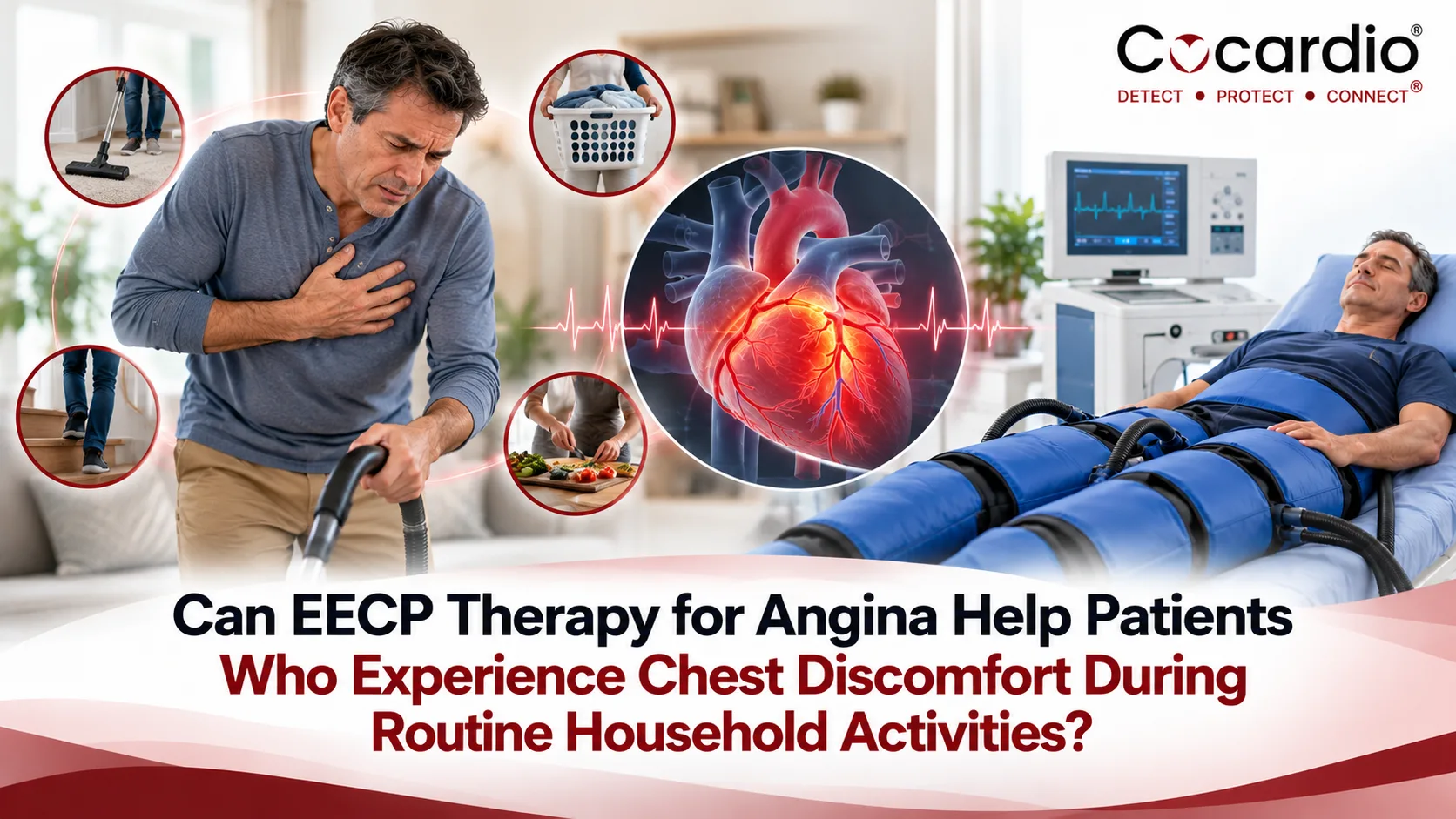
Does your chest feel tight when vacuuming, carrying groceries, climbing stairs, or completing everyday household chores? For people living with coronary artery disease, even routine physical activities can sometimes trigger angina symptoms that interfere with independence and quality of life. These episodes may occur when the heart requires more oxygen than narrowed coronary arteries can adequately supply. Understanding why household activities trigger chest discomfort and whether Enhanced External Counterpulsation (EECP) may help can support informed conversations about cardiovascular treatment options.
Why Can Routine Household Activities Trigger Angina?
Household chores may appear physically undemanding, but many require repeated movements, lifting, bending, or sustained exertion. Activities such as cleaning floors, carrying laundry baskets, or moving furniture can temporarily increase heart rate and blood pressure. For individuals with coronary artery disease, this additional workload may create an imbalance between the heart's oxygen supply and demand. When coronary blood flow cannot adequately meet the increased demand, patients may experience chest pressure, tightness, or discomfort associated with angina.
Which Household Activities Commonly Trigger Chest Discomfort?
Different household tasks place varying levels of demand on the cardiovascular system. Some patients notice symptoms during activities that involve lifting, prolonged standing, or repeated movement. Others experience discomfort when completing several chores without sufficient rest. Recognizing these patterns can help healthcare professionals understand symptom severity and determine whether additional evaluation is needed.
Common activities that may trigger angina include:
- Vacuuming, sweeping, or mopping floors.
- Carrying groceries or heavy laundry baskets.
- Climbing stairs while completing household tasks.
- Gardening, lifting objects, or moving furniture.
- Cooking or cleaning for extended periods without rest.
Chest discomfort during these activities should not automatically be attributed to aging or poor physical fitness. Symptoms that occur with progressively less exertion may indicate worsening cardiovascular problems. Patients should discuss recurring or changing symptoms with their cardiologist rather than attempting to push through discomfort. New, severe, prolonged, or resting chest pain requires urgent medical assessment.
What Does Angina During Everyday Activities Feel Like?
Angina is often described as pressure, squeezing, heaviness, or tightness in the chest rather than sharp pain. Some patients experience discomfort extending into the arms, shoulders, neck, jaw, or back. Others notice shortness of breath, unusual fatigue, nausea, or sweating during routine activities. Because symptoms vary between individuals, a healthcare professional should evaluate recurring exertional discomfort.
When Should Chest Discomfort Become a Concern?
Chest discomfort that repeatedly occurs during routine household activities may indicate that the heart is struggling to meet increased oxygen requirements. Symptoms that begin during lighter activities than previously tolerated deserve particular attention. A cardiologist may review medications, cardiovascular risk factors, and previous diagnostic findings to determine whether further testing or treatment adjustments are necessary. Patients should follow their prescribed angina action plan and seek emergency care for new, severe, persistent, or worsening symptoms.
Can EECP Therapy for Angina Help Patients With Everyday Activity Limitations?
For selected patients with chronic stable angina, eecp therapy for angina may provide an additional option when symptoms persist despite appropriate medical treatment. Enhanced External Counterpulsation is a noninvasive procedure designed to influence circulation through timed compression of the lower body. Some clinical studies suggest that EECP can reduce angina frequency and improve exercise tolerance in certain patients. However, treatment responses vary, and EECP is not appropriate for every individual experiencing chest discomfort.
How Does EECP Work?
During an EECP session, inflatable cuffs are positioned around the calves, thighs, and buttocks while the patient rests on a treatment table. The cuffs inflate and deflate in coordination with the heartbeat, creating controlled pressure changes that influence blood circulation. This process is intended to support blood flow during the heart's relaxation phase and reduce cardiac workload during its pumping phase. Repeated sessions may help certain patients experience improvements in chronic angina symptoms, although the underlying coronary disease still requires appropriate medical management.
Can EECP Help Patients Complete Household Activities More Comfortably?
Patients experiencing angina while performing household chores often want to know whether treatment could improve their ability to manage everyday responsibilities. In appropriately selected individuals, eecp therapy for angina may improve exercise tolerance and reduce the frequency of chest discomfort. These benefits could potentially make certain daily activities easier, although improvements in specific household tasks have not been established for every patient. Treatment goals should be discussed with a healthcare professional and based on realistic expectations.
What Improvements Might Patients Notice?
Some patients report being able to walk longer distances or perform moderate activities with fewer angina symptoms following EECP treatment. Others may experience improvements in perceived quality of life or reduced limitations associated with chronic chest discomfort. However, the extent and duration of improvement differ, and some individuals may not experience meaningful benefits. Patients should continue following their cardiologist's recommendations regarding safe activity levels, medications, and symptom monitoring.
Who May Be a Suitable Candidate for EECP?
EECP is generally considered for selected patients with chronic stable angina who remain symptomatic despite guideline-directed medical therapy. It may be particularly relevant when coronary revascularization procedures are unsuitable or have not adequately relieved symptoms. Certain cardiovascular conditions, vascular disorders, and other medical concerns can make EECP inappropriate. A qualified healthcare professional must evaluate the patient's diagnosis, medical history, and potential contraindications before recommending treatment.
What If Your Heart Tests Appear Normal?
Some patients experience chest discomfort during everyday activities even when initial cardiac tests appear reassuring. Different tests evaluate different aspects of cardiovascular function, and certain conditions may require additional investigation. Patients can review Can you have coronary artery disease despite normal heart test results and when to consider EECP treatment near me to understand why persistent symptoms sometimes require further evaluation. A normal test result should not be used as a reason to ignore recurring exertional chest discomfort.
Can EECP Prevent Coronary Artery Disease From Progressing?
Patients researching eecp for coronary artery disease prevention should understand the difference between symptom management and cardiovascular disease prevention. EECP may improve angina symptoms in selected patients, but it has not been established as a treatment that prevents coronary artery disease progression or future heart attacks. It does not physically remove arterial plaque or replace prescribed cardiovascular medications. Long-term risk reduction continues to depend on evidence-based medical treatment and appropriate lifestyle management.
Why Ongoing Cardiovascular Care Remains Important
Even when chest discomfort improves, coronary artery disease may still require regular medical monitoring and treatment. Patients should continue taking prescribed medications and following recommendations for cholesterol control, blood pressure management, and physical activity. Smoking cessation, diabetes management, and heart-healthy dietary habits may also support cardiovascular health. EECP should be considered a potential addition to comprehensive care rather than a replacement for established treatment strategies.
What Should Patients Expect During EECP Treatment?
A commonly used EECP treatment protocol involves approximately 35 one-hour sessions delivered over several weeks. During each appointment, patients lie on a treatment table while inflatable cuffs apply pressure synchronized with their heartbeat. Healthcare professionals monitor treatment tolerance and may adjust the procedure according to clinical requirements. The recommended schedule depends on individual medical circumstances and the treating provider's assessment.
Is EECP the Same as ECP Therapy?
Patients exploring noninvasive cardiovascular treatment may encounter several related terms during their research. The phrase ecp therapy generally refers to external counterpulsation, while EECP commonly describes enhanced external counterpulsation systems. Both terms relate to externally applied compression intended to influence circulation during the cardiac cycle. Understanding this terminology can help patients communicate more clearly when discussing treatment options with healthcare providers.
How Much Does EECP Treatment Cost?
Treatment expenses are an important consideration for patients exploring additional cardiovascular care options. The total cost may depend on the recommended number of sessions, provider arrangements, and individual insurance coverage. Patients should ask about consultation fees, potential out-of-pocket expenses, and available payment arrangements before beginning treatment. For information about EECP therapy cost, contact CoCardio® to request details about its current treatment arrangements.
Questions to Ask Before Scheduling Treatment
Preparing questions before an initial consultation can help patients understand whether EECP is worth considering. Individuals should discuss their symptoms during household activities, previous cardiovascular treatments, and any changes in exercise tolerance. It is also important to understand potential contraindications, expected benefits, and treatment limitations. Useful questions include:
- Could my symptoms during household chores indicate chronic stable angina?
- Am I a suitable candidate for EECP based on my cardiovascular diagnosis?
- Could treatment improve my exercise tolerance and daily activity limitations?
- How many sessions might be recommended?
- What side effects or medical conditions could make treatment unsuitable?
- What are the expected treatment costs and consultation requirements?
Where Can You Find EECP Treatment in Encinitas?
Patients searching for eecp treatment near me may benefit from contacting CoCardio® in Encinitas, California. The clinic provides information about Enhanced External Counterpulsation and the process for requesting a consultation. Individuals experiencing persistent chronic angina can inquire about treatment availability, medical assessment requirements, and appointment scheduling. An initial inquiry can help clarify the next steps without assuming that EECP is appropriate for every patient.
Why Consider CoCardio® for an EECP Consultation?
CoCardio® welcomes inquiries from individuals interested in understanding whether EECP may have a role in managing chronic stable angina. Patients can ask about treatment procedures, expected schedules, and the medical information needed for an eligibility assessment. Those researching ECP therapy near me should prioritize appropriate medical evaluation rather than choosing treatment based solely on convenience. Coordinating care with an existing cardiologist remains essential for safe cardiovascular management.
Take the Next Step Toward Managing Everyday Angina Symptoms
Are chest discomfort and reduced exercise tolerance making household activities increasingly difficult? If you have diagnosed chronic stable angina that continues despite prescribed treatment, learning about additional symptom-management options may be worthwhile. CoCardio® in Encinitas can provide information about EECP treatment and its consultation process. Completing an inquiry form is a convenient way to request details about appointment availability and eligibility assessments.
Contact CoCardio®
Location: 162 S Rancho Santa Fe Rd, Ste B55, Encinitas, CA 92024
Phone: +1(858) 500-1399
Request an EECP Consultation: Complete the CoCardio® Online Inquiry Form
Conclusion
Chest discomfort during routine household activities can significantly affect independence, confidence, and quality of life. For selected patients with chronic stable angina, eecp therapy for angina may offer an additional approach to managing symptoms and improving exercise tolerance when appropriate medical treatment has not provided sufficient relief. However, EECP does not cure coronary artery disease, and treatment suitability must be determined through an individualized medical assessment. To learn more about EECP consultation options, contact CoCardio® in Encinitas at +1(858) 500-1399 or submit an inquiry through the website to request information about treatment availability and next steps.
Medical Disclaimer
This article is intended for general educational and informational purposes only and does not constitute medical advice, diagnosis, or treatment recommendations. EECP is not suitable for every patient, and eligibility must be determined by a qualified healthcare professional after reviewing medical history, symptoms, and relevant diagnostic findings. Do not discontinue prescribed medications, delay recommended cardiovascular evaluations, or substitute EECP for established medical treatment without consulting your healthcare provider. If you experience new, severe, persistent, or worsening chest pain, sudden shortness of breath, fainting, or other symptoms suggestive of a heart attack, call 911 or seek immediate emergency medical attention.