A holiday can contain an impressive number of attractions and still feel unsatisfying. This often happens when travellers treat each day as a race—one monument, one market, one café, one safari and one sunset squeezed into a schedule with almost no breathing space.
Jaisalmer deserves a different approach. Its appeal lies not only in famous landmarks but also in transitions: the changing colour of sandstone, the movement from city streets to open desert, the quietness after sunset and the shift from adventurous activities to a slower evening.
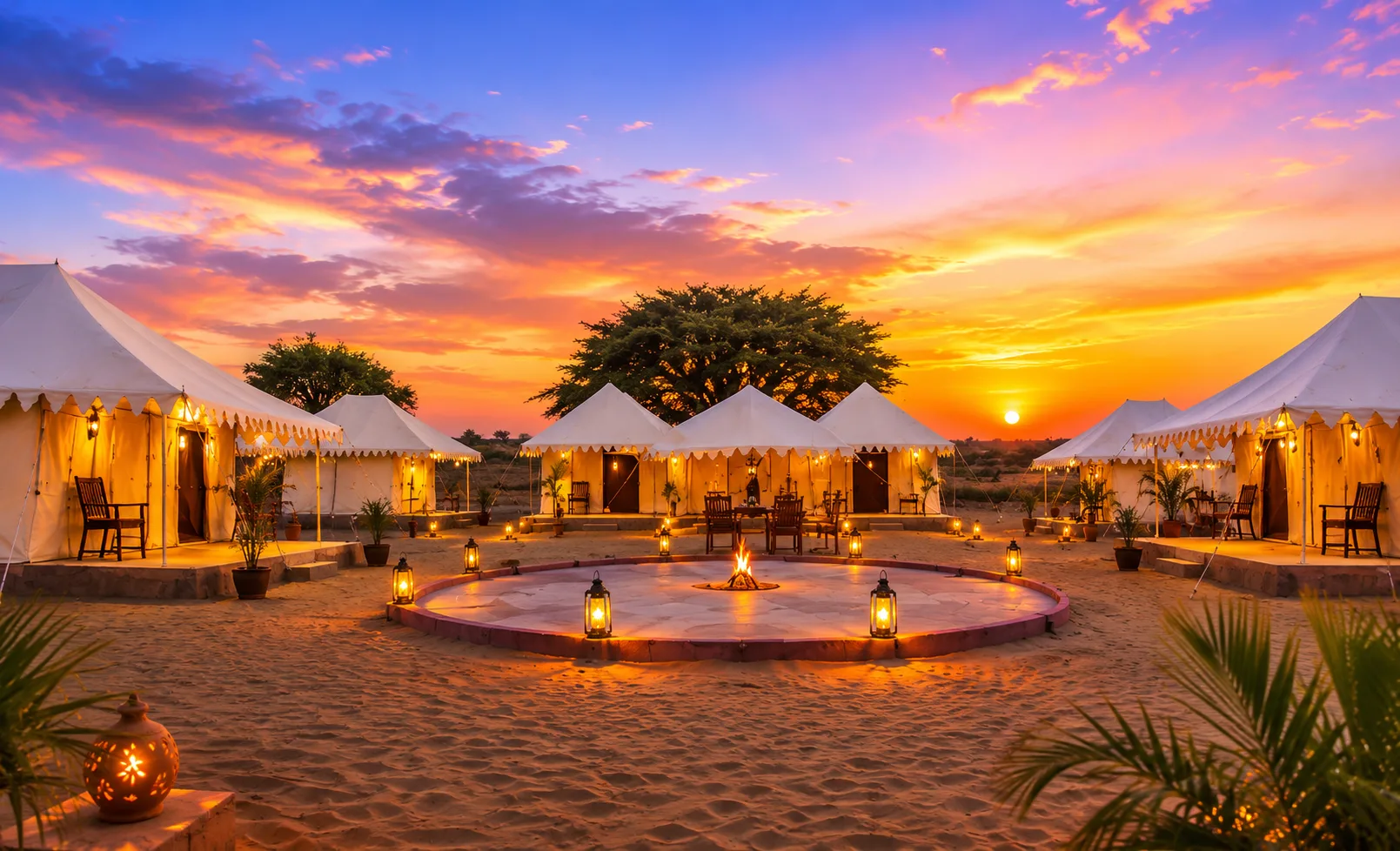
Couples considering the best resort in Jaisalmer for couples should therefore think about pace as carefully as accommodation. Lohagarh Desert Resort allows couples to combine safari experiences, sunset views, Rajasthani culture, dining and comfortable tented accommodation without treating the resort merely as a place to sleep.
Why Do Overloaded Couple Itineraries Often Fail?
Couples may have different travel styles. One person may want to see every major attraction, while the other may prefer slow mornings and unplanned time. When an itinerary becomes too crowded, these differences can create tension.
A rushed programme can also produce practical problems:
- Meals are delayed or skipped
- Travel time is underestimated
- Sunset activities become stressful
- Physical tiredness reduces enjoyment
- Conversations revolve around timing
- Photographs become more important than experiences
- Minor delays disrupt the entire day
A successful couple’s holiday should offer a shared structure without controlling every hour. Planning the most time-sensitive activities while leaving space around them can create a much more comfortable journey.
Begin With Travel Priorities, Not a List From Social Media
Before creating an itinerary, couples should decide what kind of holiday they actually want.
Are they mainly interested in heritage? Do they want an adventurous safari? Is the holiday connected with a honeymoon or anniversary? Would they rather spend more time in the desert than in markets? Are photographs a priority, or do they want quiet time away from routine?
These questions help separate personal priorities from attractions that appear repeatedly on social media.
A couple interested in history may reserve more time for Jaisalmer Fort and the city’s architectural heritage. Adventure-focused travellers may prioritise a jeep safari. Couples seeking relaxation may choose fewer city attractions and spend longer at the desert resort.
There is no single correct itinerary. The best plan is the one both travellers can enjoy.
How Should Couples Divide City and Desert Experiences?
City sightseeing and desert activities have different rhythms. Trying to combine too much of both in one compressed period can reduce the quality of each.
The city invites walking, architectural observation, local shopping and historical exploration. The desert is more dependent on arrival time, safari arrangements, sunset and the evening programme.
A practical sequence may involve completing selected city sightseeing before travelling toward the resort. Couples should allow a sufficient road buffer so they do not arrive worried about missing sunset.
Those with additional time may divide the journey more comfortably:
- Day one: selected heritage attractions and city experiences
- Day two: relaxed morning, desert transfer, safari, sunset and cultural evening
- Day three: peaceful morning and onward travel
This structure is only an example. Actual planning should account for the season, monument timings, starting location, road conditions and the resort’s programme.
Why Should Sunset Become the Anchor of the Desert Day?
Some activities can be moved by an hour without significantly changing the experience. Sunset cannot.
Couples should work backwards from the expected sunset period when planning their desert arrival. They need time for check-in, refreshments, preparation and the journey to the relevant activity area.
Arriving at the last minute can turn a romantic experience into a logistical race. It may also reduce the opportunity to enjoy a camel ride, jeep safari or photography without continuously checking the clock.
A comfortable buffer allows unexpected delays without damaging the most time-sensitive part of the day.
Should Couples Choose a Camel Safari or Jeep Safari?
The choice depends on the experience they want rather than which activity sounds more impressive.
Camel Safari
A camel safari offers a slower and more traditional way to encounter the desert landscape. It may suit couples interested in a steady pace, scenic observation and a connection with the familiar imagery of Rajasthan.
Ride duration and personal comfort should be considered. Guests with mobility, joint or back concerns should discuss suitability before participating.
Jeep Safari
A jeep safari offers a more energetic encounter with the dunes. It may appeal to couples who enjoy speed, changing terrain and adventure.
Because the ride can involve movement over uneven surfaces, travellers should consider their health and comfort. Pregnant guests or individuals with back, neck or joint conditions should seek appropriate advice and communicate their concerns beforehand.
Some couples may want to experience both activities, while others may prefer to select one and leave more time for sunset and relaxation. Availability, safety conditions, timings and package inclusion should be verified with the resort.
How Much Free Time Should a Couple Keep?
There is no mathematical rule, but every travel day should contain at least one period without a fixed objective.
During a desert stay, this might mean sitting quietly after sunset, taking an unhurried meal, enjoying the accommodation or spending time beneath the evening sky.
Free time is not wasted time. It allows couples to process the day and respond to unexpected moments. A changing sky, a meaningful conversation or an appealing photography location cannot always be fitted into a fifteen-minute slot.
The absence of continuous scheduling also reduces the frustration caused by small delays.
Why Should the Resort Be Part of the Itinerary?
Some travellers choose accommodation only after planning every other part of the journey. They then return to the property late at night and leave early in the morning.
This approach may work for a conventional city hotel, but it misses the purpose of a desert resort.
The resort experience can include:
- Desert surroundings
- Swiss tent accommodation
- Camel or jeep safari arrangements
- Sunset opportunities
- Folk music and dance
- Regional dining
- Seasonal bonfire arrangements
- Night-sky observation
- A slower morning environment
When these experiences are coordinated within one stay, couples spend less time shifting between unrelated locations.
A thoughtfully selected desert resort for couples in Jaisalmer becomes part of the holiday rather than an address used only for check-in.
How Can Couples Balance Togetherness and Personal Preferences?
Travelling as a couple does not require both people to enjoy every experience equally.
One person may be interested in photography while the other wants to observe the landscape without a camera. One may prefer a jeep safari, while the other favours a slower camel ride. One may want to watch the full cultural programme, while the other values quiet time afterward.
Good planning begins with acknowledging these differences. Couples can choose a few central experiences together while leaving room for individual preferences.
This creates a holiday based on mutual enjoyment rather than compromise at every step.
Is One Night Enough?
A carefully planned one-night stay can include the essential desert sequence:
- Arrival before sunset
- A selected safari activity
- Sunset views
- Cultural performances
- Dinner
- Time beneath the night sky
- Swiss tent accommodation
- A peaceful morning
This can work well for couples with limited time. The main requirement is an early enough arrival.
A two-night stay may be better for anniversaries, honeymoons or travellers seeking a slower pace. It creates more room for rest, photography and unhurried experiences without forcing every major activity into one evening.
Couples should choose duration according to their complete itinerary, travel budget and preferred pace.
What Should Couples Confirm Before Reserving?
A clear booking conversation prevents assumptions from becoming disappointments.
Couples should confirm:
- Accommodation category
- Double-occupancy arrangement
- Private washroom facilities
- Check-in and check-out times
- Included meals
- Camel and jeep safari availability
- Cultural programme schedule
- Seasonal bonfire arrangements
- Transportation requirements
- Cancellation or rescheduling conditions
- Government identification requirements
- Additional charges for special requests
Couples planning an anniversary, honeymoon, birthday or proposal should discuss decorations, dining and other arrangements in advance. Requests should not be considered confirmed until the resort has accepted them.
How Can Couples Avoid Spending the Entire Holiday on Their Phones?
Phones are useful for navigation, communication and photography, so a complete digital ban is neither necessary nor realistic.
Instead, couples can establish a few simple boundaries:
- Capture photographs during selected moments
- Avoid reviewing every image immediately
- Keep work notifications muted
- Do not record the complete cultural programme
- Put phones away during at least one meal
- Spend part of sunset simply observing
- Carry a power bank to avoid battery anxiety
These small choices allow technology to support the trip without dominating it.
What Makes Lohagarh Desert Resort Relevant to a Slower Itinerary?
Lohagarh Desert Resort combines major dimensions of a desert holiday within one setting. Couples can participate in an adventurous activity, experience sunset, observe regional performances, enjoy dinner and return to Swiss tent accommodation without turning the evening into a series of unrelated transfers.
The property can suit couples who want both engagement and rest. An active safari can be followed by a cultural programme, while the later part of the evening can remain more personal and unhurried.
The resort’s location at Barna Village, Khuri, also places the stay within a desert environment rather than treating the dunes as a short excursion disconnected from the accommodation.
Final Thoughts
Experiencing Jaisalmer properly does not mean collecting the maximum number of locations. It means choosing experiences that reveal the city’s heritage, desert landscape and cultural character while preserving enough time to enjoy them.
A romantic resort stay in Jaisalmer can help couples replace an overloaded checklist with a more balanced journey.
Lohagarh Desert Resort supports this rhythm by bringing adventure, culture, dining, comfort and peaceful desert time together. When couples stop measuring a holiday by how many places they have covered, they often return with something more valuable: clearer memories of the moments they actually shared.