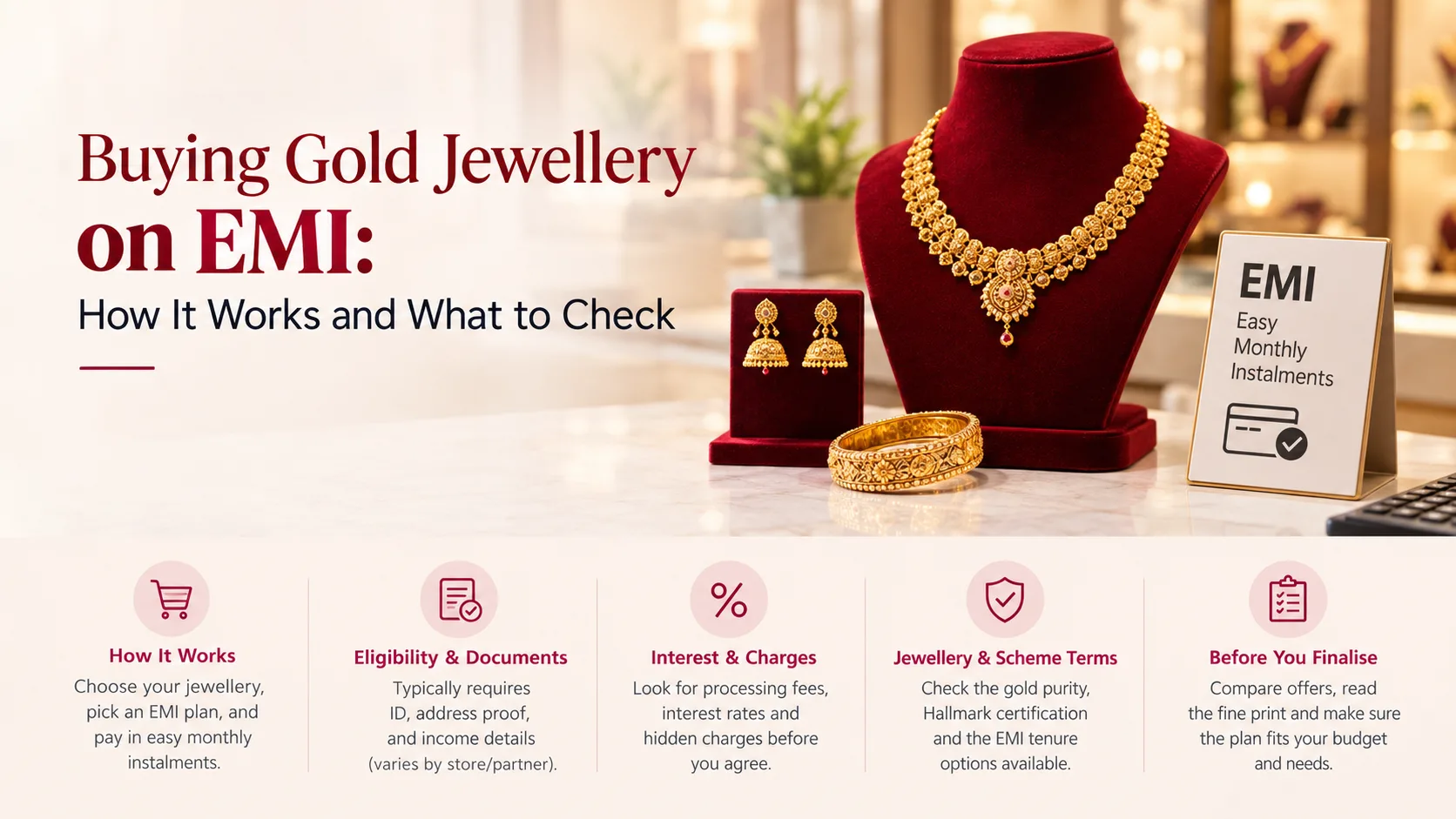
Gold prices don't wait for anyone's budget to catch up. If you've been putting off a purchase because paying the full amount upfront feels like a stretch, EMI options have made buying gold jewellery a lot more manageable — but only if you understand how the schemes actually work.
Here's a straightforward breakdown.
How Gold Jewellery EMI Actually Works
At its core, EMI (Equated Monthly Instalment) lets you split the cost of a purchase into fixed monthly payments instead of paying everything at once. For gold jewellery, this usually comes in a few different forms:
- Jeweller-run gold schemes — you pay a fixed monthly amount for a set period (commonly 11 months), and the accumulated value goes toward a purchase, sometimes with a bonus instalment added by the brand
- Credit card EMI — converting a purchase into monthly instalments through your bank, either at checkout or afterward through the bank's app
- No-cost EMI via finance apps — third-party consumer finance platforms that partner with jewellers to offer instalment payments, sometimes without needing a credit card at all
Each route has slightly different terms, so it's worth understanding which one actually applies before you commit.
What to Check Before Choosing a Scheme
1. Whether it's genuinely "no-cost" "No-cost EMI" doesn't always mean zero extra charges. Sometimes the interest is quietly built into the product price instead of shown separately. It's worth asking directly whether the price is the same as paying upfront.
2. Minimum purchase amount Many EMI schemes only kick in above a certain purchase value. If you're planning to buy gold ring online on a smaller budget, check this threshold first so you're not caught off guard at checkout.
3. Making charges This is one people often miss. Some schemes cover only the gold value under EMI, while making charges still need to be paid upfront. Always ask this specifically before assuming the full amount is covered.
4. Lock-in period and exit terms If you're enrolling in a jeweller's monthly savings-style scheme, understand what happens if you need to withdraw early or change your mind about the piece you originally planned to buy.
5. Rate lock vs floating rate Gold prices fluctuate. Some schemes lock the rate at the time of enrollment, others apply the rate on the day of final purchase. This can meaningfully change what you end up paying.
Where This Works Well
EMI tends to make the most sense when:
- You're planning a larger purchase, like a wedding set or a milestone gift
- You want to browse and compare gold necklace designs over a few weeks without rushing into a decision
- You're shortlisting gold earrings for women and want time to compare a few designs before deciding
- You're building toward a specific piece rather than buying on impulse
A Practical Tip Before You Commit
Before signing up for any EMI scheme, it helps to actually see how a piece looks on you first, so you're not paying in instalments for something you're unsure about. Jos Alukkas offers a virtual try-on feature on their site, letting you preview rings, necklaces, and earrings before you finalize a purchase — useful when you're planning to pay over several months and want to be confident about the design upfront.
Final Thought
EMI has made gold jewellery more accessible, but the fine print still matters. A scheme that looks simple on the surface can carry hidden costs if you don't ask the right questions early. Take the time to compare a couple of options, read the terms carefully, and you'll likely find a payment plan that fits your budget without any surprises later.