The natural sweetener market has exploded over the last decade, and monk fruit extract sits right at the center of that growth. Food and beverage brands, supplement manufacturers, and private-label companies are all racing to replace sugar and artificial sweeteners with something cleaner — and monk fruit fits the bill. But here's the catch: not every monk fruit extract on the market is created equal, and choosing the wrong monk fruit supplier can quietly undermine an otherwise great product.
If you're sourcing in bulk, quality isn't a nice-to-have. It's the difference between a sweetener that performs consistently batch after batch and one that triggers customer complaints, regulatory headaches, or costly reformulations. This guide breaks down exactly what to look for when evaluating a monk fruit extract supplier, so you can make an informed sourcing decision — whether you're a first-time buyer or scaling an existing supply chain.
What Is Monk Fruit Extract, and Why Does Sourcing Quality Matter So Much?
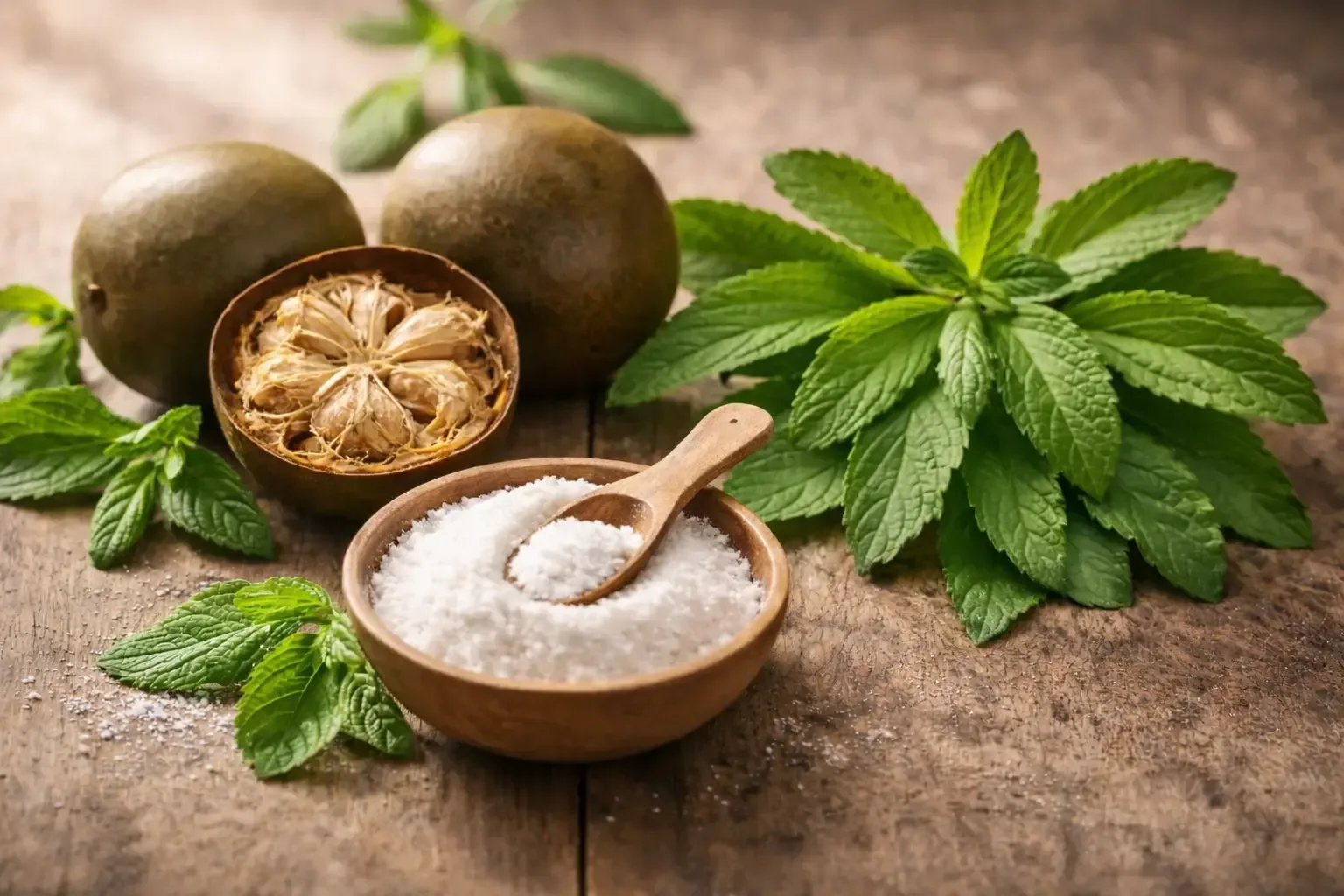
Monk fruit (Siraitia grosvenorii) is a small melon native to southern China, prized for compounds called mogrosides — naturally occurring antioxidants that are roughly 150 to 250 times sweeter than sugar, calorie-free, and don't spike blood glucose. That profile makes it a favorite for keto, diabetic-friendly, and clean-label formulations.
But raw monk fruit itself isn't what ends up in your product. It's the extract — typically standardized to a specific mogroside V percentage (25%, 30%, 40%, or 50% being common industry benchmarks) — that manufacturers actually use. The extraction and standardization process is where quality can vary wildly between suppliers. Poor extraction methods can leave behind bitter aftertastes, inconsistent sweetness levels, or unwanted residues, which is exactly why the supplier you choose matters as much as the fruit itself.
Core Quality Standards Every Bulk Buyer Should Demand
1. Verified Mogroside Content and Standardization
The single most important quality marker in monk fruit extract is mogroside V percentage. A reputable monk fruit extract supplier will clearly state the standardization level on the Certificate of Analysis (CoA) and back it up with third-party lab testing — usually via HPLC (High-Performance Liquid Chromatography) verification. If a supplier can't produce a CoA with mogroside content clearly listed, that's an immediate red flag.
Ask for:
- HPLC test reports for every batch
- Consistent mogroside V percentage across shipments
- Clear labeling of extraction ratio (e.g., 50:1 vs. mogroside-standardized)
2. Clean Extraction Methods (Water-Based vs. Solvent-Based)
Extraction method directly affects both purity and taste. Water-based extraction is widely considered the gold standard because it avoids residual solvents and preserves a cleaner flavor profile, while some lower-cost operations still rely on solvent extraction, which can leave trace chemical residues if not properly purified.
A transparent supplier should be willing to disclose:
- The extraction method used
- Whether any solvents were involved, and if so, residue testing results
- Filtration and purification steps taken post-extraction
3. Third-Party Certifications
Certifications aren't just paperwork — they're proof that a facility follows documented, auditable processes. When vetting a monk fruit supplier, look for:
- NON-GMO Project Verified — confirms no genetic modification
- Organic Certification (USDA/EU Organic) — for organic-labeled end products
- ISO 22000 or FSSC 22000 — food safety management systems
- Kosher and Halal certifications — essential for many food and beverage brands
- GMP (Good Manufacturing Practice) compliance — particularly critical for supplement-grade extract
A supplier that holds multiple overlapping certifications typically indicates a more mature, quality-driven operation rather than a bare-minimum compliance approach.
4. Heavy Metals, Pesticide, and Microbial Testing
Because monk fruit is an agricultural crop, contamination risk from soil, pesticides, or processing environments is real. Every batch of bulk extract should be tested for:
- Heavy metals (lead, arsenic, cadmium, mercury)
- Pesticide residues
- Microbial contamination (total plate count, yeast, mold, E. coli, Salmonella)
Reliable suppliers test each batch and make results available on request — not just once a year, but consistently. This is one of the clearest indicators separating a serious supplier from a reseller simply repackaging unverified material.
5. Batch Consistency and Traceability
Bulk buyers know the pain of a supplier whose product quality shifts from shipment to shipment. Consistency comes down to traceability — the ability to track extract back to its specific harvest, extraction batch, and testing records. A trustworthy monk fruit extract supplier maintains detailed batch records and can answer questions like:
- Where was this specific batch sourced from?
- What harvest season does it correspond to?
- Are results consistent with previous shipments?
Traceability isn't just about quality control; it's also critical for regulatory audits and recall preparedness.
6. Solubility, Particle Size, and Blending Performance
For manufacturers, quality isn't only about purity — it's also about how the extract performs in application. Fine, consistent particle size affects solubility in liquids, blending uniformity in dry mixes, and overall mouthfeel. A supplier who understands formulation challenges will offer technical data sheets covering:
- Particle size distribution
- Solubility in water and other common carriers
- Recommended blending ratios with bulking agents like erythritol or allulose (common in many monk fruit sweetener blends)
How Monk Nectar® Approaches Quality Sourcing
At Monk Nectar®, quality control isn't treated as a final checkpoint — it's built into every stage of the supply chain, from farm partnerships to final packaging. Each batch is standardized for mogroside V content, tested through HPLC verification, and screened for heavy metals, pesticide residues, and microbial safety before it ever leaves the facility.
Monk Nectar® works with water-extracted, non-GMO sourced monk fruit, and maintains full batch traceability so bulk buyers — whether formulating beverages, supplements, or tabletop sweeteners — can source with confidence rather than guesswork. For brands that need documentation ready for audits, private-label launches, or regulatory review, having a monk fruit supplier that provides transparent CoAs and testing data on request removes a major layer of sourcing risk.
Questions Buyers Commonly Ask (AEO Quick-Answer Section)
- What percentage of mogroside V should bulk monk fruit extract contain?
Most food and beverage applications use extract standardized between 25% and 50% mogroside V, with 50% being the most concentrated and commonly used for high-intensity sweetening applications.
- Is monk fruit extract safe in bulk manufacturing?
Yes. Monk fruit extract is generally recognized as safe (GRAS) by the FDA when sourced from a supplier following proper testing and certification protocols.
- How can I verify a monk fruit supplier's quality claims?
Request a Certificate of Analysis (CoA) for each batch, ask for third-party lab test results, and confirm relevant certifications such as Non-GMO Project Verified, Organic, or ISO food safety standards.
- What's the difference between monk fruit extract and monk fruit sweetener blends? Pure extract is highly concentrated and standardized by mogroside content, while sweetener blends combine the extract with bulking agents like erythritol to mimic sugar's volume and texture for easier at-home or food-service use.
- Does extraction method affect taste?
Yes. Water-based extraction generally produces a cleaner taste with less bitterness compared to some solvent-based methods, making it the preferred process among quality-focused suppliers.
Final Takeaway
Sourcing monk fruit extract in bulk isn't just a procurement decision — it's a quality decision that directly affects your product's taste, safety, and brand reputation. The best monk fruit extract supplier relationships are built on transparency: verified lab testing, clear certifications, consistent batch traceability, and a willingness to share documentation without hesitation.
Before signing a bulk supply agreement, ask for CoAs, confirm certifications, and request samples to test performance in your own formulations. A supplier like Monk Nectar®, which prioritizes standardized mogroside content, clean extraction methods, and rigorous batch testing, gives manufacturers the confidence to scale production without compromising on quality or safety.
In a market flooded with sourcing options, the suppliers who compete on transparency — not just price — are the ones worth building a long-term partnership with.