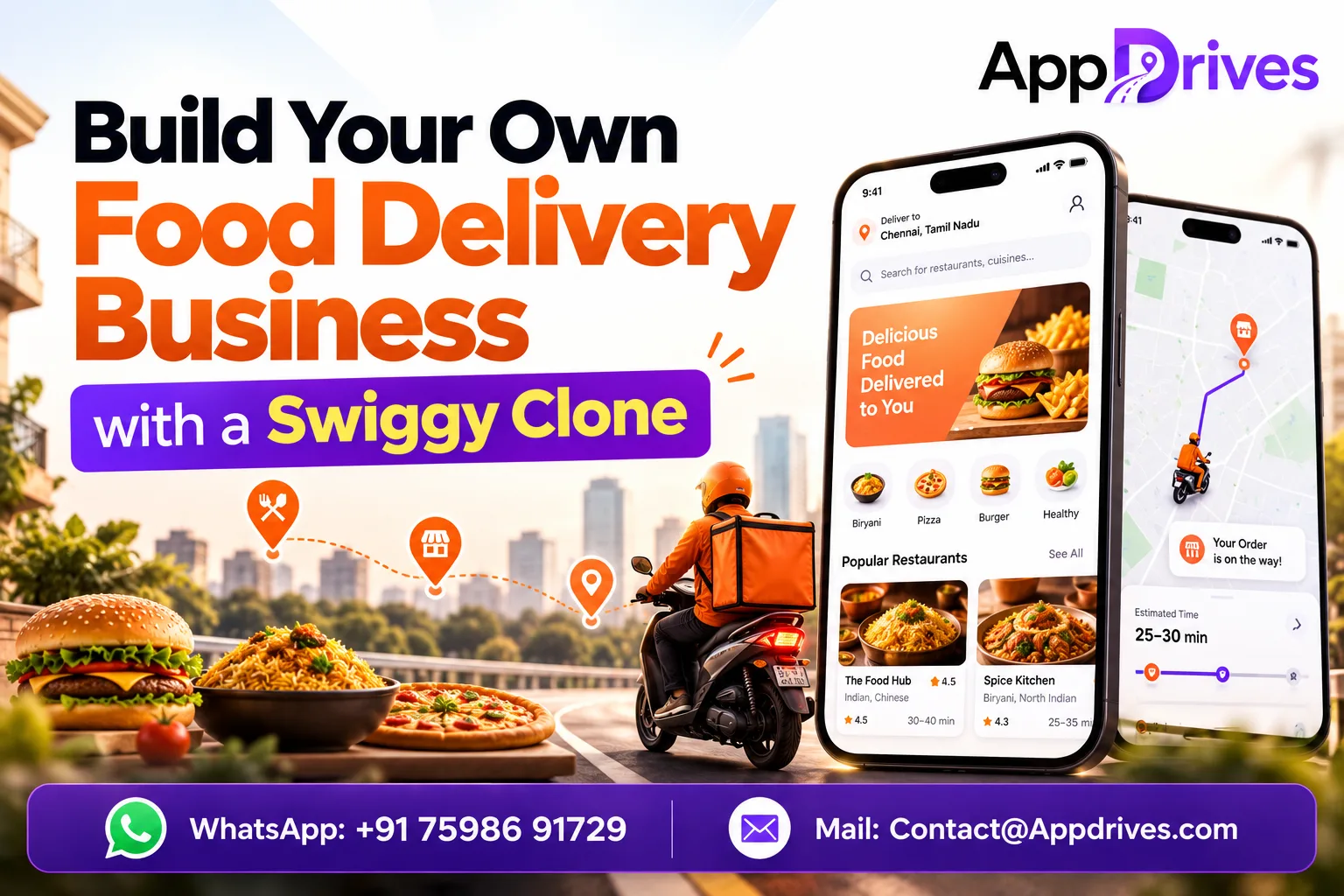
The food delivery industry has created new opportunities for entrepreneurs looking to connect customers, restaurants, and delivery partners through a single platform. A Swiggy-like food delivery app can bring these three stakeholders together while giving businesses multiple ways to generate revenue. Building such a platform requires more than an attractive customer app—it needs reliable ordering, payment, restaurant management, delivery tracking, and administrative systems.
What Makes a Swiggy-Like Food Delivery App Successful?
A successful food delivery platform should provide a smooth experience for every participant. Customers need convenient restaurant discovery, menu browsing, secure payments, order tracking, and reviews. Restaurants need tools for menu management, order acceptance, inventory updates, and sales monitoring. Delivery partners require order notifications, navigation, earnings tracking, and availability controls.
An admin panel connects the entire ecosystem by managing users, restaurants, delivery operations, commissions, promotions, payments, and analytics.
Essential Features to Include
Customer App
The customer application should make food ordering quick and convenient. Important features include:
- Restaurant search and filters
- Menu and food item browsing
- Multiple payment options
- Order scheduling
- Real-time order tracking
- Ratings and reviews
- Promo codes and cashback
- Push notifications
These features help create a convenient ordering journey from restaurant discovery to delivery.
Restaurant and Delivery Management
Restaurant partners should be able to manage menus, prices, availability, incoming orders, preparation times, and performance reports. Meanwhile, delivery partners can use GPS navigation, order assignments, earnings tracking, availability controls, and customer communication tools to complete deliveries efficiently.
Development Process for a Swiggy Clone
Planning the platform before development helps define the required features, target audience, business model, and technology requirements. The development process generally moves through planning, UI/UX design, development, testing, deployment, and ongoing maintenance.
If you want to understand each stage in greater detail, explore this guide on how to build a Swiggy clone, which covers the major considerations involved in creating a food delivery platform.
Choosing the Right Business Model
A food delivery platform can generate income through different revenue channels rather than depending on a single source. Restaurant commissions, delivery charges, advertising, promotional placements, subscriptions, and other platform services can be combined according to the target market.
The right approach depends on factors such as restaurant partnerships, customer demand, delivery operations, and local competition. For a deeper look at monetization strategies, the Swiggy clone business model provides additional information on potential revenue channels.
Ready-Made Script vs. Custom Development
Businesses generally have two approaches when launching a food delivery platform: developing everything from scratch or using a ready-made solution. Custom development can provide greater control over unique workflows and functionality, while a ready-made solution can reduce development time and provide core functionality from the beginning.
A Swiggy clone script can provide a foundation containing customer, restaurant, delivery, and admin components that can be customized around a business's requirements.
Technology and Scalability Considerations
The technology stack should support real-time communication, secure transactions, location tracking, high order volumes, and future expansion. Modern platforms may use technologies such as React.js, Flutter, Node.js, Python, MongoDB, PostgreSQL, Redis, cloud infrastructure, payment gateways, and mapping services.
Scalability is equally important. Starting with a focused geographical market can allow businesses to validate their operations before expanding into additional cities, restaurants, and delivery zones.
Final Thoughts
Launching a Swiggy-like food delivery platform requires careful planning across technology, user experience, restaurant operations, delivery management, and monetization. Whether you choose custom development or a ready-made solution, defining the business requirements and essential features first can create a stronger foundation for long-term growth.
With the right platform structure, businesses can create a branded food delivery experience and gradually expand their operations as customer and restaurant demand increases.