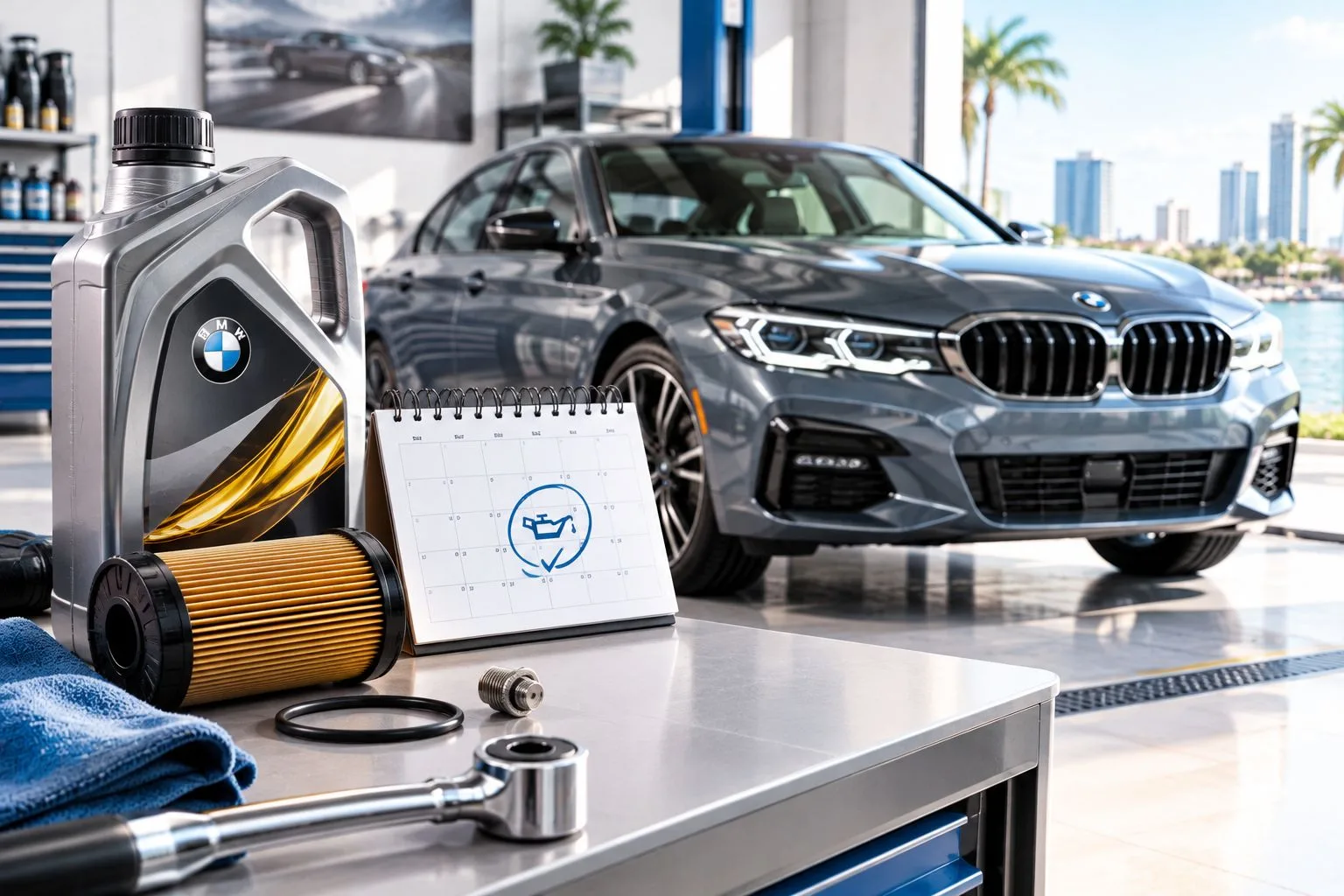
If you own the Ultimate Driving Machine, you can expect impeccable performance, smooth handling, and smooth performance on every single drive. Protecting those qualities requires regular oil changes, whether you use your car for city driving or the open road. Timely BMW Oil Change in Fort Lauderdale can keep your BMW’s engine running like new. But when should you change your BMW’s oil? Our guide will explain the BMW Oil change intervals, the variables that can cause variations in the intervals, and why this ‘when’ is so important.
The Official BMW Guidelines
BMW uses its Condition-Based Service (CBS) system. The system takes into account various engine conditions, as well as mileage and driving patterns, and informs the driver through the Drive display when it is time for an oil service. Depending on the model and your driving conditions, an oil change interval of roughly 10,000 to 15,000 miles may be possible with CBS. This value is derived from a series of tests performed by BMW and represents a reasonable compromise between engine protection, performance, and convenience.
Highly frequent short trips, traffic congestion, and extended idling in hot weather all tend to increase oil wear and more quickly reduce the overall life of engine oil. Short trips are especially taxing because an engine often never reaches its normal operating temperatures; water and fuel contaminants can remain in the oil and ultimately reduce its useful life.
Real-World Florida Driving
In Fort Lauderdale, you may be subject to more demanding driving conditions than those generally used to establish the ideal oil change interval. Extremely hot temperatures, high humidity, the occasional downpour, traffic congestion, and stop-and-go driving may place additional demands on your BMW’s engine and potentially accelerate oil degradation. The extra protection afforded by a shorter oil change interval may be worthwhile for drivers who frequently encounter these types of driving conditions.
A good rule of thumb is that for a lot of BMW owners, a 5,000- to 7,500-mile interval is practical. But this rule is dependent on the vehicle model, with limitations for the engine, so be sure to consult your owner's manual and your local dealership for their advice. For some owners, driving style, such as local commutes (short distance, extended idling), traffic, and highway use, can affect this as well. So if most of your driving is local, where there are sharp turns, heavy traffic/short stops with extended idling, or local commutes, and your car may be doing short trips, 5,000 miles may be a more appropriate interval. Remember to keep checking the CBS recommendations as well.
Consequences of Avoiding Oil Change Intervals
Engine Sludge and Clogged Passages
Old, degraded oil becomes thick sludge, failing to clean and suspend debris, which can block oil channels.
Turbocharger Bearing Damage
Turbochargers need clean, high-pressure oil for lubrication and cooling. Dirty, thick oil starves the bearings, causing the turbocharger to fail prematurely.
VANOS Variable Valve Timing Malfunction
The VANOS system in BMWs needs clean oil pressure to adjust valve timing. Contaminated oil leads to sluggish performance, rough idling, or system failure.
Greater Friction and Metal-to-Metal Wear
As oil viscosity wears thin, camshafts, rod bearings, and piston rings wear more rapidly due to increased friction.
Severe Overheating and Complete Seizure
Contaminated oil can’t provide proper lubrication or heat regulation. As a result, the engine overheats quickly, leading to warped metal, cracked housings, or complete engine seizure.
It’s recommended that you take your car to a reputable auto shop or to the dealership for routine oil changes. Delays can be risky. If you own a BMW, come to the Superior Exotics Team. We offer expert oil changes in Fort Lauderdale at competitive rates. We are a trustworthy auto shop, liked by thousands of car owners, even UFC fighters.
“Content Copied From”: https://medium.com/@teamsuperiorexotics/bmw-oil-change-intervals-in-fort-lauderdale-d351f2f9408d