
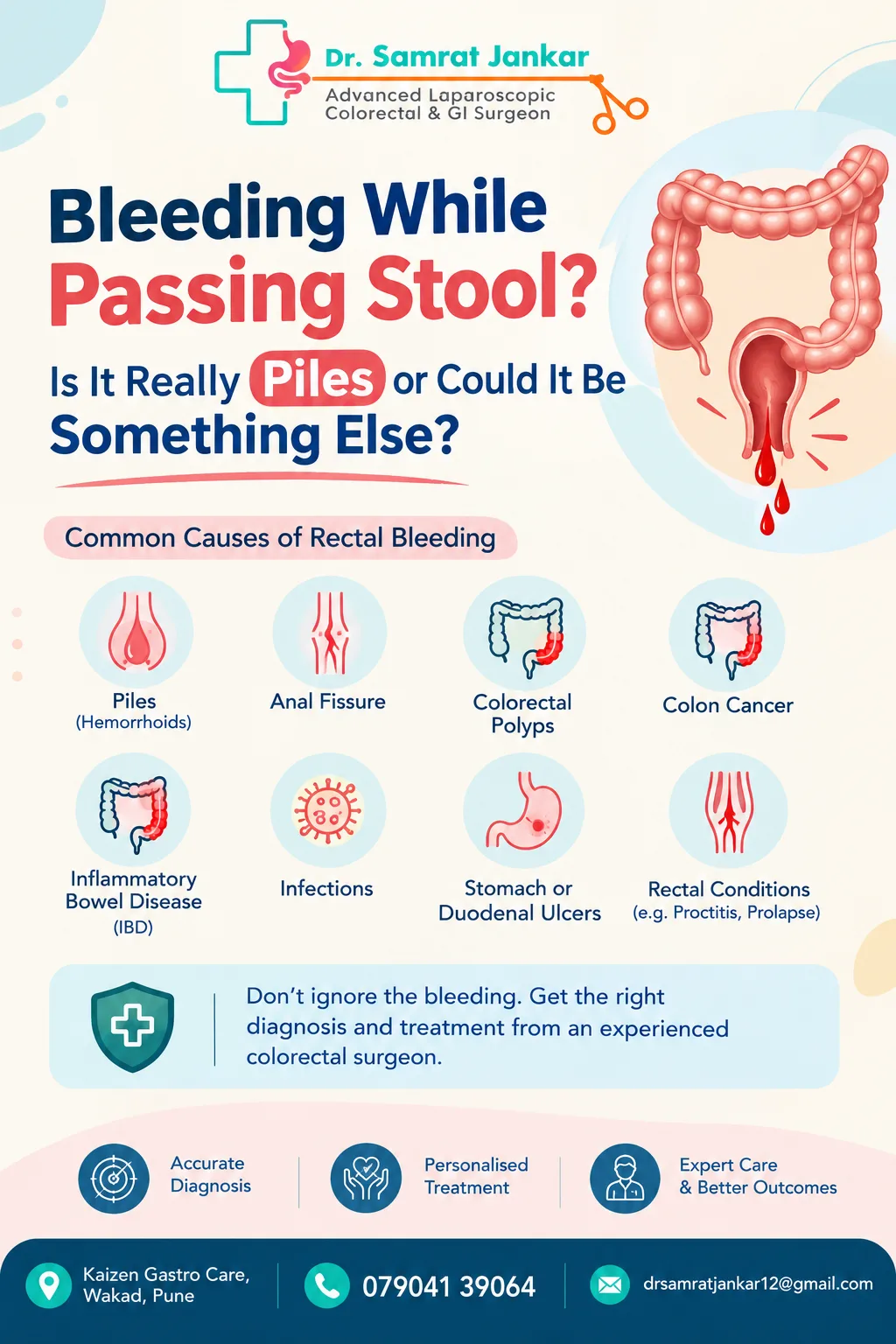
Bleeding while passing stool is most often caused by piles or a fissure. But polyps, colitis and colorectal cancer can also cause it. A proper check-up by a specialist is the only way to know the real cause.
You look down and see blood. Your heart sinks. Most people think, "It must be piles." Many then wait for weeks. Some feel too shy to see a doctor.
This blog will help you understand why bleeding happens, how to tell the causes apart, and when to seek help.
Is Blood in Stool Always Piles?
No, it is not. Piles are the number one cause, but they are not the only one. This is the biggest myth about rectal bleeding.
Bleeding is a symptom, not a disease. It tells you that something in the digestive tract needs attention. The cause may be minor or serious. You cannot know without an examination.
What Does the Colour of Blood Tell You?
Colour gives a rough clue about the source.
- Bright red blood: usually from the anus or rectum, as in piles or fissures
- Dark red or maroon blood: may come from the colon
- Black, sticky, foul-smelling stool: may come from the stomach or food pipe
Colour is only a hint. It cannot replace a medical test.
Common Causes of Bleeding While Passing Stool
1. Piles (Hemorrhoids)Piles are swollen veins in the anal canal. They are very common in India. Nearly half of all adults may have them at some point.
Piles are of two types:
- Internal piles: inside the rectum, usually painless, may bleed
- External piles: under the skin around the anus, may cause pain and swelling
Doctors grade internal piles from 1 to 4:
- Grade 1: Only bleeding
- Grade 2: Lump comes out and goes back on its own
- Grade 3: Lump must be pushed back
- Grade 4: Lump stays out all the time
Triggers include constipation, straining, long hours of sitting, low-fibre food, pregnancy and obesity.
2. Anal FissureA fissure is a small cut in the anal lining. Hard stool is the usual cause. The pain is sharp and burning. It can last for hours after stool. Bleeding is small, often just streaks on tissue paper.
3. Anal FistulaA fistula is an abnormal tunnel near the anus. It often follows an abscess. It causes pain, swelling and pus discharge. Blood may be seen occasionally. Fistulas rarely heal without treatment.
4. PolypsPolyps are small growths inside the colon. Most do not cause symptoms. Some bleed a little. A few can turn into cancer after many years. That is why doctors remove them early.
5. Colitis and Crohn's DiseaseThese are inflammatory bowel diseases. They cause blood and mucus in stool, loose motions, stomach cramps and weight loss.
6. Colorectal CancerThis is the least common cause, but the most serious. In the early stage, it can look just like piles. Early detection makes treatment far more successful.
Piles vs Fissure vs Cancer: How to Tell the Difference
This is one of the most searched questions online. The table below gives a quick idea.
FeaturePilesAnal FissureColorectal CancerBlood colourBright redBright red, small amountDark or bright redPainUsually painlessSharp, burningOften painless earlyLump at anusPossibleRareRareBowel habit changeRareConstipationCommon (alternating or narrow stools)Weight lossNoNoOftenTiredness, anaemiaRareRareCommonThis table is for awareness only. It is not a diagnosis.
Trending Questions People Ask
Blood in Stool but No Pain: Is It Serious?Painless bleeding is common in internal piles. But it is also seen in polyps and cancer. So painless bleeding should never be ignored, especially if it repeats.
Can Piles Turn into Cancer?No. Piles do not turn into cancer. But both can occur together. Piles can also hide the symptoms of cancer. That is why doctors examine the full picture.
Can Constipation Cause Blood in Stool?Yes. Hard stool and straining can damage the anal lining and swell the veins. This leads to fissures and piles.
Is Blood in Stool Normal After Spicy Food?Spicy food does not cause piles. But it can irritate the area and worsen the burning. If blood appears repeatedly, get it checked.
Can Piles Be Treated Without Surgery?Yes, in early stages. Diet changes, water, stool softeners and medicines often work well. Advanced piles may need a procedure.
Warning Signs You Should Not Ignore
See a doctor soon if you notice:
- Bleeding lasting more than one week
- Blood mixed inside the stool
- Sudden change in bowel habits
- Thin, pencil-like stools
- Unexplained weight loss
- Constant weakness or pale skin
- Family history of colon cancer
- Age above 45 with any rectal bleeding
Why Self-Medication Is Risky
Many people buy creams from the chemist. Others follow social media tips or visit unqualified practitioners. This often backfires.
Creams may ease symptoms for a few days. Meanwhile, the real cause continues to grow. A delay of even a few months can change the treatment plan.
A qualified proctologist in Pune can find the cause in a single visit.
How Is the Cause Diagnosed?
The doctor will usually follow these steps:
- Ask about your symptoms, diet and bowel habits
- Do a gentle physical and anal examination
- Perform proctoscopy to view the anal canal
- Advise colonoscopy to check the entire colon, if needed
- Order blood tests to check for anaemia
These tests are quick and safe. Most are done without hospital admission.
Treatment Options Based on the Cause
Treatment depends on the diagnosis. Not everyone needs surgery.
Piles
- Fibre-rich diet, water and stool softeners
- Rubber band ligation for grade 2
- Laser or stapler procedures for advanced piles
Fissure
- Ointments and sitz baths
- Surgery if it becomes chronic
Fistula
- Surgery is usually needed
- Options include laser treatment and LIFT
Polyps, colitis and cancer
- Polyp removal during colonoscopy
- Long-term medicines for colitis
- Surgery with a specialist team for cancer
Modern methods mean smaller wounds, less pain and faster recovery.
Simple Tips to Prevent Rectal Bleeding
- Eat more fruits, vegetables, salads and whole grains
- Drink 8 to 10 glasses of water daily
- Do not strain during stool
- Do not sit on the toilet for long
- Never hold back the urge to pass stool
- Walk or exercise daily
- Limit junk food and excess spice
Looking for Piles Treatment in Pune?
The right doctor makes a big difference. Choose someone who diagnoses first and treats later.
Dr. Samrat Jankar is a laparoscopic and colorectal surgeon and the Director and Head of GI Surgery at Kaizen Gastro Care, Wakad, Pune. He has 17+ years of experience and has treated over 20,000 patients.
He is a trusted laparoscopic surgeon in Pune and a well-known surgical gastroenterologist in Pune. Patients searching for the best piles specialist in Pune value his clear advice. He explains every option in simple words and recommends surgery only when needed.
For safe and ethical piles treatment in Pune, book a consultation today.
Final Thoughts
Blood in stool is common, but it is never normal. Piles are the most frequent cause. Yet fissures, polyps, colitis and cancer can look the same. Early diagnosis brings peace of mind and better results.
Do not let shyness or fear delay your care.
Book Your Consultation
Dr. Samrat Jankar: Laparoscopic & Colorectal Surgeon
📍 Kaizen Gastro Care, Shop No. 208/209, Oriana Crest Building, Datta Mandir Road, Opposite Costa Rica, Wakad, Pimpri-Chinchwad, Pune, Maharashtra 411057
📞 079041 39064
✉️ [email protected]
🕗 Mon–Sat: 8 AM to 3 PM and 4 PM to 9 PM
🌐 www.drsamratjankar.com
Frequently Asked Questions (FAQs)
Q1. Is bleeding while passing stool always piles?
No. Piles are the most common cause. Fissures, fistulas, polyps, colitis and colorectal cancer can also cause bleeding.
Q2. When should I see a doctor for blood in stool?
See a doctor if bleeding lasts more than a week, repeats often, or comes with weight loss, weakness or a change in bowel habits. Do not wait if you are above 45.
Q3. How can I tell if it is piles or a fissure?
Piles usually cause painless bright red bleeding, sometimes with a lump. A fissure causes sharp, burning pain during stool. Only a doctor can confirm the diagnosis.
Q4. Can piles turn into cancer?
No. Piles do not turn into cancer. But the symptoms can look alike, so persistent bleeding needs a proper check-up.
Q5. Is laser treatment good for piles?
Laser treatment can be a good option for suitable patients. It usually means less pain and quicker recovery. Your doctor will advise after examination.
Q6. Which doctor should I consult for piles in Pune?
Consult a proctologist or colorectal surgeon. Dr. Samrat Jankar at Kaizen Gastro Care, Wakad, offers complete piles treatment in Pune.