The gap between textbook theory and practical application remains one of the greatest hurdles in modern education. While traditional classrooms lay the groundwork for understanding scientific principles and mathematical formulas, they often struggle to answer the student's eternal question: "When am I ever going to use this?"
Enter hands-on STEM (Science, Technology, Engineering, and Math) workshops. By shifting the learning environment from passive listening to active creation, these immersive sessions bridge the gap between abstract concepts and real-world innovation.
Moving From Passive Consumption to Active Creation
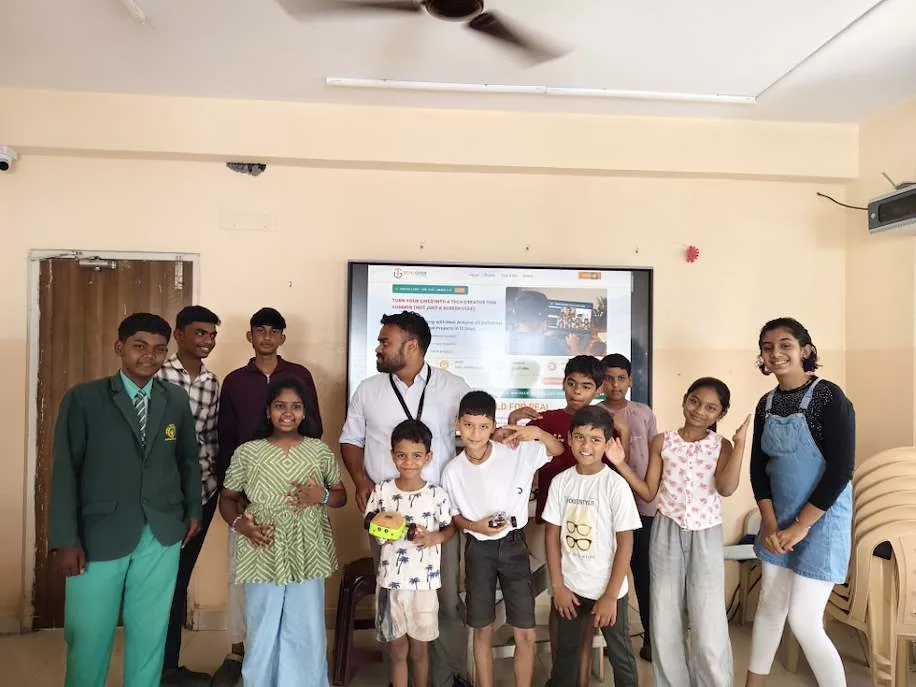
Today's students grow up surrounded by advanced technology, yet most remain passive consumers of it. Interactive STEM workshops invert this dynamic. When middle and high school students build circuit boards, program autonomous micro-robots, or model renewable energy solutions, technology transforms from a source of entertainment into a toolkit for creation.
By physically assembling components and watching code come to life, learners grasp complex scientific logic far faster than they would through lecture slides. Abstract ideas like mechanical advantage, algorithmic efficiency, or electrical resistance become tangible reality when students see their own projects move, light up, or solve a physical problem.
Building the core "Human Skills" of Tomorrow
While technical literacy is a clear takeaway, the true power of experiential STEM workshops lies in the soft skills they cultivate:
Constructive Resilience: In standard academic testing, mistakes usually lead to lost points. In a STEM workshop, trial and error is the primary method of learning. Debugging a piece of code or redesigning a top-heavy structure teaches students to view failure not as a defeat, but as essential data for the next iteration.
Collaborative Problem-Solving: Workshop projects mimic modern professional environments. Working in small, diverse teams requires students to divide responsibilities, present conflicting ideas respectfully, and negotiate solutions under time constraints.
- Agile Critical Thinking: STEM challenges rarely have a single "correct answer." Learners must analyze open-ended problems, evaluate alternative approaches, and adapt their designs as new constraints emerge.
Preparing Students for an Evolving Job Market
The global job market is shifting rapidly toward automation, artificial intelligence, and green technologies. The top careers of the next decade will demand professionals who are not just knowledgeable, but adaptable and interdisciplinary in their approach.
Early exposure to structured STEM workshops demystifies technical fields. It dismantles the misconception that subjects like computer science or engineering are reserved for a select few, opening doors for students of all backgrounds to pursue future-ready careers.
The Future of Education is Experiential
The purpose of modern education is no longer to memorize facts—it is to teach young minds how to learn, adapt, and invent. Hands-on STEM workshops provide the ideal incubator for these skills, nurturing curious kids into confident, creative problem-solvers.
For schools, educators, and parents looking to equip the next generation for the challenges of tomorrow, investing in experiential STEM learning isn't just an extra effort—it is the single most effective way to shape tomorrow's innovators.
To know more@https://www.techyguide.in/stem-robotics-workshops-for-schools-india
Note for Editors: This original piece is tailored for educational blogs, parenting portals, or ed-tech publications seeking fresh perspectives on modern learning strategies.