If you've been scrolling through baby-gear stores wondering whether to pick a plastic walker or a wooden one, you're not alone. More Indian parents are now leaning toward a wooden baby walker for its sturdiness, natural finish, and old-world charm that somehow still feels modern. Unlike flimsy plastic frames that wobble or crack within months, a well-built wooden walker tends to last through multiple milestones — and sometimes even multiple children.
This 2026 buying guide walks you through why wooden walkers are having a moment, what to check before you buy one, and how to use it safely. We'll also answer the questions Indian parents search for most, so you can make a confident, informed choice.
Why Choose a Wooden Baby Walker Over Plastic?
Wooden baby walkers have quietly become the preferred choice for parents who care about durability and aesthetics as much as function. Here's why:
- Durability: Solid wood — typically pine or beech — handles daily wear far better than thin plastic, which tends to crack or lose stability over time.
- Non-toxic and eco-friendly: Quality wooden walkers use water-based, child-safe paints and finishes, making them a safer long-term choice for chewing-prone toddlers.
- Aesthetic appeal: Wooden walkers blend into home décor far more gracefully than bright plastic ones, and many parents keep them as keepsakes.
- Better stability: The added weight of wood gives these walkers a lower center of gravity, reducing tipping risk compared to lightweight plastic models.
A common myth is that wooden walkers are "old-fashioned" or less safe than modern plastic ones. In reality, most BIS-certified wooden walkers sold in India today combine traditional materials with contemporary safety features like anti-slip wheels and activity panels — offering the best of both worlds.
Key Factors to Consider Before Buying
Choosing the right wooden baby walker isn't just about looks. Here's a checklist to run through before you add one to your cart.
1. Safety Standards & Certifications
Always check for a BIS (Bureau of Indian Standards) certification, rounded edges, and non-toxic paint. Certified manufacturers test for lead-free finishes and structural stability, which matters far more than how a walker looks in photos.
2. Age & Developmental Suitability
Most wooden walkers in India are designed for babies aged 8 to 18 months — old enough to sit up and bear some weight on their legs, but still learning balance. Always match the walker to your baby's developmental stage rather than their age alone.
3. Build Quality & Wood Type
Pinewood is lightweight yet sturdy and commonly used in Indian-made walkers, while beechwood is denser and slightly more premium. Avoid walkers with visible splinters, rough joints, or unfinished edges.
4. Wheel Design & Mobility Control
Look for anti-slip, lockable wheels that perform well on both tiled and wooden floors. Adjustable speed control is a useful feature that prevents the walker from rolling too fast on smooth surfaces.
5. Adjustability & Growth Accommodation
Height-adjustable seats or handles extend the usable life of a walker as your baby grows taller, so you're not shopping again in a few months.
6. Additional Features
Many modern wooden walkers double as activity centres, with built-in xylophones, shape sorters, counting beads, or storage trays — features that keep babies engaged well beyond the walking stage.
7. Price Range in India
Budget wooden walkers typically start around ₹1,500–₹2,500, mid-range options with activity panels fall between ₹2,500–₹4,500, and premium or designer walkers can cross ₹4,500, depending on wood type and finish.
Top Wooden Baby Walker Picks for 2026
Rather than chasing whatever trends on marketplaces, it helps to know what a genuinely well-built wooden walker looks like. A strong example currently available in India is the
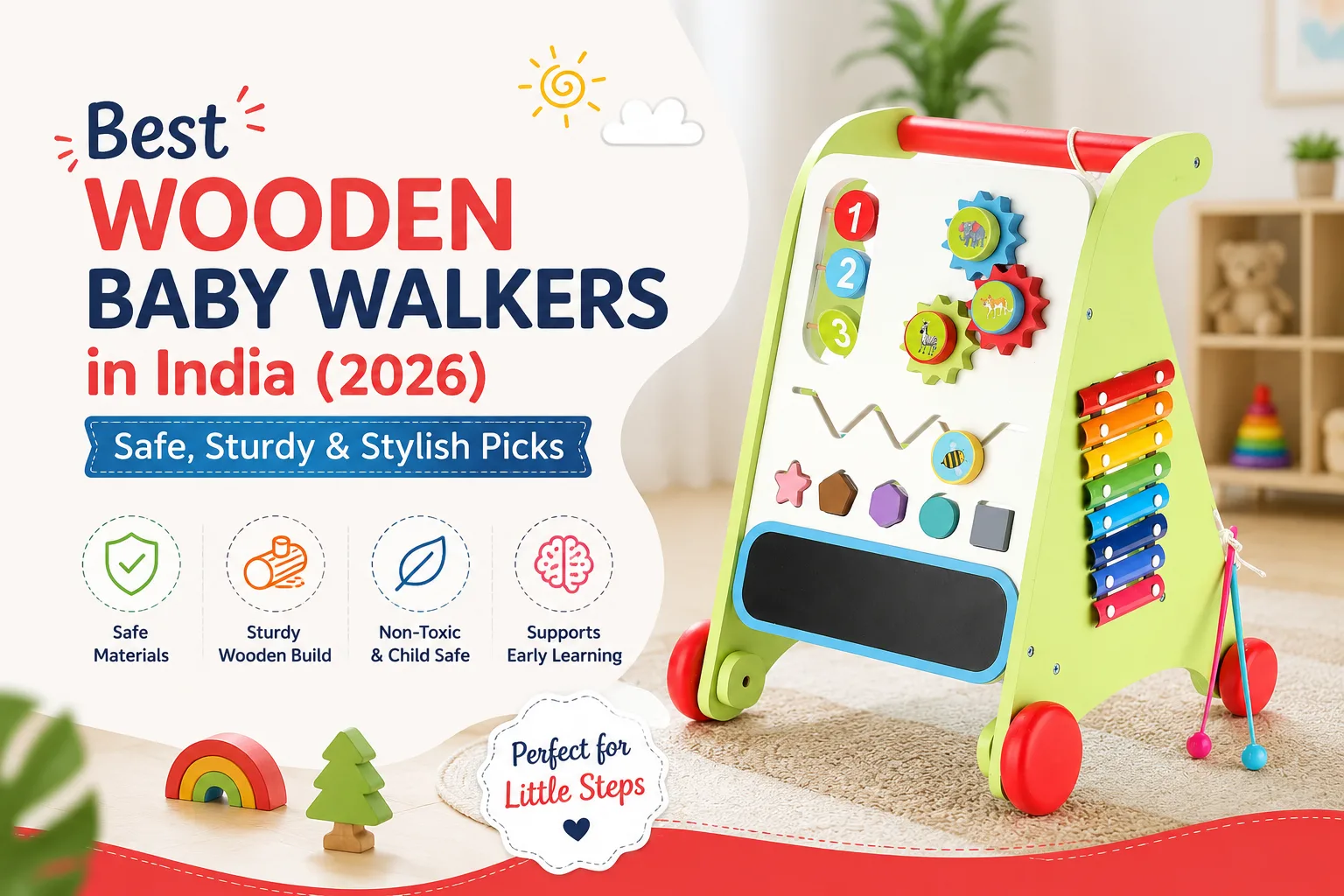
A strong example currently available in India is the Chanak Push-Pull Wooden Baby Walker, built from sturdy pinewood for babies aged 9 months and up. It's BIS certified and manufactured under ISO 9001:2015 standards, with an ergonomic handle sized for small hands and six built-in activities — including a xylophone, shape puzzle, counting beads, and rotating gears — built into the front panel. It also includes a storage compartment, making it functional well past the initial walking phase.
When comparing walkers across price points, keep these categories in mind:
- Best Budget Pick: A simple push-bar design in pinewood, without electronic add-ons — ideal if you just need core stability and safety.
- Best All-Rounder: Walkers with an activity panel (like the Chanak model above) that combine mobility support with sensory play.
- Best Premium Pick: Beechwood walkers with a smoother finish, adjustable height, and minimalist Scandinavian-style design for parents prioritising décor and longevity.
- Best Compact Option: Foldable or narrow-frame wooden walkers suited to smaller apartments or homes with limited floor space.
You can browse the full range of BIS-approved baby walkers and infant essentials to compare options side by side before deciding.
How to Use a Wooden Baby Walker Safely
- Never leave your baby unsupervised in a walker, even for a minute.
- Keep walkers away from stairs, thresholds, and slippery or uneven flooring.
- Limit usage to short, supervised sessions rather than long stretches.
- Check regularly for loose screws, worn wheels, or wobbly joints as signs the walker needs repair or replacement.
Paediatric bodies such as the American Academy of Pediatrics generally advise supervised, limited use of any walker, and recommend floor-based free play as the primary way babies build walking strength and balance.
Wooden vs Plastic vs Push Walker: A Quick Comparison
FactorWooden WalkerPlastic WalkerPush WalkerDurabilityHighModerateHighCostModerate–HighLow–ModerateModerateStabilityHigh (heavier base)LowerDepends on designAestheticsNatural, décor-friendlyBright, playfulSimple, minimalBest ForParents wanting longevity & styleBudget-conscious buyersBabies already close to walking
Maintenance & Care Tips for Wooden Baby Walkers
- Wipe down with a slightly damp cloth rather than soaking the wood, which can warp the frame over time.
- Avoid harsh chemical cleaners that can strip child-safe paint finishes.
- Store in a dry area away from direct sunlight to prevent cracking or fading.
- Periodically tighten screws and check wheel movement, especially after heavy daily use.
What Experts Say About Baby Walkers
Child development experts generally agree that walkers — wooden or otherwise — should be used as a supervised play tool rather than a substitute for natural movement. Babies build core strength and balance through crawling and floor play, so a walker works best as an occasional aid rather than a daily routine. Choosing a stable, well-certified wooden walker and limiting session length helps you get the developmental benefits of standing and mobility play without over-relying on the device.
Conclusion
A good wooden baby walker checks three boxes at once: it's safer by design, built to last, and blends into your home rather than cluttering it. Prioritise BIS certification, sturdy wood construction, and lockable wheels over flashy extras, and you'll end up with a walker that supports your baby through several stages of early development.
If you're ready to compare certified options, take a look at Chanak's wooden baby walker or explore their wider collection of infant and toddler essentials for more BIS-approved options.
Frequently Asked Questions
Are wooden baby walkers safe for babies?
Yes, when BIS-certified and used under supervision. Look for rounded edges, non-toxic paint, and stable, lockable wheels.
At what age can I start using a wooden walker for my baby?
Most wooden walkers are designed for babies aged 8–18 months, once they can sit up independently and bear weight on their legs.
Do wooden walkers cause bow legs or delay walking?
There's no strong evidence that walkers cause bow legs, but paediatricians advise limiting daily usage and prioritising floor play for natural muscle development.
Which is better — wooden or plastic baby walker?
Wooden walkers generally offer better durability, stability, and aesthetics, while plastic walkers are lighter and often more budget-friendly.
What is the difference between a baby walker and a push walker?
A baby walker usually has a seat that supports the baby's weight, while a push walker is a frame babies hold onto and push while already standing and taking steps.
Are wooden walkers more durable than plastic ones?
Generally yes — solid wood construction resists cracking and wear better than most plastic frames over long-term daily use.
What is the average price of a wooden baby walker in India?
Prices typically range from ₹1,500 for basic models to ₹4,500+ for premium, feature-rich options.
Which brand makes the best wooden baby walker in India?
Several Indian brands make BIS-certified wooden walkers; Chanak is one option known for combining wooden construction with built-in activity panels.
Where can I buy a certified wooden baby walker online in India?
You can browse certified options directly on manufacturer sites, such as Chanak's baby walker collection, or on major marketplaces — just confirm BIS certification before purchase.
How long can a baby use a walker each day?
Most experts recommend keeping walker sessions short and supervised — generally not more than 15–20 minutes at a stretch, a few times a day.
How do I clean and maintain a wooden baby walker?
Wipe with a damp (not wet) cloth, avoid harsh chemicals, and periodically check screws and wheels for wear.
Can wooden baby walkers be adjusted as the baby grows?
Many models offer height-adjustable seats or handles, extending usability as your baby grows taller.