
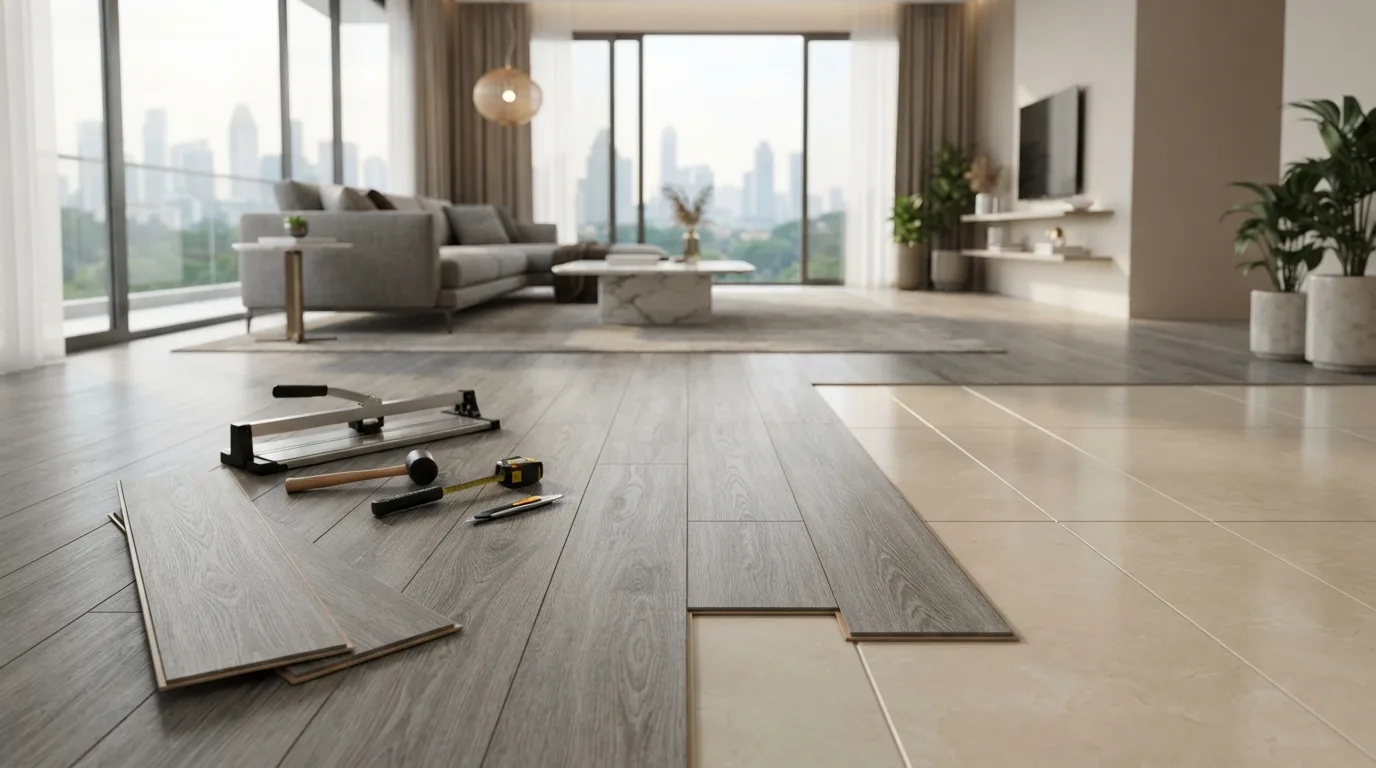
Replacing old floor tiles can be expensive, noisy and time-consuming, especially when the existing floor is still in decent condition. That is why many homeowners consider SPC flooring over tiles to give the room a new look without removing the entire tiled surface.
SPC, or stone plastic composite flooring, has a rigid core that gives it better stability than more flexible vinyl flooring. However, laying SPC over existing tiles is not as simple as placing the planks on top. The tiles need to be firmly bonded, major uneven areas corrected, and the surface properly prepared before installation. Understanding these requirements can help you decide whether an SPC tile overlay suits your floor.
Can SPC Flooring Be Installed Over Existing Tiles?
Yes, SPC flooring can often be installed over existing tiles when the surface is firm, clean, dry and reasonably level. Repair loose tiles and large cracks, and fill or level deep grout lines and major height differences before installation.
If the existing floor is badly damaged or unstable, you may need to remove the tiles. A professional installer can inspect the surface and recommend the right preparation.
Which Tiles Are Suitable for an SPC Overlay?
Ceramic and porcelain tiles are generally suitable bases for SPC flooring, as long as they are stable and reasonably level. The tile surface affects how you prepare:
- Glazed or polished tiles are non-porous and usually need a compatible primer before applying any levelling compound.
- Heavily textured tiles usually need a skim coat or levelling compound to smooth the surface.
- Mosaic tiles can need more filling and levelling because of their many grout lines.
Preparing Tiles Before Installing SPC
Preparation decides how the finished floor looks and lasts. Follow these steps in order:
- Inspect and test. Tap across the floor with a coin or screwdriver handle. A hollow, drummy sound means the tile is not fully bonded. Repair or remove hollow, loose or cracked tiles.
- Check flatness. Lay a straightedge across the floor. As a rough guide, many manufacturers allow a variation of around 3 mm over 2 metres, but the exact figure depends on the product.
- Clean thoroughly. Remove dust, grease, wax and adhesive residue.
- Fill grout lines. As a general guide, fill grout lines wider or deeper than about 4 to 5 mm with a suitable cement-based filler or levelling compound. Small, shallow joints may be acceptable with some rigid products, but check the manufacturer's guidance.
- Prime and level. On glazed or polished tiles, apply a suitable primer first. Then use a self-levelling compound designed for use over tile to fix dips and low areas. Make sure it is compatible with both the tile and the SPC.
- Cure and re-check. Let all materials cure as instructed, then check flatness again.
These figures are general guides. Always confirm the tolerance in your SPC manufacturer's installation instructions, as installing outside it may affect your warranty.
What Is the Best SPC Flooring for Tile Overlay?
No single product suits every home, but these are the factors to compare:
- Core and thickness: SPC is always rigid-core. Total thickness commonly ranges from about 4 mm to 8 mm. A thicker plank can feel more solid, but it won't hide major defects.
- Wear layer: This protects the surface. Higher-traffic areas benefit from a thicker wear layer.
- Locking system: A well-made click system holds up better on floors with minor imperfections.
- Attached underlay: Some planks come with underlay already fixed to the back, which adds comfort and reduces sound. Don't add a second underlay unless the manufacturer allows it, as this can affect the joints. An underlay also does not level grout lines or dips.
- Approval for tile overlay: Check that the manufacturer allows installation over existing tile.
Can SPC Flooring Go Over Uneven Tiles?
SPC flooring is more forgiving than thin, flexible vinyl for minor surface imperfections, but it should not be installed over seriously uneven tiles. Large dips and raised areas can leave parts of the planks unsupported, causing flexing and putting stress on the click joints. Level out major dips and high spots before installation to create a stable base.
Click-Lock SPC and Expansion Gaps
Click-lock SPC flooring is a floating floor, meaning the planks connect to each other and are not glued or fixed to the subfloor. This method can make installation quicker and cleaner.
Leave an expansion gap around the room's edges and fixed objects to allow the flooring to move slightly with temperature and humidity changes. Always follow the manufacturer's recommended gap size.
Floor Height: Plan for It Early
SPC over tile raises the finished floor level. Check these before ordering:
- Doors: They may need trimming for clearance.
- Skirting: It may need to be refitted, or covered with quarter-round or trim.
- Transitions: You may need reducers or thresholds where the floor meets other rooms.
- Cabinets and appliances: Fixed items may leave less clearance, especially under built-ins or where a dishwasher or oven sits.
SPC Flooring for Singapore Homes
SPC flooring is popular for home renovation in Singapore because it offers many designs and a water-resistant core that suits humid conditions and can handle everyday spills. For homeowners comparing different flooring options, Vinyl Flooring in Singapore is also worth considering for its range of styles and practical features. For living rooms and bedrooms, SPC can be a practical way to update an HDB flat or condominium unit, often without removing existing tiles.
For bathrooms and other wet areas, follow the manufacturer's guidance first, as standing water and unsealed edges can still cause problems.
Before starting, check the rules that apply to you. HDB owners should refer to HDB's official renovation guidelines, and condominium owners should check with their MCST for any flooring or noise requirements.
Benefits and Limitations of an SPC Tile Overlay
Benefits:
- Less demolition, so less dust and noise
- A completely new look without removing the whole floor
- Many colours, textures and plank sizes to suit modern, Scandinavian, minimalist and other styles
Limitations:
- Badly damaged or unstable tiles must be removed, not covered
- The finished floor is higher than before
- Extra preparation, such as filling, priming and levelling, adds to the cost
Final Thoughts
The best SPC flooring for tile overlay is not simply the thickest or most expensive product. It is the one that suits your tile surface, room conditions and installation method, and that the manufacturer approves for use over tile.
Check the condition of the existing floor first, prepare it properly, and include levelling and height adjustments in your renovation budget from the start. For a wider comparison of vinyl types on uneven floors, see our guide to Best Vinyl Flooring for Uneven Tile.