
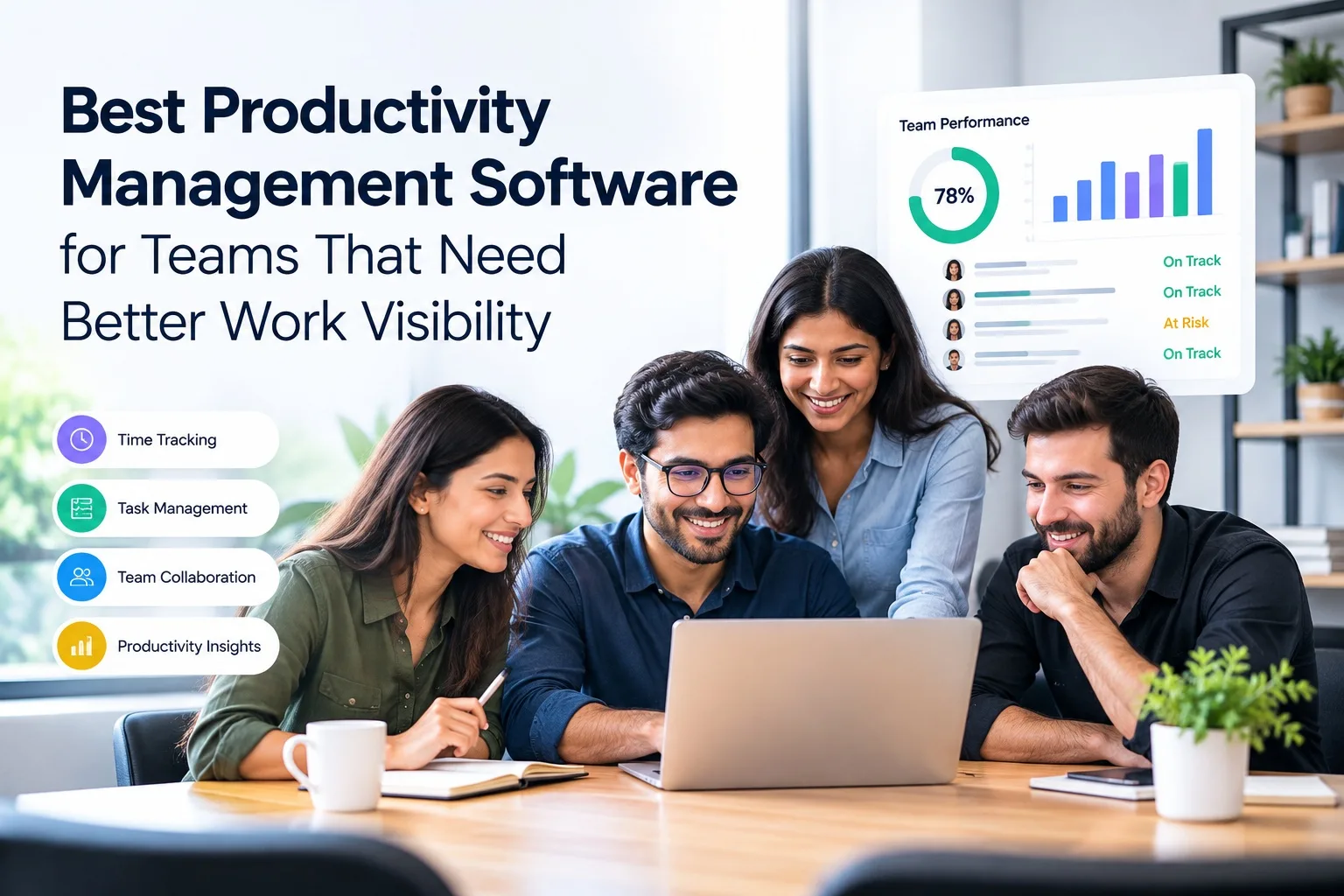
Managing a team becomes harder when you cannot clearly see where work time is going, which projects are moving forward, or where employees need support. Spreadsheets and manual reports may work for a small team, but they quickly become difficult to manage as the business grows.
The right productivity management software can give managers a clearer view of work without making employees feel like they are constantly being watched. The goal is not simply to track hours. It is to understand how time, tasks, projects, and team workload connect.
Why Teams Need Better Work Visibility
Many businesses face the same problems:
- Managers do not have a clear view of daily work.
- Timesheets are completed late or contain errors.
- Projects take more hours than expected.
- Workloads are not evenly distributed.
- Billable and non-billable hours are difficult to compare.
- Teams use different systems for tasks, time, attendance, and reporting.
These gaps can affect project margins, deadlines, client billing, and team performance.
A better approach is to bring important work information into one place. Managers can then spend less time collecting reports and more time making decisions.
What to Look for in Productivity Management Software
When comparing software, focus on features that solve real business problems rather than choosing a platform based only on the number of features.
1. Automatic Time Tracking
Manual time entries can create inaccurate reports. Automatic time tracking helps teams record time while they work and gives managers a clearer picture of how hours are being used.
2. Project and Task Tracking
Time data becomes more useful when it is connected to projects and tasks. Managers can identify which projects are taking longer and whether work is progressing as planned.
3. Workload Visibility
Managers need to know who has too much work and who has available capacity. Workload reports can help teams distribute tasks more fairly and reduce unnecessary delays.
4. Productivity Insights
Simple activity numbers do not always explain why a project is behind. Productivity intelligence can connect time, activity, tasks, and project information to provide a more useful view of how work is progressing.
5. Reports for Better Decisions
Good reporting should answer practical questions:
- Where are most working hours going?
- Which projects are using more time than planned?
- Which employees have heavy workloads?
- How much time is billable?
- Are projects staying within budget?
The easier these answers are to access, the faster managers can respond.
Why Workstatus Is Worth Considering
For teams looking for the best productivity management software, Workstatus brings time tracking, task management, attendance, project tracking, automated timesheets, workload visibility, and productivity reporting into one system.
This can be especially useful for service businesses where employee time directly affects project costs and client delivery.
Instead of checking several platforms, managers can get a more connected view of how work is happening.
Workstatus also supports integrations with popular project and development platforms, helping teams keep existing workflows while bringing important work data together.
Choose Software Based on Your Business Needs
There is no single platform that works perfectly for every company. Before choosing software, consider your team size, project structure, reporting needs, and the amount of manual work currently involved in tracking productivity.
For example, a growing agency may need better billable-hour visibility, while a software development company may care more about project workload and task progress.
The important question is simple:
Can the software help managers understand what is happening across the team and take action before small problems become expensive ones?
That is where modern productivity intelligence becomes valuable. Instead of looking at isolated numbers, teams can use connected work data to identify patterns and make better decisions.
Turn Work Data Into Better Decisions
Better visibility does not mean watching every employee every minute. It means giving managers enough reliable information to understand workloads, project progress, time usage, and delivery risks.
When teams have the right information, managers can identify bottlenecks earlier, improve workload distribution, reduce wasted time, and keep projects on track.
If your current process depends on spreadsheets, manual timesheets, and multiple disconnected reports, it may be time to consider a more connected approach.