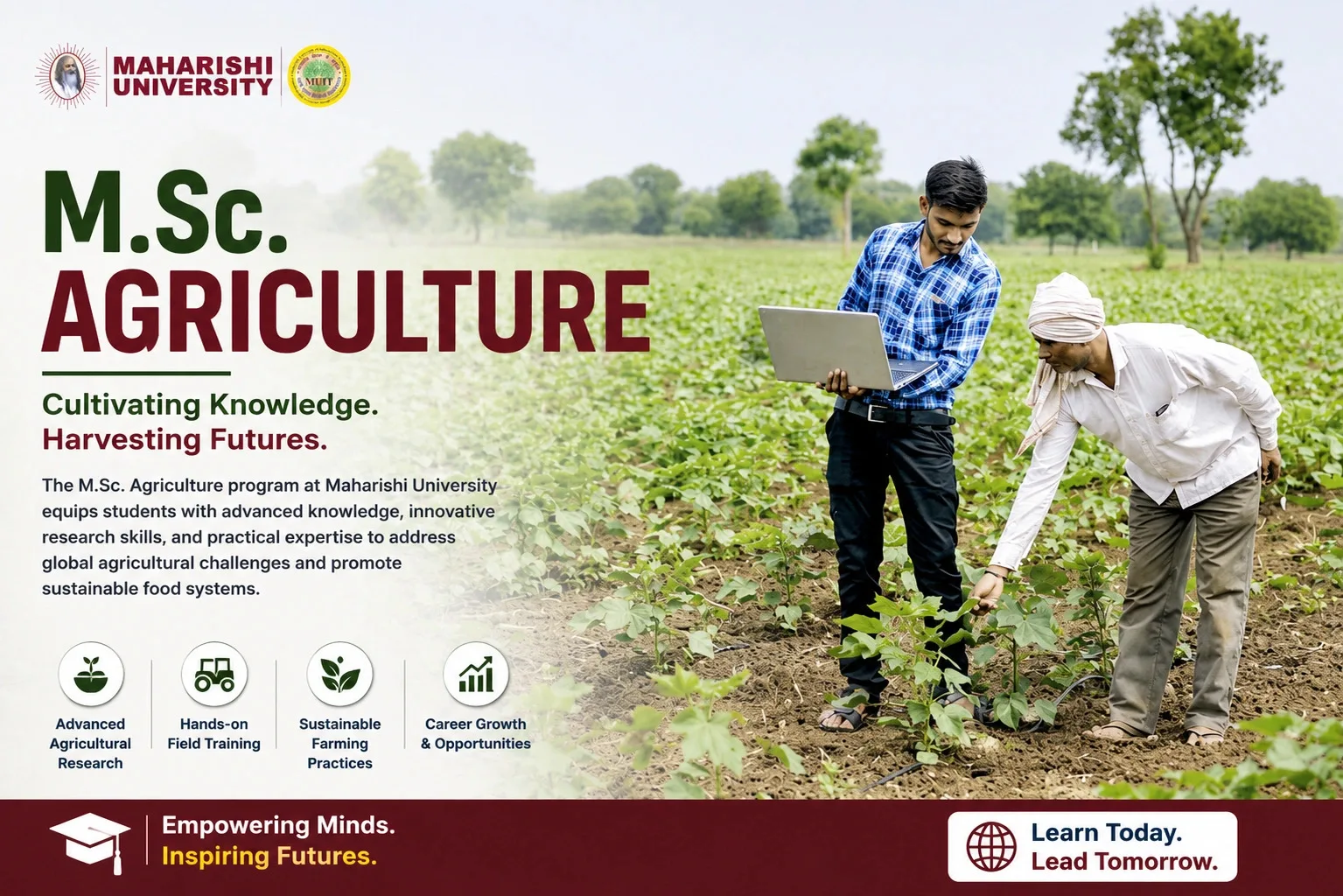
Choosing the right specialisation is one of the most important decisions when pursuing a Master of Science in Agriculture. A specialisation allows students to gain advanced knowledge in a specific area of agricultural science while preparing for specialised career opportunities in research, government organisations, agribusiness, and higher education.
With agriculture becoming increasingly technology-driven and research-oriented, selecting a field that aligns with your interests, skills, and career goals can significantly enhance your professional growth. This guide explores some of the most popular Master of Science in Agriculture specialisations and offers practical tips for choosing the right one.
Why Choose a Specialisation?
A Master of Science in Agriculture provides a broad understanding of agricultural sciences during the initial stages of study. As students progress, they can focus on a specialised discipline that matches their academic interests and long-term career aspirations.
Specialising enables students to:
- Develop subject-specific expertise.
- Gain advanced practical and research skills.
- Improve employment opportunities.
- Prepare for doctoral research and academic careers.
- Build knowledge relevant to modern agricultural challenges.
Popular MSc in Agriculture Specialisations
1. Agronomy
Agronomy focuses on crop production, soil management, irrigation practices, and sustainable farming techniques. Students learn methods to improve crop yield while conserving natural resources.
Career options: Agronomist, Farm Manager, Agricultural Officer, Crop Consultant.
2. Soil Science
This specialisation studies soil fertility, nutrient management, soil conservation, and land productivity. Students understand how soil health directly affects agricultural production.
Career options: Soil Scientist, Research Officer, Soil Conservation Specialist, Agricultural Consultant.
3. Plant Breeding and Genetics
Plant Breeding and Genetics focuses on developing improved crop varieties with better yield, disease resistance, and climate adaptability through scientific breeding techniques.
Career options: Plant Breeder, Genetic Researcher, Seed Scientist, Biotechnology Specialist.
4. Agricultural Biotechnology
Agricultural Biotechnology combines biological sciences with modern agricultural technology to improve crops, pest resistance, and food production through scientific innovation.
Career options: Biotechnology Researcher, Laboratory Scientist, Research Associate, Agritech Professional.
5. Plant Pathology
This discipline studies plant diseases, their causes, prevention methods, and disease management strategies to improve agricultural productivity.
Career options: Plant Pathologist, Disease Management Specialist, Agricultural Research Scientist.
6. Agricultural Entomology
Agricultural Entomology focuses on insects that affect crops and on methods for effective pest management using scientific and environmentally responsible approaches.
Career options: Entomologist, Pest Management Specialist, Crop Protection Officer.
7. Horticulture
Horticulture specialises in the cultivation of fruits, vegetables, flowers, medicinal plants, and ornamental crops. Students gain expertise in commercial horticultural production and management.
Career options: Horticulture Officer, Nursery Manager, Landscape Consultant, Horticulture Researcher.
8. Seed Science and Technology
This specialisation deals with seed production, quality testing, storage, processing, and certification to ensure high-quality agricultural production.
Career options: Seed Technologist, Quality Control Officer, Seed Production Manager.
9. Agricultural Economics
Agricultural Economics focuses on farm management, agricultural finance, marketing, rural development, and agricultural policies.
Career options: Agricultural Economist, Policy Analyst, Market Research Officer, Agribusiness Manager.
How to Choose the Right Specialisation
Selecting the right Master of Science in Agriculture specialisation requires careful evaluation of several factors.
Assess Your Interests
Choose a field that genuinely interests you. Students who enjoy research may prefer biotechnology or plant breeding, while those interested in fieldwork may choose agronomy or horticulture.
Consider Career Goals
Think about your future career plans. If you wish to work in government services, research, agribusiness, teaching, or entrepreneurship, select a specialisation that supports those goals.
Explore Industry Demand
Emerging fields such as agricultural biotechnology, precision agriculture, climate-smart farming, seed technology, and sustainable agriculture continue to offer growing career opportunities.
Review Curriculum
Compare the syllabus, laboratory facilities, field training, research opportunities, and industry exposure offered by different universities before making your decision.
Evaluate Research Opportunities
If you plan to pursue a PhD or research career, choose a specialisation with strong research facilities and experienced faculty members.
Career Opportunities After Specialisation
Graduates of a Master of Science in Agriculture can pursue careers in:
- Government Agriculture Departments
- Agricultural Universities
- Research Institutions
- Agritech Companies
- Seed and Fertiliser Industries
- Food Processing Companies
- Agricultural Consultancy Firms
- Rural Development Organisations
- Environmental and Sustainability Projects
Many graduates also establish successful agribusiness ventures or continue with doctoral research.
Apply Now for Master of Science in Agriculture
📞 Call Us: +91-9870200541
📧 Email: [email protected]
🌐 Apply Online: MUIT Lucknow Admission Portal
🏫 Visit Website: MUIT Lucknow Official Website
Frequently Asked Questions (FAQs)
1. What is the Master of Science in Agriculture?
A Master of Science in Agriculture is a postgraduate programme that provides advanced knowledge in agricultural sciences, research, crop management, soil science, biotechnology, and sustainable farming practices.
2. What are the popular specialisations in a Master of Science in Agriculture?
Some of the most popular specialisations include Agronomy, Soil Science, Plant Breeding and Genetics, Agricultural Biotechnology, Plant Pathology, Agricultural Entomology, Horticulture, Seed Science and Technology, and Agricultural Economics.
3. How do I choose the right MSc in Agriculture specialisation?
Choose a specialisation based on your academic interests, career goals, industry demand, research opportunities, and the curriculum offered by the university.
4. Which MSc in Agriculture specialisation has the best career scope?
Career opportunities are available across all specialisations. Fields such as Agricultural Biotechnology, Agronomy, Plant Breeding, Soil Science, and Agricultural Economics are widely preferred due to growing industry demand.
5. Can I pursue higher studies after completing a Master of Science in Agriculture?
Yes. Graduates can pursue a PhD, research fellowships, specialised certification courses, or advanced research in agricultural sciences and allied disciplines.
6. Is practical training included in the programme?
Yes. Most universities include laboratory work, field visits, research projects, seminars, and practical training as part of the curriculum.
7. What careers are available after specialising in Agronomy?
Graduates can work as Agronomists, Agricultural Officers, Farm Managers, Crop Consultants, or Research Scientists.
8. What is the scope of Agricultural Biotechnology?
Agricultural Biotechnology offers opportunities in research laboratories, agritech companies, biotechnology firms, seed industries, and agricultural innovation projects.
9. Is Horticulture a good specialisation?
Yes. Horticulture offers careers in fruit and vegetable production, floriculture, nursery management, landscape development, research, and government horticulture departments.
10. What skills are developed during a Master of Science in Agriculture?
Students develop research skills, scientific analysis, laboratory techniques, crop management expertise, leadership, communication, problem-solving, and project management abilities.
11. Can Master of Science in Agriculture graduates apply for government jobs?
Yes. Graduates can apply for positions such as Agricultural Officer, Horticulture Officer, Extension Officer, Soil Conservation Officer, Research Associate, and other agriculture-related government roles, subject to recruitment eligibility.
12. Does the choice of specialisation affect career opportunities?
Yes. A specialisation helps students develop expertise in a specific field, which can influence the types of jobs, research opportunities, and industries they can pursue after graduation.
13. Which industries recruit Master of Science in Agriculture graduates?
Graduates are recruited by agritech companies, seed and fertiliser industries, food processing organisations, agricultural consultancies, research institutes, educational institutions, and government departments.
14. Is research an important part of the programme?
Yes. Research plays a significant role in the programme through dissertations, laboratory experiments, field studies, scientific projects, and data analysis.
15. Why should I choose a Master of Science in Agriculture?
A Master of Science in Agriculture provides advanced technical knowledge, practical experience, research exposure, and specialised skills that prepare graduates for rewarding careers in agriculture, research, higher education, agribusiness, and sustainable agricultural development.