What you eat in the three to six months before trying to conceive shapes the hormonal environment, egg quality, sperm health, and uterine receptivity that conception depends on. Food is not a fertility treatment. But it is one of the most powerful preparatory tools available to any couple and most couples underestimate it entirely.
At Dr. Aravind's IVF Fertility & Pregnancy Centre, the best IVF centre in Coimbatore, nutrition assessment is a standard part of every fertility consultation. Here is what the evidence actually supports.
Why Food Affects Fertility More Than Most Couples Realise
Reproductive cells eggs and sperm are among the most nutritionally sensitive cells in the human body. Eggs take approximately 90 days to mature. Sperm regenerates every 72 to 90 days. The dietary environment during that window directly influences their quality, chromosomal integrity, and developmental potential.
A diet high in processed food, refined sugar, trans fats, and low in micronutrients creates systemic inflammation and oxidative stress, two conditions that measurably damage egg and sperm quality over time. A diet built around whole foods, healthy fats, and antioxidant-rich vegetables does the opposite. The 90-day window before conception is the most nutritionally important period in the entire fertility journey.
The Foundation: A Mediterranean-Style Fertility Diet
Consistently, across multiple large studies, a Mediterranean-style eating pattern shows the strongest association with better fertility outcomes in both men and women. The core principles are straightforward.
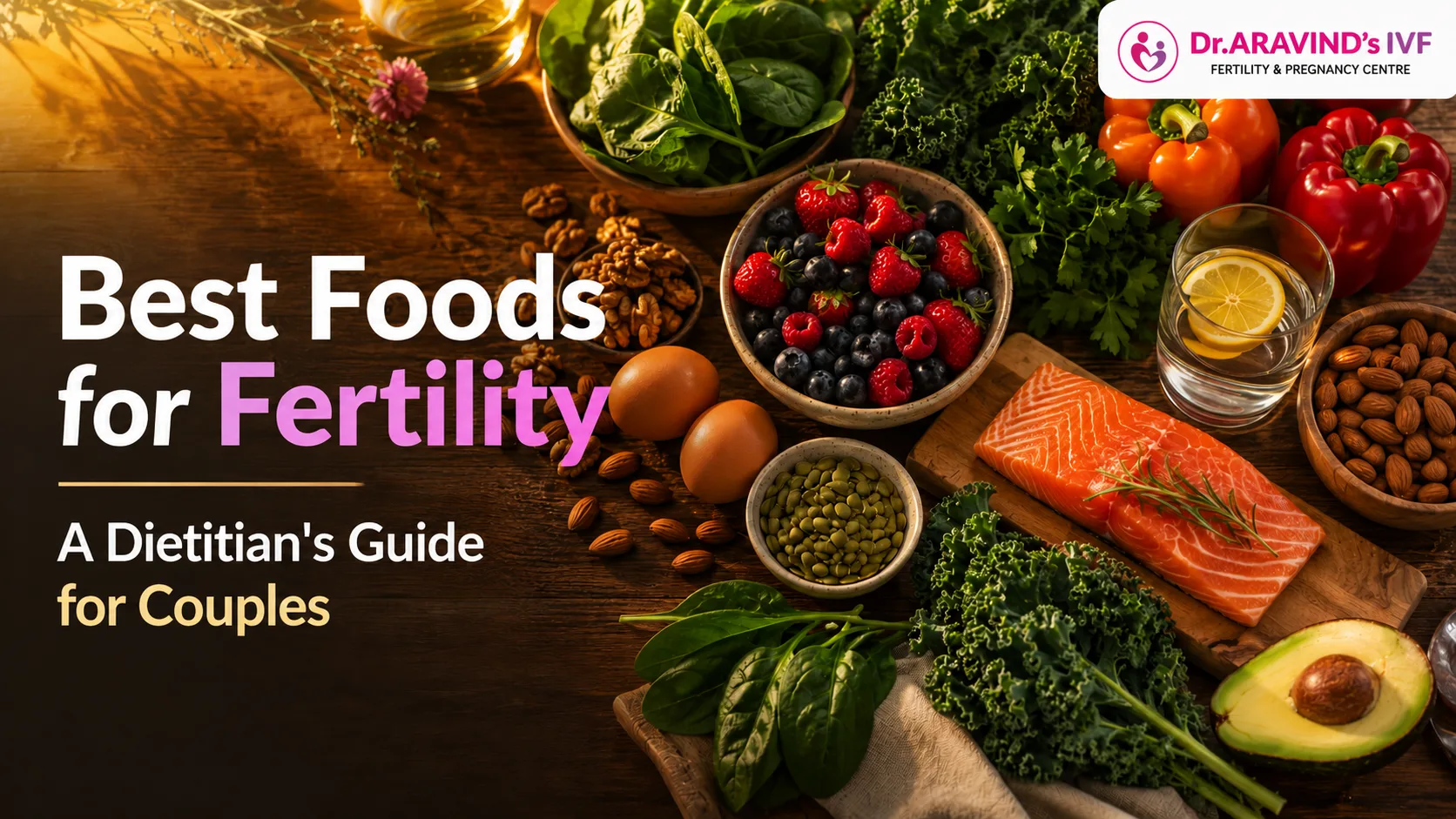
Prioritise leafy green vegetables spinach, kale, broccoli daily. These provide folate, iron, and antioxidants that support ovulation, implantation, and early embryo development. Couples consuming higher seafood intake at least two servings per week of low-mercury fish conceived in significantly less time than those eating less. Omega-3 fatty acids in fish improve egg quality, support hormone production, and enhance sperm motility and morphology simultaneously.
Whole grains over refined carbohydrates stabilise blood sugar and insulin levels directly relevant for women with PCOS where insulin resistance disrupts ovulation. Legumes, beans, and lentils provide plant-based protein and folate with a lower inflammatory load than red meat consumed in high quantities.
Healthy fats from olive oil, avocados, nuts, and seeds support hormone production and aid the absorption of fat-soluble vitamins including Vitamin D — one of the most commonly deficient and most fertility-relevant nutrients in the Indian population.
Key Nutrients Every Couple Should Prioritise
Folate is non-negotiable for women — 400 micrograms daily from food and supplementation, starting three months before conception. Higher folate levels are associated with better implantation rates and reduced chromosomal abnormalities in embryos.
Vitamin D deficiency is widespread in India and directly linked to ovulatory dysfunction, reduced IVF success rates, and poor sperm quality. Get tested. Correct it if needed.
CoQ10 supports mitochondrial function in egg cells particularly relevant for women over 35 where mitochondrial efficiency naturally declines. For men, CoQ10 improves sperm motility and reduces DNA fragmentation.
Zinc supports ovulation in women and sperm production in men. Oysters, pumpkin seeds, nuts, and whole grains are the most accessible dietary sources.
"For a deeper understanding of how nutrition and egg quality are connected before fertility treatment:"
What Both Partners Should Reduce or Avoid
Ultra-processed food, excessive caffeine, alcohol, and trans fats all have direct negative effects on reproductive health. A 2025 controlled nutrition trial confirmed that consumption of ultra-processed foods adversely affects sperm quality and reduces testosterone in men. For women, high-glycaemic diets are associated with longer time to conception and higher rates of ovulatory dysfunction.
Reducing these is not about perfection. It is about reducing the inflammatory and hormonal burden on the reproductive system during the most important preparatory window of the fertility journey.
Conclusion
Food cannot replace clinical fertility care but it can meaningfully change the biological foundation on which that care works. Couples who arrive at Dr. Aravind's IVF Fertility & Pregnancy Centre having made consistent nutritional improvements in the months before treatment consistently show better hormonal profiles, better egg and sperm quality, and better treatment outcomes.
As the best IVF centre in Coimbatore and a trusted name among the best IVF centres in India, the clinic integrates nutritional guidance alongside clinical treatment because conception is not just a medical event. It is the result of a body that has been genuinely prepared for it.
https://www.draravindsivf.com/book-your-appointment
FAQ
Q1. What are the best foods to eat when trying to conceive in India? Leafy greens, whole grains, legumes, low-mercury fish, nuts, seeds, eggs, and full-fat dairy form the strongest fertility-supportive dietary foundation. Prioritise folate-rich and antioxidant-rich foods consistently across the 90 days before trying to conceive.
Q2. Does diet affect IVF success rates? Yes. Couples who follow a Mediterranean-style diet in the months before IVF consistently show better ovarian response, better embryo quality, and improved implantation rates compared to those with high processed food intake.
Q3. What should men eat to improve sperm quality? Zinc, CoQ10, omega-3 fatty acids, folate, and Vitamin D are the most evidence-backed nutrients for sperm health. Walnuts, fatty fish, pumpkin seeds, leafy greens, and eggs cover most of these. Reducing alcohol, smoking, and ultra-processed food intake is equally important.
Q4. How long before trying to conceive should we change our diet? Start at least three months before trying to conceive — aligning with the 90-day maturation cycle of both eggs and sperm. Changes made during this window directly influence the quality of the reproductive cells involved in conception.