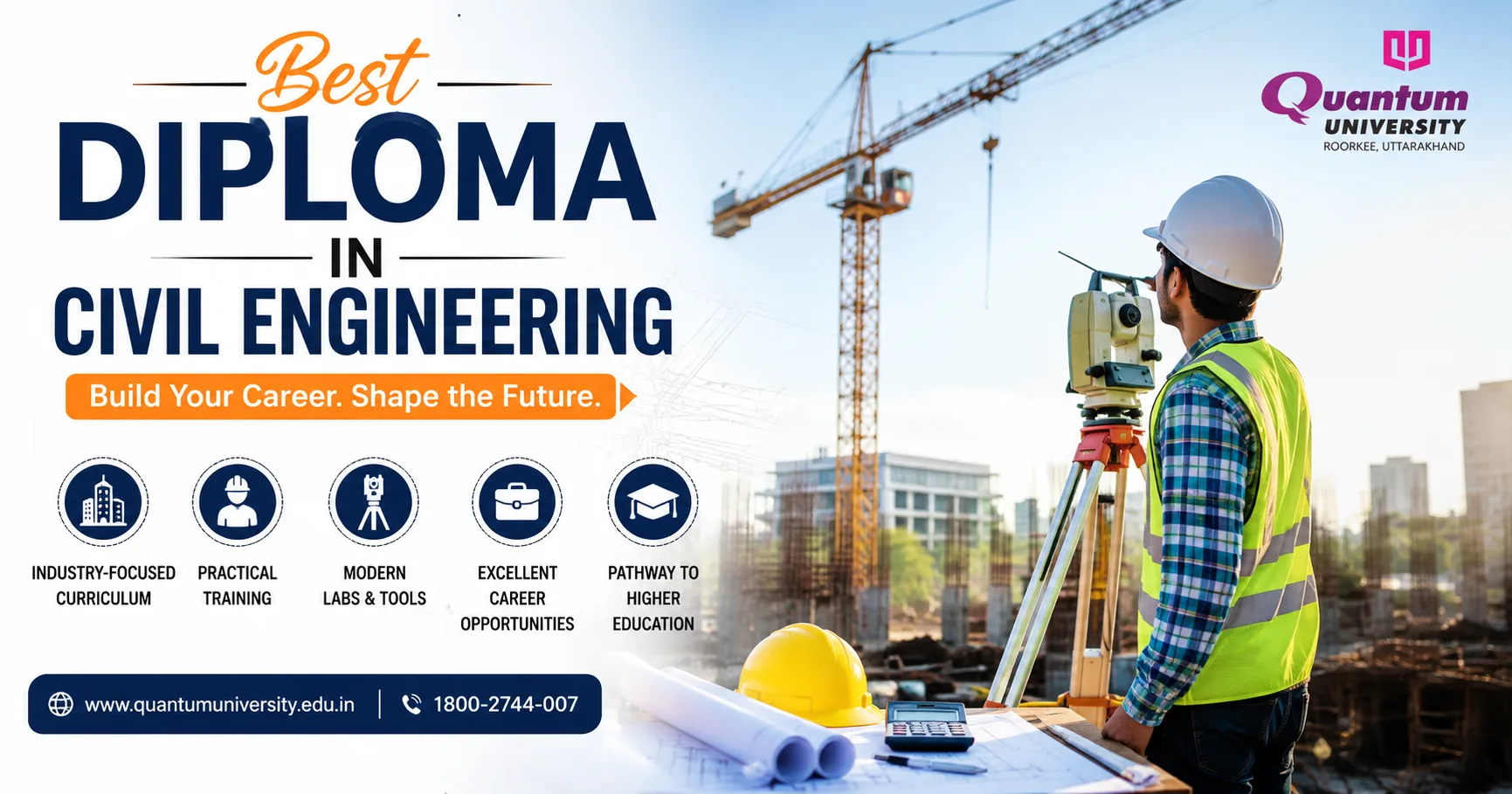
Civil engineering is at the heart of every major infrastructure project, from highways and bridges to residential complexes and smart cities. As the demand for skilled professionals continues to grow, enrolling in the Best Diploma in Civil Engineering can be the ideal starting point for a successful engineering career. This diploma program equips students with technical knowledge, practical expertise, and problem-solving abilities that are highly valued across the construction and infrastructure industries. At Quantum University, students receive career-focused education supported by modern facilities, experienced faculty, and industry exposure that prepares them for today's engineering challenges.
Best Diploma in Civil Engineering: A Strong Foundation for Future Engineers
A diploma in civil engineering provides students with the essential skills required to understand planning, designing, constructing, and maintaining infrastructure. Unlike programs that focus only on theory, diploma courses emphasize practical learning to help students develop confidence and technical competence.
Students learn the fundamentals of:
- Construction technology
- Structural engineering
- Surveying
- Building materials
- Transportation engineering
- Environmental engineering
- Quantity surveying
- Engineering drawing
- Computer-aided design
This balanced approach enables graduates to adapt quickly to professional work environments.
Best Diploma in Civil Engineering Curriculum Designed for Industry Needs
Engineering industries expect graduates to possess both technical knowledge and practical experience. A modern diploma curriculum is therefore designed to bridge the gap between academics and industrial requirements.
Core subjects generally include:
- Engineering Mathematics
- Engineering Physics
- Engineering Mechanics
- Building Construction
- Concrete Technology
- Soil Mechanics
- Highway Engineering
- Hydraulics
- Estimation and Costing
- AutoCAD Applications
- Construction Project Management
Students also participate in workshops, laboratory experiments, and project work that strengthen their practical understanding.
Practical Training That Builds Real-World Skills
One of the biggest strengths of a diploma program is experiential learning. Students gain hands-on exposure to construction methods, engineering equipment, and software used in professional environments.
Practical learning activities include:
- Surveying using modern instruments
- Material testing laboratories
- Structural model preparation
- Site visits
- CAD drafting
- Project estimation exercises
- Industrial internships
- Team-based engineering projects
These experiences help students become job-ready before graduation.
Career Opportunities After the Best Diploma in Civil Engineering
Civil engineering remains one of the most versatile engineering disciplines, offering opportunities across numerous industries. Diploma holders can begin their careers immediately or pursue higher education for advanced specialization.
Popular career options include:
- Site Engineer
- Civil Engineering Technician
- Surveyor
- Quality Control Engineer
- CAD Designer
- Junior Structural Engineer
- Construction Supervisor
- Estimation Engineer
- Project Coordinator
- Infrastructure Maintenance Executive
With experience and additional certifications, professionals can progress into leadership and project management roles.
Skills Employers Value in Civil Engineering Graduates
Today's employers seek professionals who combine technical expertise with workplace skills. During the diploma program, students develop competencies that improve their career prospects.
Important professional skills include:
- Technical communication
- Analytical thinking
- Project planning
- Leadership
- Team collaboration
- Time management
- Safety awareness
- Decision-making
- Problem-solving
These transferable skills are valuable across multiple engineering sectors.
Emerging Trends in Civil Engineering
The construction industry is evolving rapidly with the adoption of digital technologies and sustainable practices. Students entering the profession should be familiar with modern engineering trends.
Key developments include:
- Smart infrastructure
- Green building construction
- Building Information Modeling (BIM)
- Prefabricated construction
- Sustainable materials
- GIS and remote surveying
- Digital project management
- Renewable energy infrastructure
Understanding these trends gives graduates a competitive advantage in the job market.
Why Choose Quantum University?
Choosing the right institution plays a significant role in professional success. Quantum University offers an educational environment that encourages innovation, technical excellence, and practical learning.
Students benefit from:
- Experienced and supportive faculty
- Well-equipped engineering laboratories
- Industry-oriented curriculum
- Internship opportunities
- Modern classrooms
- Digital learning resources
- Skill development initiatives
- Placement assistance
- Industry collaborations
The university focuses on developing competent professionals capable of contributing to modern infrastructure projects.
Higher Education Opportunities
Completing a diploma does not limit academic growth. Many students continue their education to gain specialized knowledge and improve career prospects.
Options include:
- Lateral Entry into B.Tech
- Advanced certification programs
- Specialized construction management courses
- CAD and BIM certifications
- Government technical examinations
Continuous learning enables professionals to stay competitive in the engineering field.
Tips for Selecting the Right Civil Engineering Diploma
Choosing the right diploma program requires careful consideration of several factors.
Look for:
- Recognized institution
- Updated curriculum
- Practical learning opportunities
- Experienced faculty
- Modern laboratories
- Strong industry connections
- Internship support
- Placement record
- Student development activities
A well-rounded educational experience contributes significantly to long-term career success.
Frequently Asked Questions
What is the duration of a Diploma in Civil Engineering?
The duration may vary depending on the institution and educational regulations, but most diploma programs are structured to provide comprehensive technical training over multiple semesters.
Is practical learning important in civil engineering?
Yes. Practical training helps students understand construction methods, engineering tools, surveying techniques, and project execution, making them industry-ready.
Can diploma graduates get government jobs?
Yes. Civil engineering diploma holders are eligible to apply for various technical positions in government departments and public sector organizations, subject to recruitment requirements.
Which industries recruit diploma graduates?
Construction companies, infrastructure developers, consulting firms, transportation projects, municipal bodies, and real estate organizations regularly recruit civil engineering diploma holders.
Why should students choose Quantum University?
Quantum University offers industry-oriented education, experienced faculty, practical learning opportunities, modern laboratories, internships, and placement support to help students build successful engineering careers.
Conclusion
Pursuing the Best Diploma in Civil Engineering is a smart choice for students who want to enter one of the most respected and future-focused engineering professions. The program develops technical knowledge, practical expertise, and professional skills that are essential for success in today's infrastructure sector. With its commitment to academic excellence, hands-on learning, and career development, Quantum University provides students with the foundation they need to become confident and capable civil engineering professionals.