Choosing a digital marketing course can feel simple until you compare the details. One institute may focus on theory, while another may give you tasks, campaign practice, website work, and portfolio projects. Worth knowing: Google says helpful content should be made for people first and should show clear expertise, trust, and useful depth.
For students, fresh graduates, business owners, and working professionals, the goal is often the same: build skills that can be used in real online work. A strong course should explain the basics clearly, then move into hands-on work. That way, you learn not only what a tool does, but when and why to use it.
What Should a Digital Marketing Course Cover?
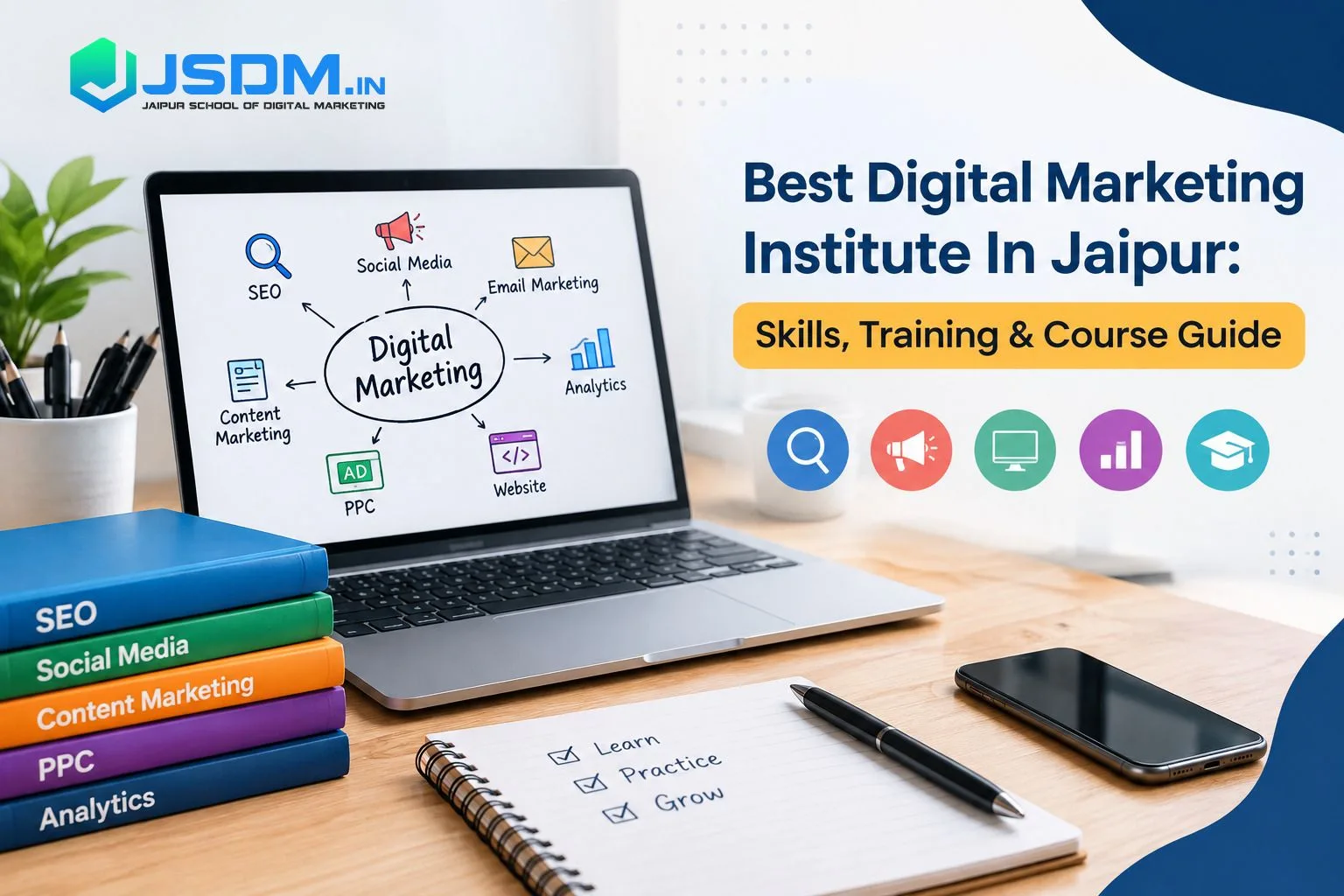
A broad digital marketing course should connect several skills instead of teaching each topic in isolation. SEO helps improve a website's visibility in organic search. SEM and PPC cover paid search campaigns, while social media marketing focuses on content, audience growth, and paid social campaigns.
That's not all. Content writing, email marketing, website basics, conversion ideas, and analytics can help you understand the full customer journey. You should also learn keyword research, on-page SEO, off-page SEO, technical SEO, ad copy, audience targeting, campaign tracking, and reporting.
The catch? A long list of modules does not prove that a course is useful. Ask whether the training lets you use these skills through assignments, live projects, campaign exercises, website tasks, or portfolio work. The value comes from being able to explain and apply what you learned.
Why Practical Training Matters
Digital marketing changes quickly because platforms, ad systems, search results, and user habits keep changing. So, memorising definitions is not enough. Practical training gives learners a chance to test ideas, review results, fix errors, and understand what happens after a campaign goes live.
For example, SEO practice can include keyword research, page structure, internal links, technical checks, and content planning. PPC practice can involve writing ads, choosing keywords, setting budgets, tracking conversions, and reading campaign data. Social media practice can cover content calendars, platform formats, audience research, and engagement.
It adds up. Each task helps build a portfolio of work that can be discussed in an interview or shown to a client. A course that includes regular feedback can also help learners spot weak areas before they become habits.
Learning SEO, SEM, Social Media, and Content
SEO is more than adding keywords to a page. It includes understanding search intent, creating useful pages, improving site structure, earning relevant links, and making technical improvements. Google describes SEO as helping search engines understand content while helping users find a site through search.
Meanwhile, SEM and PPC teach a different side of online marketing. Paid search requires planning, keyword selection, ad writing, landing-page thinking, budget control, and performance tracking. Social media adds another layer because each platform has its own content formats and audience behaviour.
Worth noting: content connects these channels. A useful blog, landing page, video, or social post can support both discovery and conversion. Learning how these pieces work together gives students a wider view of digital marketing rather than treating each tool as a separate subject.
Tools and Analytics Are Part of the Skill
Knowing the names of tools is not the same as knowing how to use them. A job-ready learner should get familiar with tools for keyword research, SEO checks, web analytics, search ads, social media management, content creation, and reporting.
Numbers matter, too. Website traffic, impressions, clicks, click-through rate, conversions, cost per lead, and engagement can tell you whether a campaign is moving in the right direction. The exact metric depends on the goal.
Here is the useful part: analytics helps turn marketing work into a process. You can set a goal, collect data, review what happened, and make the next change. That habit is useful for an in-house marketing role, an agency role, freelance work, or a small business.
Why Course Structure and Trainers Matter
A good learning plan should have a clear path. Beginners need the basics first, followed by guided practice and more complex tasks. Look for a mix of classroom or online lessons, assignments, project work, doubt support, and time to practise.
At JSDM- Jaipur School of Digital Marketing, the published course information lists 50+ modules, practical training, digital marketing tools, an internship, placement assistance, and a six-month training format. Its site also describes work across SEO, SEM, social media, content, website building, and portfolio development. These are published course details, so learners should still confirm the current batch plan, fees, and terms before joining.
That's important because course pages can change. A trainer's experience can also matter when you want to learn how marketing tasks work in real settings. The institute's trainer page lists industry experience and course-specific training details for its trainers.
How to Choose the Right Institute in Jaipur
Instead of relying on a single claim, compare the details that affect your learning. Start with the syllabus. Does it match your goal? If you want an SEO role, check for technical SEO, on-page work, off-page work, keyword research, and reporting. If paid ads interest you, look for Google Ads, Meta Ads, targeting, budgets, tracking, and optimisation.
Next, ask about practice. How many projects will you complete? Will you work with websites or campaigns? Will you build a portfolio? What happens when a task goes wrong?
The same applies to support. Ask about batch size, class format, trainer access, internship terms, certification, placement assistance, and access to learning material. Then check whether the details are clearly stated rather than relying only on sales claims.
Who Can Learn Digital Marketing?
Digital marketing does not belong to one degree or job path. Students can use it to build a new skill set, while graduates may use it to enter entry-level marketing roles. Working professionals can add online marketing skills to an existing role, and business owners can learn how search, social media, content, and paid ads support customer growth.
No coding background is required for many marketing tasks, although basic website knowledge can be useful. You also do not need to master every channel at once.
A practical path is to learn the foundations first, choose one or two areas for deeper practice, and then build projects around them. Over time, you can add analytics, automation, paid campaigns, content, or website skills. The goal is steady skill growth, not collecting as many certificates as possible.
Conclusion
The Best Digital Marketing Institute In Jaipur for one learner may not be the same fit for another, because goals and learning needs differ. What matters is whether the course gives you a clear path from concepts to practical work.
Before you join, compare the syllabus, trainers, tools, projects, internship terms, support, and current course details. Also, check whether the institute explains what you will actually do during training. That's the real test of value.
Digital marketing is a mix of technology, marketing, content, data, and creative work. If you build these skills through steady practice, you can create a stronger base for jobs, freelance projects, agency work, or business growth.
FAQs
What should I look for in the Best Digital Marketing Institute In Jaipur?
Look at the syllabus, practical work, trainers, project support, tools, internship details, class format, and placement assistance. Compare written course details instead of choosing only from promotional claims.
Is a digital marketing course useful for beginners?
Yes. Beginners can start with marketing basics and then move into SEO, social media, paid ads, content, websites, and analytics. A clear course structure can make the learning path easier to follow.
Do I need a technical or IT degree?
Not for many digital marketing roles. Skills such as SEO, content, paid advertising, social media, and analytics can be learned without an IT degree. Basic web knowledge can still help.
Should I choose classroom or online training?
It depends on how you learn. Classroom training may offer direct interaction, while online training can give more schedule flexibility. In either case, check whether you get practice, feedback, project work, and trainer support.
How long does it take to learn digital marketing?
There is no single timeline. Basic concepts can be learned fairly quickly, but useful working skills take practice. The right pace depends on the course structure, your starting point, and how much time you spend applying what you learn.