
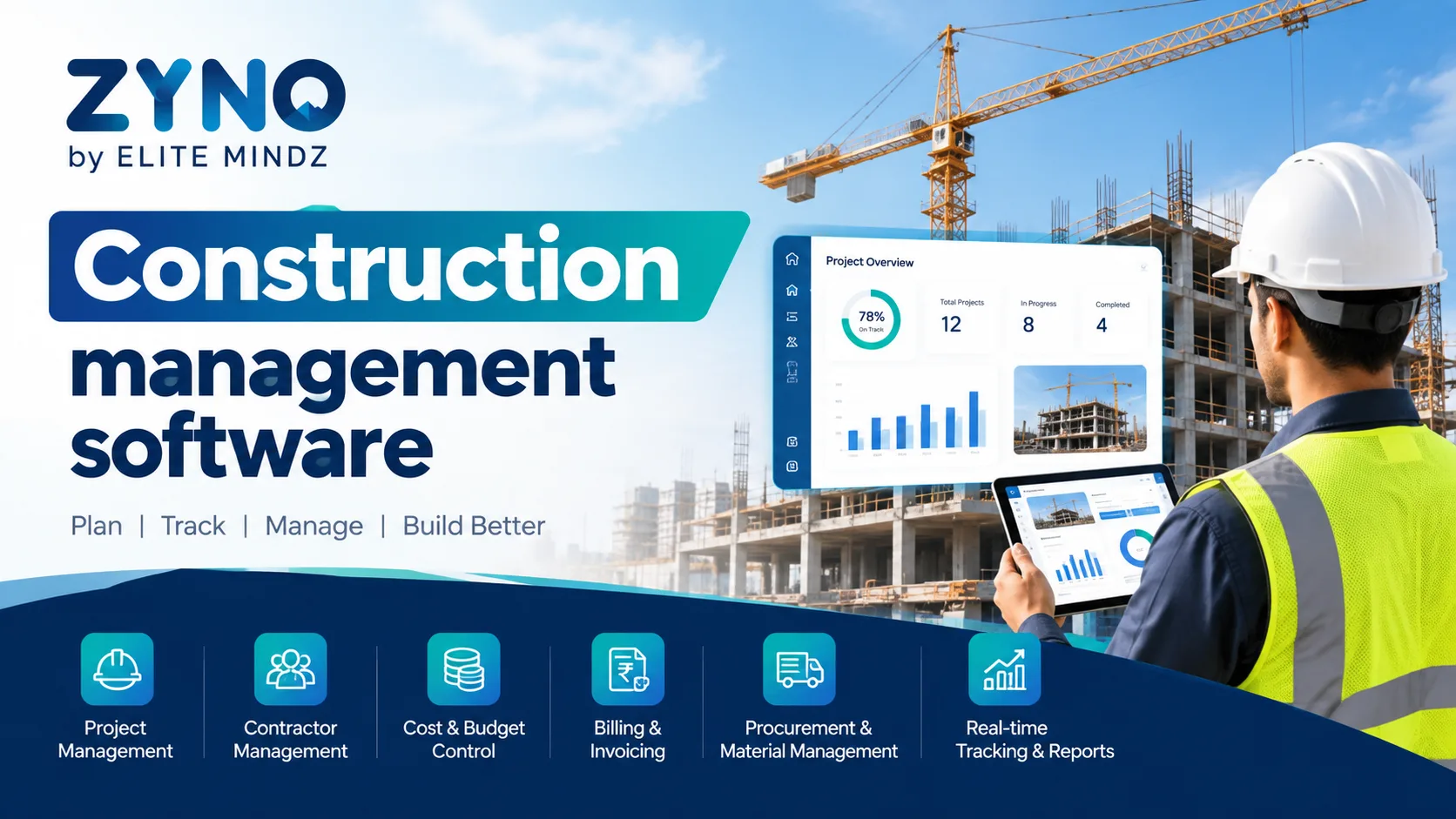
The construction industry is becoming more complex with every project. Construction companies need to manage multiple projects, contractors, employees, materials, budgets, purchase activities, billing, and deadlines at the same time. When these activities are managed through spreadsheets, paperwork, and disconnected software, it can become difficult to maintain accuracy and complete projects on time.
This is why construction ERP software has become an important technology for modern construction businesses.
A centralized construction management software solution helps businesses connect project planning, execution, contractor management, cost control, billing, resource management, procurement, and reporting in one place. With better access to project data, managers can monitor performance, identify issues, and make faster decisions.
For companies looking for the best construction ERP software in India, it is important to understand the features, benefits, and factors that should be considered before selecting a solution.
What Is Construction ERP Software?
Construction ERP software is an integrated business management system designed specifically to support construction-related operations.
Unlike basic project management tools, a construction ERP system can connect project activities with financial, operational, procurement, resource, and contractor-related processes.
A modern ERP for construction industry businesses can help manage:
- Construction project planning and execution
- Contractor and subcontractor management
- Project tracking and monitoring
- Construction cost management
- Budget and expense tracking
- Construction billing
- Procurement and purchasing
- Inventory and material management
- Resource management
- Financial controls
- Project reporting and analytics
By bringing these processes together, businesses can create a more organized and transparent construction management workflow.
Why Do Construction Businesses Need Construction Management Software?
Construction projects involve many stakeholders and activities. A single project may include architects, engineers, contractors, subcontractors, suppliers, finance teams, project managers, and clients.
Managing information between these teams can become challenging when data is spread across different systems.
Construction management software provides a centralized platform where teams can manage and monitor important project information.
For example, project managers can track progress, finance teams can monitor costs and billing, procurement teams can manage purchases, and management can review project performance through dashboards and reports.
This connected approach can help reduce manual work and improve visibility throughout the project lifecycle.
Key Features of Construction ERP Software
The best construction ERP platform should provide features that address both project and business management requirements.
1. Construction Project Management
Project management is at the core of every construction business.
Construction project management software helps teams plan projects, assign tasks, manage timelines, monitor milestones, and coordinate activities.
Instead of depending on multiple spreadsheets and communication channels, project information can be organized within a centralized system.
This helps project managers understand:
- What has been completed
- What is currently in progress
- Which activities are pending
- Where delays are occurring
- Which resources are required
2. Contractor Management Software
Contractors and subcontractors play a major role in construction projects.
Contractor management software helps businesses organize contractor information, assignments, documentation, project involvement, and related activities.
With centralized contractor data, companies can improve coordination and maintain better visibility into contractor performance across different projects.
3. Construction Project Tracking
Project delays can affect costs, schedules, and customer satisfaction.
Construction project tracking software enables businesses to monitor project progress against planned timelines and activities.
Managers can identify delayed tasks, pending activities, resource requirements, and other project issues more efficiently.
4. Construction Cost Management
Cost control is one of the biggest challenges in construction.
Unexpected expenses, material price changes, resource costs, and project delays can affect profitability.
Construction cost management software helps businesses monitor budgets, project expenses, cost allocation, and financial performance.
With better cost visibility, management can identify potential budget issues earlier and take corrective action.
5. Construction Billing Software
Construction billing can involve project milestones, contracts, materials, services, variations, and multiple stakeholders.
Construction billing software helps organize billing processes and maintain project-related financial information.
A centralized billing system can reduce manual calculations, improve record keeping, and provide better visibility into billing status.
6. Procurement and Purchase Management
Construction projects depend heavily on timely procurement of materials, equipment, and services.
A construction ERP system can help businesses manage purchase requirements, suppliers, purchase orders, and procurement workflows.
This can improve coordination between project teams, procurement teams, and suppliers while helping businesses maintain better control over purchasing activities.
7. Resource Management
Efficient resource utilization is essential for completing projects within planned budgets and timelines.
Construction ERP software can help businesses manage manpower, equipment, materials, and other project resources.
Managers can get better visibility into resource requirements and allocation across projects.
8. Inventory and Material Management
Material shortages can cause project delays, while excessive inventory can increase unnecessary costs.
A construction ERP system can provide better visibility into material requirements, stock levels, purchases, and inventory movement.
This allows construction companies to plan materials according to project requirements.
9. Financial Management
Construction businesses need accurate financial information to understand project profitability and overall business performance.
A centralized ERP system can connect project operations with financial processes, making it easier to monitor expenses, budgets, billing, and project-level financial performance.
10. Reporting and Dashboards
Management needs accurate information to make informed decisions.
Modern construction project management systems can provide dashboards and reports covering:
- Project progress
- Project costs
- Budget utilization
- Contractor activities
- Procurement
- Billing
- Resources
- Inventory
- Financial performance
These insights can help management identify trends and address problems faster.
Benefits of Construction ERP Software
Implementing a suitable construction software solution can provide several benefits to construction businesses.
Improved Project Visibility
A centralized platform provides teams with access to important project information from one place.
Managers can understand project status without collecting data manually from different departments.
Better Cost Control
Construction ERP software helps businesses monitor project budgets and expenses more systematically.
This can help reduce unexpected cost overruns and improve financial control.
Reduced Manual Work
Automating repetitive processes can reduce dependency on spreadsheets, paperwork, and manual data entry.
Teams can spend more time on project execution and business-critical activities.
Better Contractor Coordination
Centralized contractor information can make it easier to coordinate contractors and subcontractors working across different projects.
Faster Decision-Making
Real-time information, dashboards, and reports help managers make decisions based on current project data instead of outdated spreadsheets.
Improved Collaboration
When project information is centralized, different teams can work with the same data, reducing communication gaps and information duplication.
Better Project Tracking
A construction project tracking system makes it easier to monitor deadlines, milestones, tasks, and project performance.
Cloud Construction ERP Software: Why It Matters
Traditional software may limit access to business information to specific systems or locations.
Cloud construction ERP software provides a more flexible approach by allowing authorized users to access the system through supported devices and internet connectivity.
For businesses managing multiple construction sites, offices, and teams, cloud based construction management software can provide greater flexibility.
Key advantages can include:
- Centralized data access
- Easier collaboration
- Flexible user access
- Simplified system management
- Better support for multiple locations
- Scalable infrastructure
However, businesses should always evaluate security, user permissions, data protection, integrations, and vendor support before selecting a cloud ERP platform.
Construction ERP Software for Small Businesses
ERP software is not limited to large construction companies.
Construction ERP software for small business can help growing companies establish organized processes from an early stage.
Small and mid-sized construction businesses can use ERP software to manage projects, contractors, costs, billing, procurement, resources, and reports without maintaining multiple disconnected systems.
As the company grows, a scalable ERP platform can also support additional projects, users, locations, and business processes.
The Role of AI in Construction Management
Artificial intelligence is becoming an important part of modern business software, and the construction industry is also beginning to benefit from AI-powered technologies.
AI construction project management software can help businesses analyze data, automate repetitive activities, identify patterns, and support decision-making.
Depending on the platform, AI capabilities may support areas such as:
- Project data analysis
- Risk identification
- Resource planning
- Cost analysis
- Automated reporting
- Workflow automation
- Performance insights
- Predictive decision support
AI does not replace construction professionals. Instead, it can help teams process information faster and make better data-driven decisions.
How to Choose the Best Construction ERP Software in India
Selecting an ERP system is an important business decision. Companies should evaluate the software according to their current workflows and future requirements.
1. Identify Your Business Requirements
Before comparing software providers, identify the processes that need improvement.
For example:
- Project management
- Contractor management
- Cost management
- Construction billing
- Procurement
- Inventory
- Resource management
- Financial management
- Reporting
This makes it easier to compare platforms based on actual business needs.
2. Look for Construction-Specific Features
Generic ERP software may not provide the functionality required by construction businesses.
Look for an ERP for construction industry that supports project-based workflows, contractor management, cost tracking, billing, procurement, resources, and reporting.
3. Check Cloud Capabilities
If your employees work from different project sites or offices, cloud accessibility can be an important consideration.
A cloud-based ERP can help authorized users access relevant information from different locations.
4. Evaluate Integration Capabilities
Your ERP should be able to work with other important business systems.
Before implementation, check whether the software can integrate with accounting, finance, HR, inventory, procurement, or other applications used by your organization.
5. Check Reporting and Analytics
A good ERP should not only store information but also help businesses understand it.
Look for dashboards and reports that provide useful insights into project progress, costs, billing, resources, and profitability.
6. Consider Scalability
Your software should be capable of supporting business growth.
Consider whether the system can accommodate more projects, users, locations, contractors, and business processes as your company expands.
7. Evaluate Ease of Use
Software adoption depends heavily on user experience.
Choose a platform with simple workflows and an interface that project managers, finance teams, procurement teams, and field staff can understand and use effectively.
8. Review Vendor Support
Implementation and ongoing support are important parts of an ERP investment.
Evaluate the vendor's onboarding process, technical support, training, updates, and maintenance services before making the final decision.
Why Choose ZYNO Construction?
ZYNO Construction is a modern construction software solution designed to help construction businesses manage their projects and operational activities through a centralized platform.
It is built to support businesses that need better visibility across construction workflows, project execution, resources, financial controls, and reporting.
With ZYNO Construction, businesses can work toward a more connected approach to construction management instead of relying on multiple disconnected tools.
ZYNO Construction Can Help With:
- Construction project planning
- Project execution and tracking
- Contractor management
- Resource management
- Financial controls
- Cost visibility
- Project reporting
- Operational coordination
- Centralized project information
- Cloud-based access
- Modern AI-driven capabilities
By bringing important construction processes together, ZYNO Construction can help businesses improve visibility, streamline workflows, and manage projects more effectively.
Who Can Benefit From Construction ERP Software?
A modern construction ERP platform can be useful for:
- Construction companies
- General contractors
- Civil contractors
- Real estate developers
- Infrastructure companies
- EPC companies
- Engineering and construction firms
- Residential construction businesses
- Commercial construction companies
- Project-based contracting businesses
The right software depends on the size, structure, projects, workflows, and operational requirements of each business.
Final Thoughts
Managing construction projects efficiently requires strong coordination between projects, people, contractors, materials, finances, and management.
The right construction management software can bring these activities together and provide businesses with better control over their operations.
When selecting the best construction ERP software in India, companies should look beyond the number of features. The right solution should fit their construction workflows, provide useful project and financial visibility, support cloud-based operations, integrate with existing systems, and scale with business growth.
For businesses looking for a modern construction ERP system with centralized project management, operational visibility, cost control, resource management, and AI-enabled capabilities, ZYNO Construction can be a strong option to consider.
Explore ZYNO Construction to modernize construction workflows and bring greater visibility and control to your projects.
Frequently Asked Questions
What is construction ERP software?
Construction ERP software is an integrated platform that helps construction businesses manage project management, contractors, costs, billing, procurement, resources, inventory, financial processes, and reporting.
What is the difference between construction ERP software and project management software?
Construction project management software primarily focuses on planning and managing projects. A construction ERP system goes further by connecting project activities with financial management, procurement, billing, resources, contractors, inventory, and other business processes.
What are the benefits of construction ERP software?
The major benefits include better project visibility, improved cost control, reduced manual work, better contractor coordination, centralized data, faster reporting, and more informed decision-making.
Is cloud based construction management software suitable for small companies?
Yes. Cloud-based solutions can be suitable for small and growing construction businesses because they can provide centralized access to project and business information without requiring extensive on-premise infrastructure.
How does construction ERP software help with cost management?
It can help businesses track project budgets, expenses, resource costs, and financial performance, giving managers better visibility into where project money is being spent.
What does contractor management software do?
Contractor management software helps construction businesses organize contractor information, assignments, documentation, activities, and project coordination.
Can construction ERP software manage billing?
Yes. Construction ERP platforms can include billing functionality for managing project-related invoices, charges, billing activities, and financial records.
What is AI construction project management software?
AI construction project management software uses artificial intelligence to support activities such as data analysis, automation, reporting, resource planning, and decision support.
How should I choose the best construction ERP software in India?
Compare solutions based on construction-specific features, project management capabilities, contractor management, cost control, billing, cloud accessibility, integrations, reporting, scalability, usability, and vendor support.
Is ZYNO Construction suitable for modern construction businesses?
ZYNO Construction is designed to help construction businesses centralize project and operational processes, improve visibility, streamline workflows, and adopt modern digital construction management practices.