
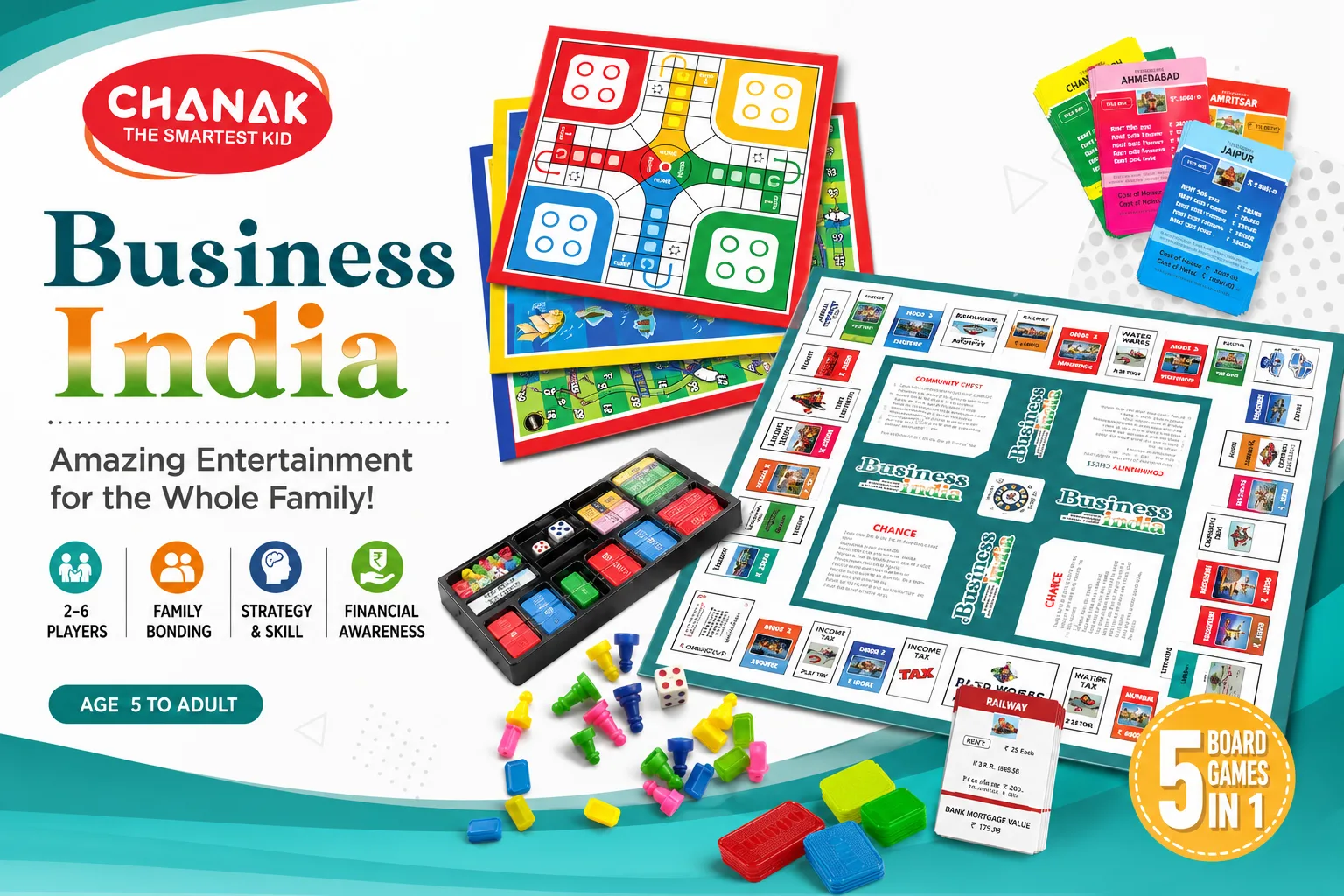
Screen time battles are real, but there’s one alternative that never gets old around the dinner table: game night. And not just any games — a good business board game has quietly become one of the smartest tools parents have for teaching money management, strategy, and decision-making, without turning it into a lecture.
Kids don’t want a lesson on budgeting. They want to win. But the moment a child is trading properties, managing a business, or deciding whether to save their cash or take a risk on a new investment, they’re absorbing real financial and strategic thinking — one dice roll at a time. That’s the magic of the best business board games for kids: the learning is invisible, but it sticks.
This guide breaks down exactly what kids learn from these games, how to pick the right one for your family, and which titles are worth adding to your game shelf — organized by age and skill level so you can find your match fast.
The Core Skills Kids Learn From Business Board Games
Not all games are created equal, and the best business board game options teach more than “who has the most cash at the end.” Here’s what’s actually happening under the hood.
Money Management & Financial Literacy
At its core, a business board game is a financial literacy tool in disguise. Players earn income, pay expenses, and decide how to allocate limited resources — the same fundamentals adults navigate with real paychecks and budgets. Kids start to grasp concepts like the difference between income and expenses, why saving matters, and what happens when spending outpaces earning.
Some games go further, introducing light versions of debt and investing — a child who takes out a loan in a board game and then has to pay it back with interest is learning a lesson that sticks far longer than any worksheet. It’s money management board games in their purest form: low stakes, high repetition, real understanding.
Strategic Thinking
Beyond money, the best games reward planning ahead rather than reacting turn to turn. Kids learn to weigh resource allocation — should I buy this property now or save for a bigger opportunity later? — and start to understand risk versus reward in a way that’s tangible rather than abstract.
This is where business board games separate themselves from pure luck-based games. A game driven entirely by dice rolls teaches patience at best. A game where choices compound over time teaches kids to think two or three moves ahead, a skill that transfers directly to schoolwork, sports, and eventually real financial planning.
Decision-Making & Negotiation
Every business game eventually forces a trade-off: trade this property for that one, spend now or wait, take the safe route or the risky one. These moments teach decision-making under uncertainty — arguably one of the hardest skills to teach outside of lived experience.
Negotiation adds another layer. Kids learn to advocate for a fair deal, read when a trade benefits them, and handle the disappointment of a deal falling through. And because consequences show up immediately on the board, kids connect choices to outcomes in a way that delayed, real-world consequences rarely allow.
How to Choose the Right Business Board Game for Your Child
With dozens of options on the market, picking the right business board game comes down to a few clear criteria:
- Age appropriateness — Younger kids (5–7) need simple mechanics like counting money and making change. Tweens (8–11) can handle budgeting and light strategy. Teens (12+) are ready for real business simulation with hiring, marketing, and competition.
- Player count — Match the game to your typical group size, whether that’s a family of three or a full game-night crew.
- Game length — A 90-minute game might be perfect for a rainy Saturday but a poor fit for a weeknight. Check play time before buying.
- Complexity level — Some games are entry points; others are deep strategic simulations. Match it to your child’s patience and experience level.
- Price point — Educational value doesn’t always require a premium price tag; several budget-friendly options teach the same core lessons.
- Screen-free, low-prep value — Look for games that set up quickly and don’t require extra apps or accessories, especially for classroom or homeschool use.
Top Business Board Games for Kids, by Category
Best for Beginners (Ages 5–8)
At this age, the goal is building comfort with money itself — counting, recognizing coins, and making basic choices about spending versus saving.
- Monopoly Junior simplifies the classic property-trading formula into shorter rounds and easier math, ideal for a first introduction to buying, earning, and spending.
- The Allowance Game has kids earn money for chores and lose it for mishaps, reinforcing the direct link between actions and financial outcomes while practicing basic addition and subtraction.
- Exact Change-style card games turn counting and making change into a fast-paced, competitive activity — great for building number confidence without kids realizing they’re doing math practice.
Best for Growing Strategists (Ages 8–12)
This is the sweet spot for budgeting basics and light entrepreneurship, where kids start managing more variables at once.
- Monopoly remains a staple for a reason — property trading, rent collection, and recovering from financial setbacks all build real budgeting instincts, even if it can run long.
- Payday introduces monthly income and expenses, loan payments, and unexpected windfalls, giving kids a simplified but surprisingly realistic model of managing a monthly budget.
- The Game of Life widens the lens to career choices, salaries, and major expenses, sparking great conversations about education, income, and long-term financial planning.
Best for Advanced Players / Tweens & Teens (12+)
Older kids are ready for genuine business simulation — hiring, marketing, competition, and multi-step strategy.
- Cashflow for Kids (based on Robert Kiyosaki’s Cashflow 101) introduces investing, assets versus liabilities, and the idea of building passive income — concepts most adults don’t learn until much later.
- Acquire challenges players to build corporations, manage mergers, and think about shareholders and bonuses, offering a deeper strategic layer for kids ready to move past basic property games.
- Food Chain Magnate-style business simulations let older teens run a company from the ground up — hiring staff, running marketing campaigns, and competing directly against rivals for market share. It’s intense, but for a serious young strategist, it’s one of the closest board-game replicas of running an actual business.
Best Budget-Friendly Pick
For families who want strong educational value without a big price tag, Payday or Monopoly Junior consistently deliver — both are widely available, replayable, and teach core money lessons without the premium cost of newer specialty titles.
How to Maximize Learning During Game Night
Buying the right business board game is only half the equation. A few small habits turn game night into a genuine learning experience:
- Ask reflection questions afterward. “Why did that trade work out for you?” or “What would you do differently next time?” turns a fun round into a real takeaway.
- Connect it to real life. Tie gameplay to actual allowance, chores, or a savings jar at home so the lessons don’t stay confined to the board.
- Rotate the banker role. Letting kids manage the bank builds responsibility and reinforces counting and record-keeping skills.
- Keep it fun, not preachy. The moment a game feels like a disguised lecture, kids check out. Let the learning happen naturally through play.
Common Mistakes Parents Make When Choosing These Games
Even well-intentioned parents run into a few predictable pitfalls when choosing a business board game:
- Picking a game too advanced or too simple for the child’s age, which leads to frustration or boredom.
- Ignoring game length relative to attention span — a 90-minute strategy game is a hard sell for a first-time 6-year-old player.
- Overlooking replayability, since kids lose interest fast in games with only one path to victory.
- Treating the game as the only financial lesson, rather than a conversation starter that should extend beyond the board.
Frequently Asked Questions
What age is best for business board games? Most business board games work well starting around age 5–7 for simplified versions like Monopoly Junior, with more strategic titles like Payday and The Game of Life suited to ages 8–12, and advanced business simulations like Cashflow or Acquire best reserved for kids 12 and up.
Do business board games actually teach real money skills? Yes — games that involve earning, spending, saving, and trading give kids hands-on practice with budgeting, cash flow, and basic investing concepts, and studies on game-based learning consistently show stronger retention than traditional instruction alone.
What’s the best business board game for kids overall? There’s no single “best” business board game for every family — Monopoly remains the most accessible classic, Payday is excellent for budgeting basics, and Cashflow for Kids stands out for introducing investing concepts to older children.
How long do business board games usually take to play? Play time varies widely: simpler games like Monopoly Junior or Payday typically run 30–60 minutes, while deeper strategy titles like Monopoly or Acquire can take 90 minutes or more.
Do these games help with real-life decision-making, not just money? Absolutely — negotiating trades, weighing risk versus reward, and adjusting strategy based on other players’ moves all build decision-making and critical thinking skills that extend well beyond the game board.
Final Thoughts
The best business board games for kids do something textbooks rarely manage: they make money management, strategy, and decision-making genuinely fun. Whether it’s a first round of Monopoly Junior or a deep dive into Cashflow for Kids, every trade, budget, and bold (or cautious) move is building financial instincts that will serve your child long after the game is packed away. Pick one that matches your child’s age and attention span, pull up a chair, and let game night do the teaching.